Francisco de Goya y Lucientes was the greatest Spanish artist of his time. Naturally, we believe he was the greatest artist in the world during his lifetime—but that’s always open for debate.
He is also one of the artists best represented in the Prado Museum, making it the perfect place to discover his extraordinary career. In this guide, we’ll suggest an itinerary so that your visit won’t, as Goya himself famously warned, “produce monsters.”
1. Understand His Historical Context
To truly appreciate Francisco de Goya, it helps to understand the extraordinary period in which he lived.
Goya witnessed the transition from the Ancien Régime to the ideas that would eventually shape modern liberal democracies. In Spain, however, that transition was painfully brief. The country experienced only a short liberal period before the return of absolutism under Ferdinand VII, one of the darkest chapters in modern Spanish history.
Throughout his life, Francisco de Goya served under three different monarchs and lived through the Napoleonic invasion of Spain.
The Reign of Charles III
Under Charles III, Spain embraced many of the ideals of the Enlightenment: reason, science and reform. Goya’s early paintings reflect this optimistic atmosphere. His brushwork was already remarkably loose and expressive, yet his subjects remained cheerful and approachable.
The Reign of Charles IV
Charles IV was very different from his father. He was no “philosopher king,” to borrow Plato’s expression. By the end of the eighteenth century, Francisco de Goya had reached full artistic maturity.
At the same time, Romanticism was beginning to emerge across Europe. Liberal ideas had already inspired both the American and the French Revolutions. Goya absorbed these cultural changes and produced some of his most daring works, including The Nude Maja.
The French Invasion
The beginning of the nineteenth century confronted Francisco de Goya with an impossible dilemma.
Although many of the ideals behind the French Revolution appealed to him, Napoleon’s invasion brought unimaginable violence to Spain. Goya found himself caught between sympathy for Enlightenment principles and the reality of foreign occupation—a deeply uncomfortable position that profoundly shaped his work.
After the War of Independence
Within our team, there is broad agreement: this is where Francisco de Goya reached his artistic peak. It is also where he became his darkest. His later paintings reveal a world dominated by pessimism, fear and irrationality. They are masterpieces of extraordinary emotional power, but they can also be profoundly unsettling.
2. Discover Francisco de Goya from Beginning to End
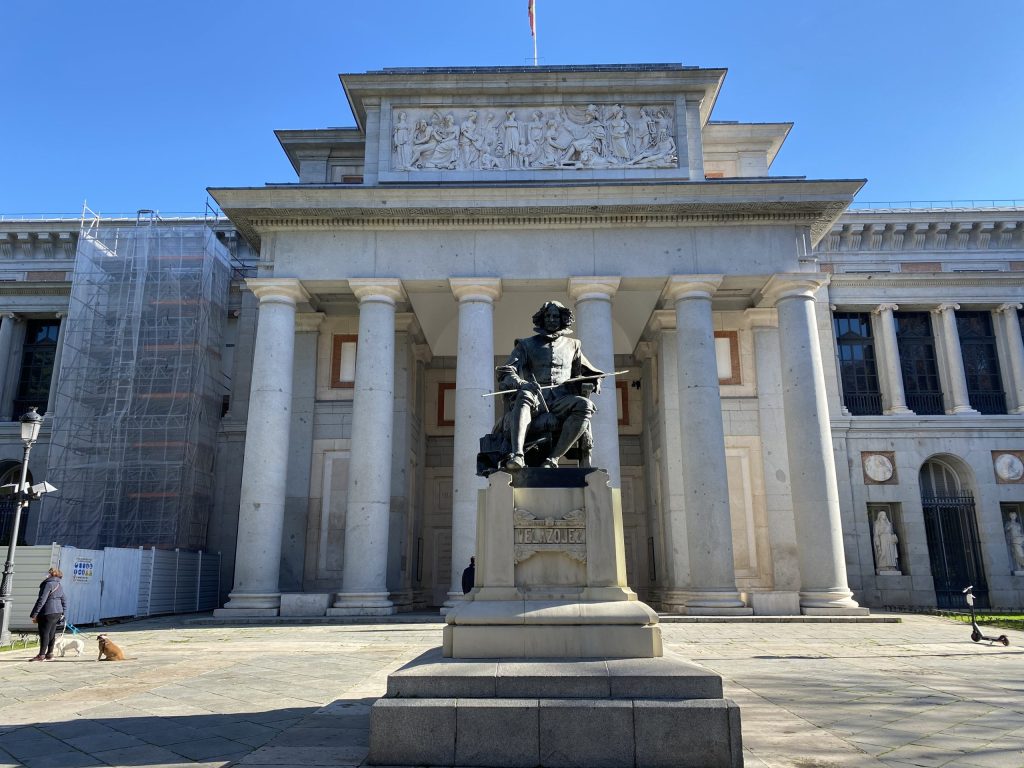
The Prado Museum houses one of the world’s finest collections of works by Francisco de Goya. In fact, much of the museum’s south wing—next to the Murillo statue—is dedicated to his paintings.
So, how should you explore his career?
If your goal is to focus entirely on Goya, begin on the museum’s second floor in the south wing and work your way down through the building. This route allows you to follow his artistic evolution chronologically.
His career began with cartoons for the Royal Tapestry Factory, located near Madrid’s Atocha district. Here you’ll find delightful works such as The Parasol, Summer and Blind Man’s Buff. From there, continue through the final decades of the eighteenth century. Goya briefly experimented with Neoclassicism—a phase we are happy to forgive—before fully developing the unmistakable style that made him famous.
Along the way, don’t miss masterpieces such as Charles III Hunting, The Dukes of Osuna and Their Children and the Portrait of Jovellanos. This section naturally culminates with The Clothed Maja, The Nude Maja and The Family of Charles IV.
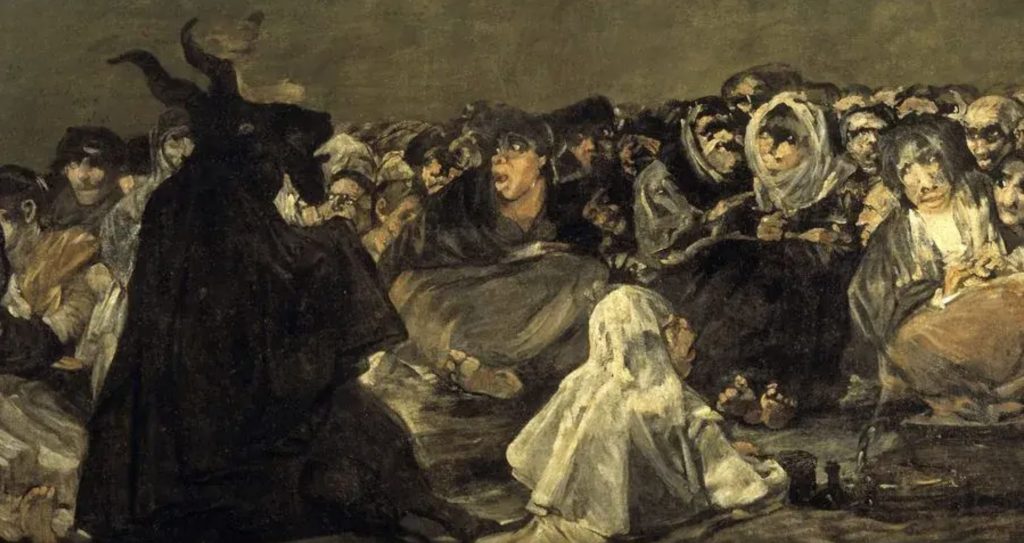
Finally, descend to the galleries devoted to The Second of May 1808, The Third of May 1808 and, of course, the haunting Black Paintings. This is where visitors can witness the extraordinary transformation of Francisco de Goya: from a painter inspired by reason and the Enlightenment to an artist exploring madness, fear and the darkest corners of the human mind.
3. Don’t Expect a Happy Ending
Behind those haunting paintings lies a deeply personal tragedy.
By the end of his life, Francisco de Goya was completely deaf, his eyesight was deteriorating, and his privileged position at court had disappeared. To make matters worse, he suffered repeated attacks that forced him to leave his home on Desengaño Street and move to the now legendary Quinta del Sordo (“House of the Deaf Man”), where he painted the famous Black Paintings directly onto the walls.
Eventually, Ferdinand VII’s return to absolute rule forced Goya into exile. He died in Bordeaux, France, in 1828.
Would You Like to Learn More About Francisco de Goya?
The best way to discover Francisco de Goya is by joining one of our guided tours of the Prado Museum (click here!)
Here is what you can expect:
- Small groups of no more than seven people (or a private tour if you’re travelling with a larger group).
- Museum tickets included.
- Tours available in English, Spanish, French and Italian. Please check the schedule carefully, as each language has different starting times. If you need any help, just get in touch.
- You can choose between our standard two-hour tour or arrange a longer private visit if you’d like to explore Goya’s work in greater depth.
- Do we skip the line? Yes, but make sure you read this article (click here) so you fully know what it means.
One final curiosity: our meeting point is the monument to Francisco de Goya, located on Calle Felipe IV, directly opposite the Prado Museum ticket office.
See you there!