To visit the Prado is one of the most rewarding cultural experiences in Madrid. Yet many first-time visitors make the same mistake: trying to see everything in a single morning. With more than 1,700 works on display and one of the finest collections of European painting in the world, that simply isn’t possible.
The good news is that it doesn’t have to be. In fact, many art lovers find that a second visit to the Prado is even more enjoyable when it follows a single theme. Rather than hurrying past dozens of masterpieces, you can take the time to explore the connections between paintings, discover why they entered the Royal Collection or follow the career of one artist from beginning to end.
In this guide, we suggest seven different ways to visit the Prado. None is better than another; the right choice depends entirely on your interests. You might focus on a national school, a historical period, a single painter or even the story behind the museum’s collection. Whatever you choose, the aim is the same: enjoy the museum without feeling obliged to see everything. When it comes to visiting the Prado, there is really only one rule—have fun.
A Quick Tip To Visit The Prado
If this is your first visit, don’t worry about missing a few paintings. There are more than 1,700 works on display, and it would take days to appreciate them all. To visit the Prado should be a pleasure, not an endurance test.
1. Focus on the Venetian Collection: Perhaps the Most Exotic Way to Visit the Prado
If there is one Italian school that is exceptionally well represented at the Prado Museum, it is the Venetian school. Few museums, either outside or even within Italy, can rival the quality and number of Venetian masterpieces preserved in Madrid. This extraordinary collection owes much to the personal tastes of Emperor Charles V and, above all, Philip II. Both monarchs forged close relationships with some of Venice’s greatest painters, ensuring that many of their works eventually became part of the Spanish Royal Collections.
To visit the Prado is to encounter some of the greatest artists in history, and Titian stands above all others when following this itinerary. If you choose to visit the Prado alla maniera veneziana, no painter is more essential. No other artist enjoyed such a close relationship with the Spanish monarchy during the sixteenth century. Charles V admired his talent so deeply that he appointed him court painter, while Philip II continued commissioning works from him for decades. Thanks to their patronage, the Prado now houses one of the finest collections of Titian’s paintings in the world, including masterpieces such as Charles V at the Battle of Mühlberg and Danaë and the Shower of Gold.
The Venetian school, however, extends far beyond Titian. As you continue your visit, you will discover works by Tintoretto, Veronese, Bassano and other artists who transformed Venice into one of the great artistic centres of the Renaissance. They shared an extraordinary command of colour, luminous compositions and a remarkably free approach to painting, qualities that distinguished the Venetian school from other Italian artistic traditions of the period.
If you decide to visit the Prado following this theme, you will discover not only some of the greatest painters of the Renaissance but also an essential part of the artistic taste of the Spanish Habsburgs. After all, it was their patronage that made it possible for Madrid to preserve one of the world’s most important collections of Venetian painting.
2. Visit the Flemish Collection
If the Venetian school represents one of the Prado’s greatest Italian treasures, the Flemish collection is arguably one of the finest in the world. The close political ties between the Spanish Crown and the Low Countries during the sixteenth and seventeenth centuries brought countless masterpieces from Flanders to Spain. Many were acquired by Spanish monarchs and are now among the museum’s greatest treasures.
This itinerary can begin with one of the most enigmatic artists in the history of art: Hieronymus Bosch. Philip II was deeply fascinated by his paintings and assembled several of his greatest masterpieces. As a result, the Prado now houses the world’s largest collection of Bosch’s works, including The Garden of Earthly Delights, The Adoration of the Magi and The Extraction of the Stone of Madness.
Your visit can then continue with other great names of Flemish painting. Rogier van der Weyden represents the refinement of the Early Netherlandish masters; Joachim Patinir transformed landscape painting by making it the central focus of his compositions; and Peter Paul Rubens left an extraordinary legacy thanks to both the quality and the sheer number of works he produced for the Spanish court. Artists such as Anthony van Dyck and Jan Brueghel the Elder complete an exceptional journey through two centuries of painting in the Low Countries. After all, to visit the Prado is to discover Rubens: he is one of the museum’s most widely represented painters.
Following this route allows you to appreciate how Flemish painting evolved from the meticulous detail of the fifteenth century to the movement and exuberance of the Baroque. It also explains why Spanish monarchs admired these artists so deeply. The result is a collection that is difficult to match anywhere else in the world, making the Prado Museum an essential destination for anyone interested in Flemish art.
3. The Spanish Collection
For many visitors, this is the most natural way to visit the Prado. From the final decades of the Middle Ages to the nineteenth century, the museum brings together almost every major figure in the history of Spanish painting.
The route can begin with Bartolomé Bermejo and other Hispano-Flemish masters of the fifteenth century before moving on to the elegance of Renaissance painters such as Juan de Juanes and Luis de Morales. It reaches its high point during Spain’s Golden Age, when artists such as Ribera, Zurbarán, Murillo and, of course, Velázquez transformed the history of painting. Many art historians regard Velázquez as the greatest Spanish painter of all time.
No visit would be complete without spending time in the galleries devoted to Francisco de Goya. Few artists illustrate Spain’s transition from the Old Regime to the modern world so vividly. His tapestry cartoons, portraits, historical paintings and, above all, the haunting Black Paintings reveal an artistic and personal evolution unlike that of any other painter.
Choosing this itinerary allows you to trace the development of Spanish painting over more than four centuries. It also explains why the Prado is considered the world’s leading museum for the study of this artistic tradition. If this is your first time to visit the Prado and you want a broad introduction to Spanish painting, this is probably the best route to follow. There is no doubt about it: to visit the Prado is also to take a journey through the history of Spain.
4. Explore the Prado Through the Baroque
If the Baroque is your favourite period in art history, this may be the most rewarding way to visit the Prado. No other artistic movement is represented so richly throughout the museum. The seventeenth century was a golden age for European painting and coincided with the height of Spain’s political and cultural influence. As a result, the Prado is home to an extraordinary collection of Baroque masterpieces from Spain, Flanders and Italy.
One of the pleasures of this route is seeing how artists from different countries interpreted the same artistic ideals. In the Spanish galleries, you’ll discover Ribera’s uncompromising realism, Zurbarán’s quiet spirituality, Murillo’s warmth and the genius of Velázquez. The Flemish collection is dominated by the energy and theatricality of Rubens, while the Italian galleries introduce masters such as Guido Reni and Luca Giordano, each offering a distinctive interpretation of the Baroque style.
As you move through the museum, look for the elements these painters share. Dramatic lighting, bold contrasts between light and shadow, dynamic compositions and an unmistakable sense of movement all reflect the Baroque desire to engage the viewer emotionally. Although every artistic tradition developed its own visual language, they all sought to create paintings that inspired wonder.
To visit the Prado through the lens of the Baroque is to understand why this movement changed the course of European painting. Rather than simply moving from one masterpiece to the next, you’ll experience one of the most ambitious and creative moments in the history of Western art.
5. Visit the Prado Through the Renaissance
Although the Baroque often steals the spotlight, to visit the Prado is also to discover one of Europe’s finest Renaissance collections. If you’re fascinated by the period in which artists rediscovered the ideals of Classical Antiquity and transformed the way the world was represented, this itinerary is an excellent place to begin.
Start with the great Italian masters. Fra Angelico embodies the spiritual ideals of the Early Renaissance, while Raphael achieved an almost unrivalled harmony of composition, colour and balance. Titian occupies a central place in this route as well. His long career bridged the High Renaissance and the emergence of the Baroque, and the Prado now holds one of the finest collections of his work anywhere in the world.
The Renaissance was not, however, an exclusively Italian achievement. The museum also displays outstanding works by Albrecht Dürer, whose prints and paintings helped spread Renaissance ideas across northern Europe. Nearby, you’ll find landscapes by Joachim Patinir, whose innovative approach transformed the genre, while El Greco’s early paintings reveal the profound influence that his years in Venice had on his artistic development before he established the unmistakable style for which he is now celebrated.
To visit the Prado with the Renaissance as your guide is to witness one of the greatest revolutions in the history of art. It reveals how perspective, anatomy and the representation of the human figure evolved from the fifteenth century onwards, laying the foundations for the artistic achievements that would shape Europe for centuries to come.
6. Discover the Prado Through Its Sculpture
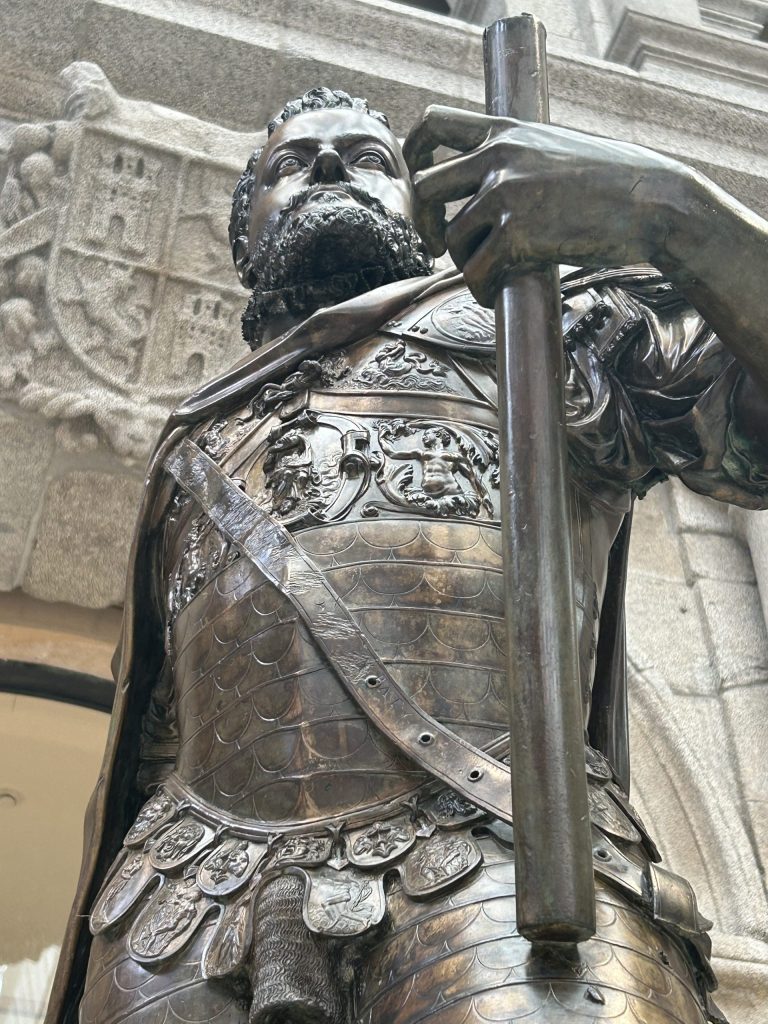
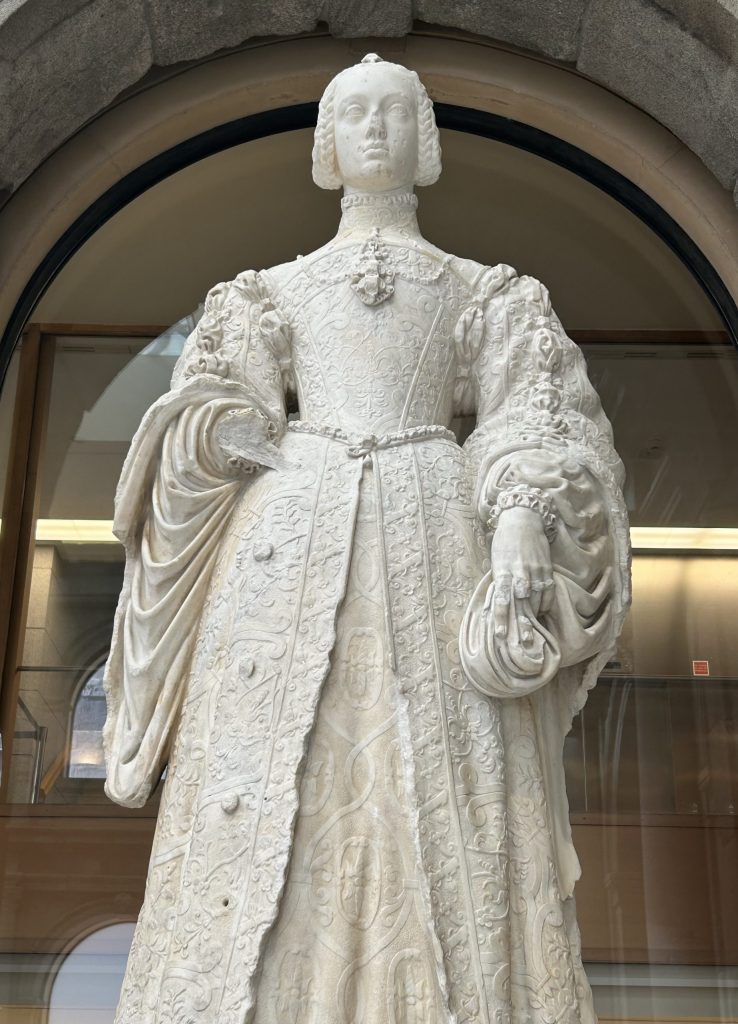
To visit the Prado is not just a pictorial experience, the museum is also home to an outstanding sculpture collection that often goes unnoticed. If you’ve already admired the masterpieces on canvas, why not explore the museum from a different perspective? To visit the Prado’s sculptures collection offers a fresh way to understand the museum and reveals how painters and sculptors have influenced one another for centuries.
A natural starting point is the collection of Greco-Roman sculpture. Many of these works once adorned the palaces and gardens of the Spanish monarchy before entering the Royal Collection. More importantly, they explain why artists from the Renaissance to the Baroque looked back to Classical Antiquity with such admiration. Their ideals of beauty, balance and proportion shaped European art for hundreds of years.
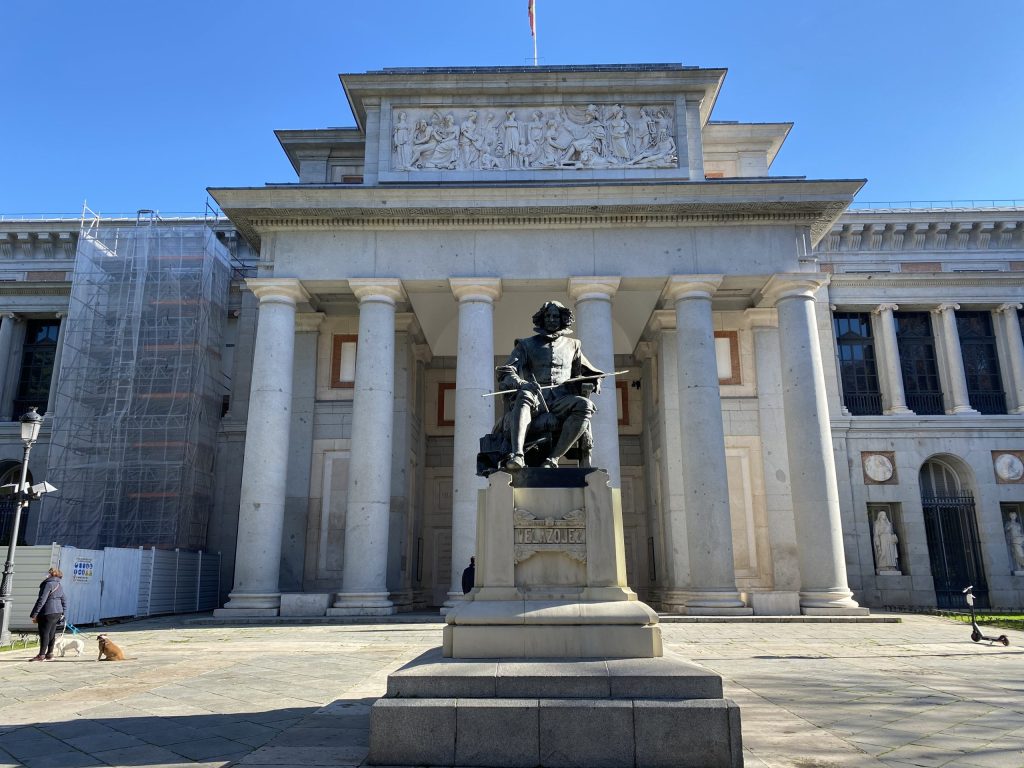
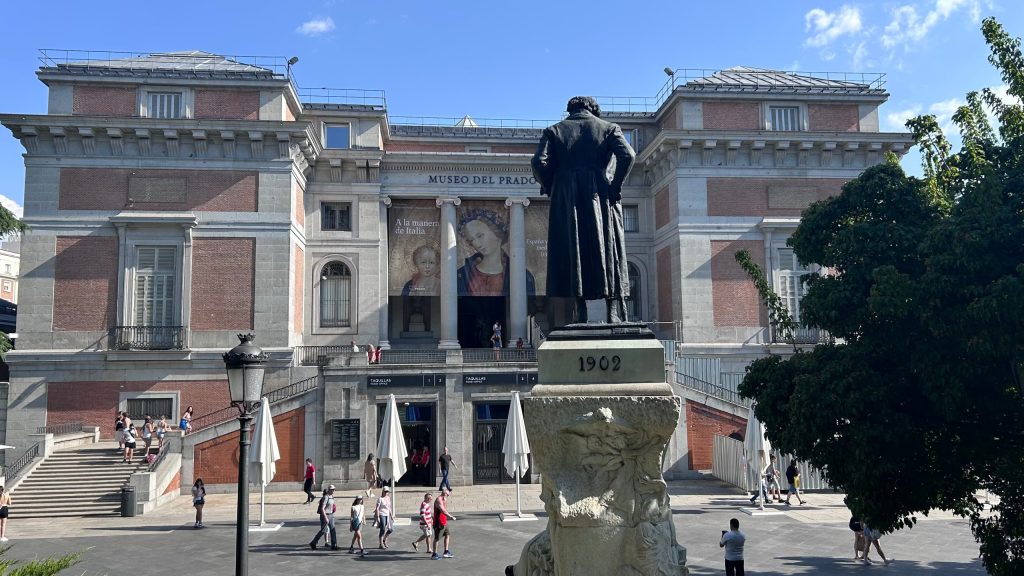
Your route can even begin before you enter the museum. Standing outside the Prado are the monumental statues of Velázquez, Goya and Murillo—the only three painters honoured in this way. They are far more than convenient meeting points. Looking at these sculptures before stepping inside changes the way you experience the galleries. Suddenly, the Prado is no longer just a museum of paintings but a conversation between different artistic traditions. It’s a quieter, less obvious itinerary, yet one that often proves especially rewarding for returning visitors.
7. Follow a Single Artist
Perhaps the most rewarding way to visit the Prado is to forget about the museum altogether and focus instead on one artist. Rather than racing through room after room, spend your time understanding how a single painter developed over decades. By the end of your visit, you’ll know far more than if you had tried to see everything.
If you asked our boss to choose just one artist, the answer would be immediate: Velázquez. Nowhere else in the world can you follow his career with such depth. The Prado’s collection traces his development from his early years in Seville to the astonishing masterpieces he painted for the court of Philip IV. Portraits, religious scenes, mythological subjects and iconic works such as Las Meninas and The Surrender of Breda reveal why he is so often described as one of the greatest painters in Western art.
Of course, Velázquez is only the beginning. Goya’s galleries tell the story of an artist unlike any other, from the optimism of his tapestry cartoons to the disturbing intensity of the Black Paintings. To visit the Prado is also to visit Rubens, who offers one of the richest collections of Flemish art anywhere in Europe; while Titian’s works make the Prado the finest place outside Italy to appreciate the genius of the Venetian Renaissance.
If you’d like to continue exploring after your visit, you’ll find dedicated articles on painters such as Velázquez and Goya throughout our blog. We’ve also written about artists whom many visitors expect to find at the Prado—but never will—including Picasso, Dalí and Monet (click here to see!). Knowing where their masterpieces are actually displayed is just as useful as knowing what awaits you inside the Prado itself. Anyhow, to visit the Prado is to visit many of the finest artists ever.
Bonus Route: Visit the Prado Through the Eyes of the Spanish Crown
Most visitors explore the Prado through the artists who painted its masterpieces. There’s another way to understand the museum, however: through the people who collected them. To visit the Prado is, essentially, to visit the Spainish Monarchy’s History.
Unlike many of Europe’s great museums, the Prado was not built by purchasing works from across the art market. Much of its collection began life as the private collection of the Spanish monarchy. For more than three hundred years, kings and queens commissioned paintings, acquired masterpieces and decorated their palaces, monasteries and royal residences with works by the finest artists of their age. Today’s museum is, in many respects, the result of their personal tastes.
Every monarch helped shape the collection. Charles V’s admiration for Titian made the Venetian painter one of his closest artistic collaborators. Philip II expanded the Italian holdings while assembling what is now the world’s greatest collection of works by Hieronymus Bosch, an artist whose mysterious imagery fascinated him throughout his reign. Philip IV, meanwhile, transformed Madrid into one of Europe’s artistic capitals by championing Velázquez and enriching the Royal Collection with masterpieces by Rubens and other Flemish painters.
To visit the Prado with this story in mind changes the way the museum unfolds before you. The galleries cease to be a succession of famous paintings and become the reflection of political ambition, dynastic prestige and centuries of royal patronage. Every room tells a chapter in the story of the Spanish Crown.
As you walk through the museum, try asking different questions. Who commissioned this painting? Why was it brought to Spain? What did it mean to the king or queen who chose to live with it? Looking beyond the canvas reveals that the Prado is more than a museum—it is the artistic autobiography of a monarchy.
Conclusion
There is no perfect way to visit the Prado. Some visitors come to admire Velázquez. Others lose themselves in Flemish painting, compare the great schools of the Renaissance or spend an entire morning discovering the Baroque. Many return again and again, choosing a different theme each time.
Perhaps that’s the Prado’s greatest strength. It isn’t a museum to conquer in a single visit, but one to return to throughout your life. Every itinerary reveals a different collection, every gallery tells a different story and every visit offers something new to discover.
If you’d like to explore the museum with an art historian, we’d love to show you around. At The Guides You Need, we specialise in small-group tours designed to go beyond the labels on the wall, helping you understand not only what you’re looking at, but why it matters.
Because the goal isn’t simply to visit the Prado.
It’s to leave understanding it.
🎨 Ready to Visit the Prado with an Art Historian?
By now, you’ve probably realised that there isn’t just one way to visit the Prado. Whether you’re passionate about Velázquez, fascinated by Flemish painting or curious about the story behind the Spanish Royal Collection, the museum rewards those who take the time to look beyond its most famous masterpieces.
That’s exactly how we designed our tours at The Guides You Need.
👥 Small Groups, Never Crowds
Our groups are intentionally small (7 people max.) allowing everyone to see, ask questions and enjoy the museum at a comfortable pace. Not an audioguide with fifty more people. No rushing from one room to the next.
🎓 Years of experiences; Not Script Readers
Every tour is led by a professional guide who knows the Prado inside and out. Rather than memorising a script, our guides adapt each visit to the group, answering questions and bringing the collection to life through stories, historical context and artistic insight.
🎟️ Tickets Included
No need to worry about booking museum tickets separately. Your entrance ticket is included, so everything is arranged before you arrive. Actually, that is how we skip the line.
⭐ More Than Just the Masterpieces
Anyone can point at Las Meninas. We help you understand why Velázquez changed the history of painting, why Philip II became obsessed with Bosch or how Rubens influenced generations of European artists. Our goal isn’t simply to show you the Prado—it’s to help you experience it.
❤️ A Tour Designed for Curious Travellers
Whether it’s your first time at the museum or your fifth, our tours are designed for travellers who want more than a checklist of famous paintings. We believe the best museum visits leave you with stories you’ll still remember long after you’ve left Madrid.
👉 Ready to visit the Prado with us? Click here and book your tour today and discover why thousands of travellers have chosen The Guides You Need.
You’ve got questions about the Prado? Click here to see our article for 26 questions you’ve always had but never dare to ask.