The Thyssen Museum is one of Europe’s great museums, yet many visitors are unaware of the fascinating stories behind its collection. In this article, we’ll introduce you to some of the museum’s best-kept secrets so you can make the most of your visit.
The Thyssen-Bornemisza, a Private Museum
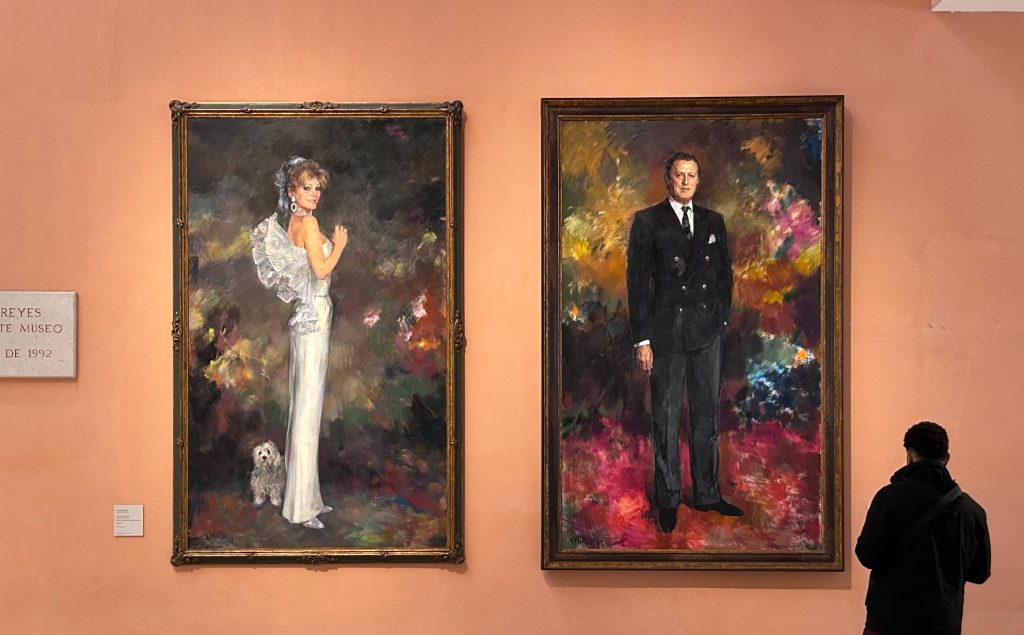
The great difference between the Prado Museum, the Reina Sofía Museum and the Thyssen Museum is that the latter has a private origin. Both the Prado and the Reina Sofía are the result of centuries of collecting. The Prado in particular owes much of its collection to the former Spanish Royal Collection, which explains its extraordinary size. The Thyssen Museum, by contrast, was created thanks to the passion of Baron Thyssen, who spent his lifetime assembling one of the world’s finest private art collections. Many countries attempted to acquire it, but in the end Spain succeeded in keeping the collection in Madrid.
In 1993, the Spanish government purchased the majority of Baron Thyssen’s collection. Thanks to that agreement, hundreds of masterpieces became part of Spain’s artistic heritage. Had those negotiations failed, we would probably have to travel abroad today to admire many of the paintings that can now be enjoyed along Madrid’s famous Art Walk.
The Thyssen Museum Has Sister Museums
Although Madrid’s Thyssen-Bornemisza Musem is by far the best known, it is not the only museum connected to the Thyssen family. There is also the Museo Carmen Thyssen in Málaga, Picasso’s birthplace. Located in the heart of the city’s historic centre, it occupies the beautifully restored Villalón Palace, a Renaissance building specially adapted to house the collection.
Unlike the Madrid museum, which presents the history of European painting from the Middle Ages to the twentieth century, the Málaga collection focuses primarily on nineteenth-century Spanish painting. Visitors will find outstanding examples of Andalusian costumbrismo, landscapes and scenes of everyday life, making it the perfect complement for anyone wishing to discover another side of Spanish art.
The Villahermosa Palace Is Much Older Than the Museum
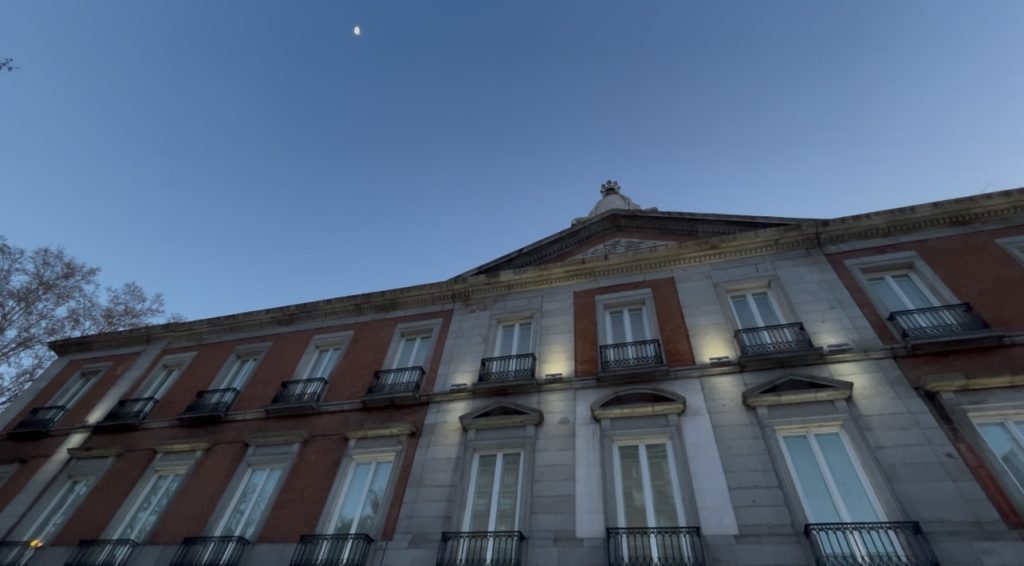
Although we now know it as the Thyssen Museum, the building itself has a much longer history. It occupies the Villahermosa Palace, an aristocratic residence dating back to the eighteenth century that gradually evolved into the elegant building we see today.
When the Thyssen collection arrived in Madrid, the palace had to be transformed into a modern museum. The architect chosen for this delicate task was Rafael Moneo, who achieved something remarkably difficult: creating contemporary exhibition spaces while preserving the palace’s historical character. The result is one of the most comfortable museums to visit anywhere in Madrid.
A Perfect Museum for Your First Introduction to Art History
Many people assume that the Prado Museum is the ideal place to begin discovering European painting. Prado Museum is awesome, but sometimes can also be overwhelming. The Thyssen Museum, on the other hand, offers one enormous advantage: it allows you to follow the history of European painting in an almost perfectly chronological order without feeling lost.
In just a couple of hours you can travel from Gothic painting to the Flemish masters, from the Renaissance to the Baroque, from Romanticism to Impressionism, before finishing your visit in front of works by Hopper or Rothko. It’s an intuitive journey that helps visitors understand how painting evolved over more than six centuries.
Unique Masterpieces: Caravaggio, Van Gogh… and the Impressionists
A few weeks ago we wrote an article (click here) about one of the questions we hear most often at the Prado Museum. “What I’d really like to see is Caravaggio.” As we always say, the Prado is an extraordinary museum, but no museum can contain everything. The Thyssen Museum, however, covers an exceptionally broad period, from the fourteenth to the twentieth century, giving it tremendous flexibility when building its collection.
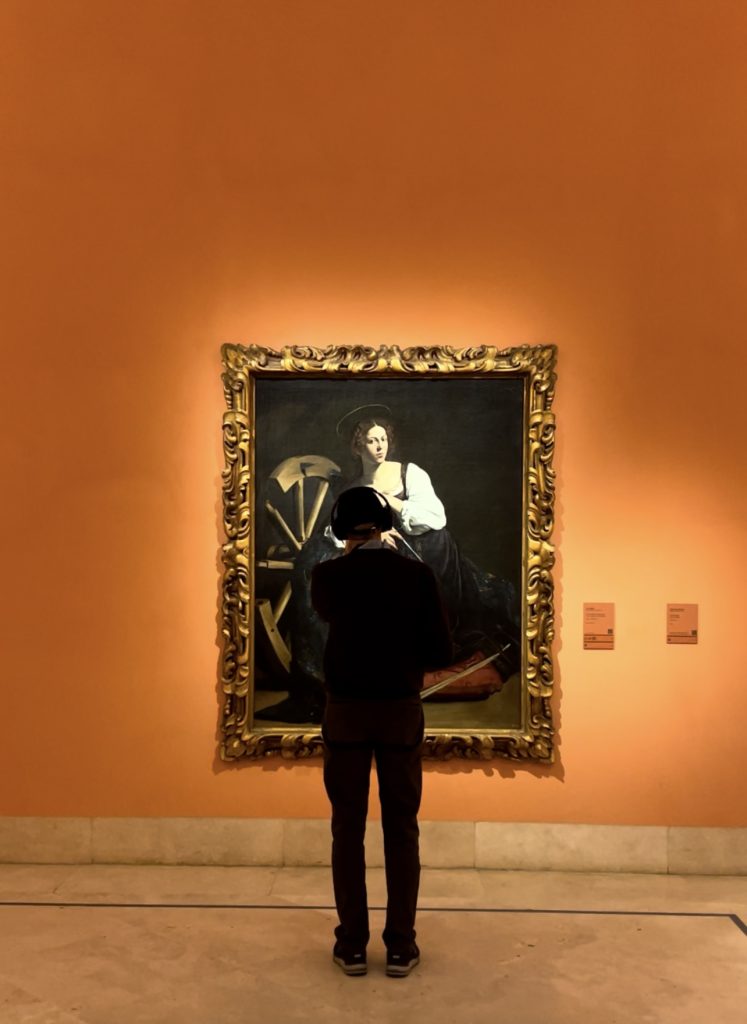
Here you’ll find Spain’s only major painting by Caravaggio: Saint Catherine of Alexandria. In this remarkable work, the Italian master displays the dramatic lighting, realism and emotional intensity that made him one of the greatest painters in European history. The museum also houses several paintings by Vincent van Gogh. Among them, The Stevedores in Arles is perhaps the finest example: vigorous, energetic brushstrokes, an intentionally rough surface and colour used with extraordinary expressive power.
The Impressionists: The Great Highlight of the Thyssen Museum
If there is one area where the Museo Thyssen truly stands out, it is its magnificent collection of Impressionist paintings. Monet, Renoir, Degas and Pissarro are just some of the names waiting for visitors in its galleries.
In fact, it is one of the finest Impressionist collections in Spain and perfectly complements what you’ll find at the Prado. While the Prado is dominated by artists such as Velázquez, Goya and Rubens, the Museo Thyssen shifts the focus towards light, colour and the revolutionary plein-air painting that transformed European art during the nineteenth century.
That ability to complement, rather than compete with, Madrid’s other great museums is precisely what makes the Museo Thyssen so special. It does not try to replace either the Prado or the Reina Sofía. Instead, it completes the story. Together, the three museums offer one of the most comprehensive journeys through the history of Western painting anywhere in the world.
Would You Like a Guided Tour of the Thyssen Museum?
Come and visit the Museo Thyssen with The Guides You Need.
As always, we believe that the best guided tours are those where everyone has space to enjoy the experience. That’s why our groups are limited to a maximum of seven people. If you’re travelling with a larger party, we’ll be delighted to arrange a private tour.
Our Museo Thyssen tours begin at 1:00 p.m. and 4:00 p.m. We deliberately chose these times to avoid the busiest hours of the day, making the visit more enjoyable for both our guests and our guides.
Tours at the Museo Thyssen are particularly relaxed because, unlike most major museums, only one guide is allowed in each gallery at any given time. As a result, we have to close bookings well in advance. The earlier you reserve, the better.
To sum up:
- Small groups of no more than seven people.
- Tours available in English, Spanish, Italian and French. If you’d like a tour in Italian or French, please let us know as early as possible so we can organise everything properly.
- Skip the line? Absolutely. More than in any other museum. If you’d like to know exactly what skip the line means in Madrid, you can read our dedicated article by clicking here.