The figure is quite astonishing: 3,418 rooms, making this building the second-largest palace in Europe (the largest is the current Hungarian Parliament in Budapest) and the largest in Western Europe. However, there are a few things worth knowing before your visit. In this article, we will help you make the most of your time at the Royal Palace and enjoy a much smoother experience.
In this article:
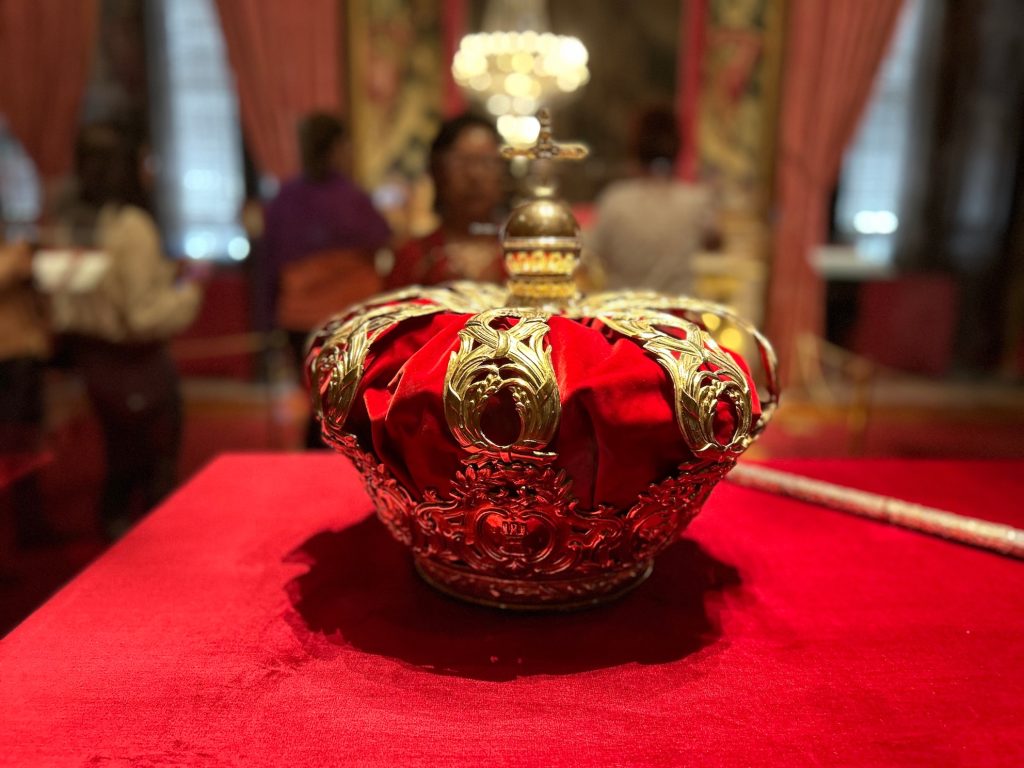
1. The Royal Palace is the official residence of His Majesty the King of Spain
Yes, the Royal Palace is the official residence of Their Majesties the King and Queen of Spain. You could think of it as Spain’s Buckingham Palace—except that it is almost twice as large. Naturally, this comes with a few complications. One of them is that the Palace sometimes closes at short notice because of an official State event.
Imagine that a new Ambassador of the Oriental Republic of Uruguay has just arrived in Spain. Before meeting the King, the ambassador must first go to the Palace of Santa Cruz, located just behind Plaza Mayor. From there, a spectacular horse-drawn carriage escorted by the Royal Guard takes the ambassador on the short journey to the Royal Palace.
Upon arrival, the ambassador is officially received by the King before attending a State luncheon. This ceremony is known as the Presentation of Credentials. It is a Spanish tradition dating back to the eighteenth century and remains one of the country’s most impressive ceremonial events. It is also one of the many reasons why a scheduled visit to the Royal Palace may occasionally be postponed.
Does the Royal Family still live there?
No. Although the Royal Palace remains the official residence of the Spanish monarch, the Royal Family has actually lived at the Palace of Zarzuela since 1962, when King Juan Carlos I—the father of the current King—decided to move there.
Do not worry, they are certainly not living in modest conditions. The Palace of Zarzuela was originally built as a hunting lodge by King Philip IV in the seventeenth century. Today it has three floors and all the facilities needed for the Royal Family to live and carry out their official duties in relative privacy.
2. On a guided tour, you will enter through the “back door”
The main entrance to the Royal Palace is located beside Plaza de la Armería, directly opposite Almudena Cathedral. However, unlike the Prado Museum or the Reina Sofía Museum, guided tours use a different entrance.
This is one of the biggest advantages of joining a guided tour, as the queue is usually much shorter. That does not mean there is never any waiting time, but delays are generally brief. In other words, your skip-the-line ticket always allows you to bypass the main queue, although there are occasions when entering the Palace takes a little longer.
When can it take longer?
Usually when there is a security issue. Not every visitor has read an article like this beforehand, and unfortunately not everyone arrives prepared. It is important to remember that you are entering the official residence of the Spanish Head of State, so security measures are understandably strict.
As a general rule, if an item is not allowed on an aeroplane, it is probably not allowed inside the Royal Palace either.
Are there any exceptions?
Of course. For example, you may bring water and electronic devices such as your mobile phone. However, as we will explain later, photography is prohibited in much of the Royal Palace, so you will not always be able to use it during your visit.
3. Royal Collections, the perfect complement to your visit
Only two years ago, Madrid welcomed a brand-new museum: the Royal Collections Gallery. This remarkable museum showcases the treasures collected by the Spanish monarchy over the centuries. Although many of these objects are no longer in use, they remain priceless pieces of Spain’s history and heritage.
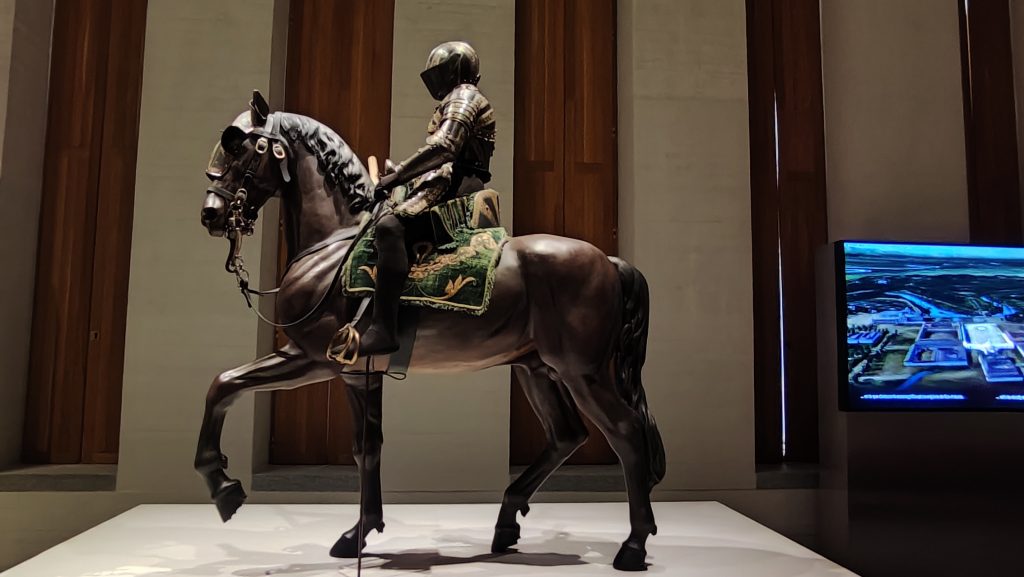
Here you will find royal carriages, ceremonial clothing, paintings that could not be displayed anywhere else (such as Velázquez’s famous White Horse—click here), magnificent suits of armour and even books. Queen Victoria Eugenie, the wife of King Alfonso XIII and the great-grandmother of the current King, was an enthusiastic reader. Thanks to this collection, you can even discover some of the books she enjoyed most.
4. A simple timeline of the Spanish monarchs will help you a lot
Spanish royal history can be confusing, so bringing along a simple timeline of the kings of Spain is not a bad idea.
The story begins with the House of Habsburg, which ruled Spain from Charles I (better known internationally as Charles V, Holy Roman Emperor) to Charles II. Things become rather complicated after that. Charles II and Louis XIV of France were cousins, brothers-in-law and uncle and nephew by marriage at the same time. When Charles II died without an heir, the House of Bourbon inherited the Spanish throne, beginning the dynasty that still reigns today.
There are cousins everywhere, uncles everywhere… in short, the Spanish royal family tree is wonderfully complicated, and it remains so even today. Here is a curious example. Many Spaniards were surprised when, after the death of Prince Philip, Duke of Edinburgh, the Spanish Royal Family sent a letter of condolence to Queen Elizabeth II beginning with the affectionate words: “Dear Aunt Lilibet.” The reason is simple: the current King’s mother was closely related to Prince Philip.
5. Photography is not allowed in much of the Royal Palace
Unlike many other historic monuments, photography is prohibited in much of the Royal Palace. The main reason is the conservation of its works of art, tapestries, furniture and decorative objects, many of which are unique and several centuries old. Restricting photography also prevents hundreds of visitors from constantly stopping to take pictures, making the visit much smoother and more enjoyable for everyone.
That said, there are areas where you will be able to take out your phone and capture a few memories of your visit. As always, the best approach is to follow the instructions given by the staff of Patrimonio Nacional, as the rules may vary depending on which rooms are open to the public or whether any temporary conservation measures are in place.
6. You will not visit all 3,418 rooms, sorry!
As we mentioned earlier, one of the most striking facts about the Royal Palace is that it contains 3,418 rooms. Fortunately, you will not need to visit them all. In fact, visitors are only allowed into a small part of the building. Even so, the tour already lasts around 90 minutes. It cannot last any longer: after an hour and a half, guided tours must leave the Palace, although visitors are welcome to remain inside until closing time.
Can you imagine visiting all 3,418 rooms? It would take several days. Besides, many of them are offices, working areas, storage rooms, technical facilities or private spaces that are not included in the visitor route. The itinerary has been carefully designed to showcase the Palace’s most spectacular and representative rooms, allowing you to understand its history and admire some of the finest interiors of the Spanish monarchy in just ninety minutes.

Would you like to visit the Royal Palace with The Guides You Need?
If you would like to explore the Royal Palace at a relaxed pace while truly understanding what you are seeing, we would be delighted to show you around.
What is included in our tour?
🏛️ A 90-minute guided tour of the Palace’s most important rooms.
🎟️ Your entrance ticket is included in the price.
👥 Small groups of no more than eight people, giving you plenty of opportunities to ask questions.
📍 Meeting point next to the equestrian statue of Philip IV, in Plaza de Oriente.
🎧 Clear, engaging and historically accurate explanations, whether this is your first visit to Madrid or you already know the city well.
Available languages 🇪🇸🇬🇧🇮🇹
We offer guided tours in Spanish, English and Italian, all starting at 2:00 p.m.
Our Spanish and Italian tours run on Mondays, Thursdays and Fridays.
Would you like to take the tour in French? 🇫🇷 Get in touch with us and we will see what we can do.
If you would like to join us, book your place today and discover why the Royal Palace is one of Europe’s most extraordinary monuments. Click here to make your reservation!