The Renaissance was a period of profound cultural, artistic and intellectual transformation that recovered much of the legacy of Classical Antiquity. It emerged in Italy between the 14th and 15th centuries, reached its height during the 15th and 16th centuries, and from there its ideas spread across much of Europe. Its name refers precisely to this ‘rebirth’ of Greek and Roman culture. Yet its protagonists did not simply imitate the past: they used ancient models to develop new ways of understanding humanity and the world.
This period was closely connected to Humanism, but its consequences extended far beyond literature and philosophy. The observation of nature acquired new importance, scientific knowledge advanced, and artists explored problems such as perspective, anatomy and the representation of space. Leonardo da Vinci, Michelangelo and Raphael are among the names we immediately associate with this era, but the transformation also affected astronomy, architecture, medicine and many other fields of knowledge.
Nor was there a single Renaissance. While Italian artists studied ancient ruins, proportion and perspective, painters in Flanders such as Jan van Eyck and Rogier van der Weyden developed a different way of observing and representing reality. Understanding such a broad phenomenon therefore requires more than memorising a list of artists and dates. In this article, we will explain what the Renaissance was through five key ideas that reveal why this period transformed European culture and left a legacy that can still be recognised in museums today.
In this article
1. The Renaissance Rediscovered the Classical World
One of the great cultural transformations of the 15th and 16th centuries was the recovery of the legacy of Greece and Rome. Intellectuals and artists turned their attention to ancient texts, sculptures, buildings and ideas, studying them as models that could provide new answers to the questions of their own time.
This does not mean that Classical culture had disappeared during the Middle Ages. Numerous ancient works had been preserved, studied and transmitted for centuries in Western Europe, Byzantium and the Islamic world. What gradually changed was the way people approached them. Humanists searched for manuscripts, compared different versions of texts and developed a strong interest in studying ancient works in forms as close as possible to their originals.
Why Did the Renaissance Begin in Italy?
Italy offered particularly favourable conditions for this process. Cities such as Florence, Rome and Venice had become important economic and cultural centres. Powerful families, religious institutions and urban governments funded writers, architects and artists, creating an environment of competition and experimentation.
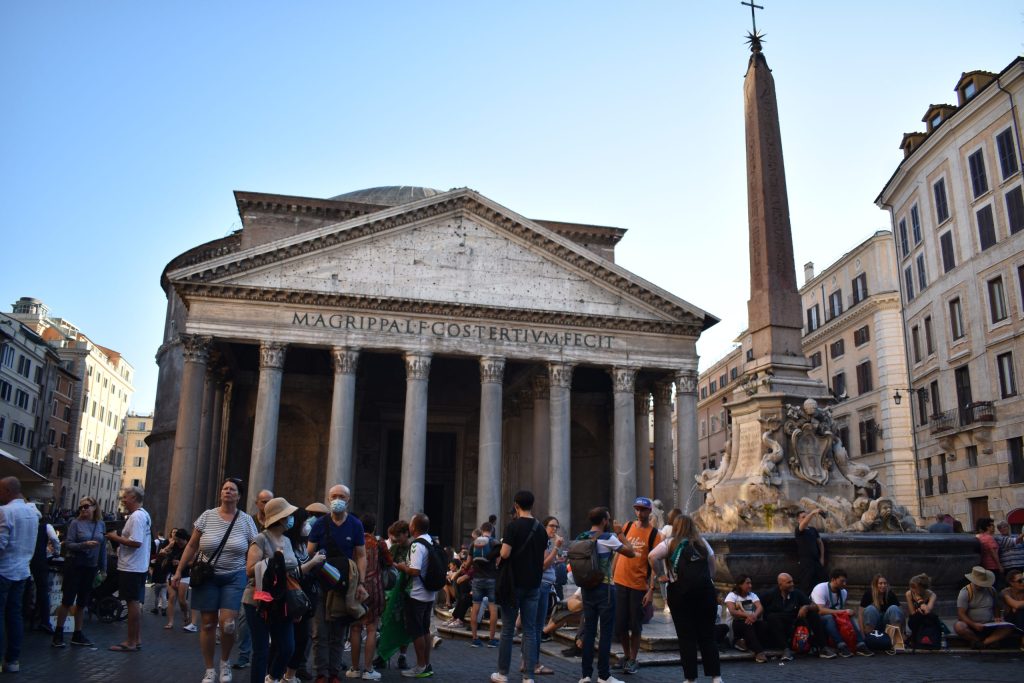
There was also something that was much harder to find elsewhere in Europe: the Roman past was physically present. Temples, columns, arches, sculptures and ancient buildings formed part of the landscape of Italian cities. Artists could observe, measure and study them directly. Rome therefore became an extraordinary source of models from Antiquity.
The arrival of intellectuals from the Byzantine Empire also encouraged the study of Greek language and literature. This process intensified around the fall of Constantinople in 1453, although it would be a mistake to date the birth of the entire movement to that event: interest in Classical culture had been developing in Italy long before then.
Rediscovering the Classics Did Not Mean Copying Them
Studying Greece and Rome did not mean attempting to recreate the ancient world literally. One of the fundamental ideas of the period was the imitation of the Classics, understood not as simple copying but as learning from their solutions and using them to create something new.
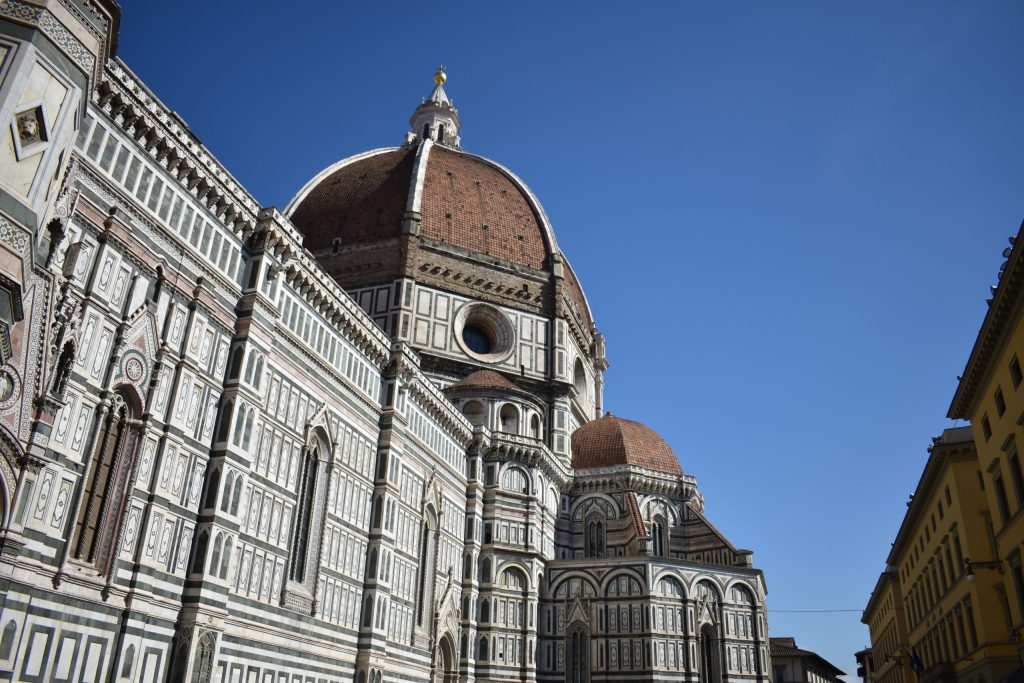
In architecture, Filippo Brunelleschi studied Roman buildings and recovered elements such as columns, arches and systems of proportion to develop an architecture distinct from the Gothic tradition. In sculpture, Donatello found models in ancient statuary that allowed him to explore the human body in new ways. Decades later, Michelangelo would study Classical sculptures preserved or discovered in Rome with extraordinary attention.
Figures and stories from Greco-Roman mythology also returned to the visual arts. Gods and heroes once again became the subjects of major works, although they continued to coexist with Christian themes. Sandro Botticelli’s The Birth of Venus is one of the best-known examples: an ancient goddess could once again occupy the centre of a major European painting more than a thousand years later.
Antiquity, therefore, was not simply a past to be recovered. It became a model with which to study, debate and create. Europeans of the 15th and 16th centuries looked back to Greece and Rome, but they did so to address the concerns of their own time. This attitude would eventually affect not only art and literature, but also the way people investigated and understood the world.
2. Science Changed the Way We Understand the World
Rediscovering ancient authors did not mean accepting everything they had written. Gradually, the observation of nature, mathematics and experience gained importance as tools for understanding reality. Inherited knowledge remained fundamental, but it could be questioned when observation did not match what traditional authorities claimed.
This change did not happen suddenly, nor can it be attributed to a single person. It was a process that unfolded over several centuries and involved physicians, astronomers, mathematicians, philosophers and artists. Many of them still lived in a world in which science, philosophy and religion were not separated in the way they are today.
Leonardo da Vinci: Observing to Understand
Few figures represent this curiosity better than Leonardo da Vinci. His notebooks contain studies of anatomy, optics, hydraulics, botany, mechanics and the movement of water. Drawing allowed Leonardo not only to represent reality, but also to investigate it.
His anatomical studies are a good example. Through observation and the dissection of human bodies, he analysed muscles, bones and organs in extraordinary detail. Understanding the human body helped him represent figures more convincingly, but his curiosity went far beyond the needs of a painter: he wanted to understand how what he observed actually worked.
Leonardo did not, however, develop the modern scientific method by himself. Many of his studies remained unpublished and had limited influence during his lifetime. His importance here lies elsewhere: he exemplifies a period in which direct observation of nature was becoming an increasingly powerful instrument of knowledge.
Copernicus, Galileo and a New Image of the Universe
The transformation was even more profound in astronomy. In 1543, Nicolaus Copernicus published De revolutionibus orbium coelestium, developing a heliocentric model that placed the Sun, rather than the Earth, at the centre of the planetary system.
His ideas were developed and transformed over the following decades. Johannes Kepler described planetary orbits through mathematical laws, while Galileo Galilei used telescopic observations to study phenomena that were difficult to reconcile with traditional cosmology. The irregular surface of the Moon, the phases of Venus and Jupiter’s moons revealed a universe far more complex than previously imagined.
This was not simply a matter of replacing one theory with another. The way in which explanations about nature could be demonstrated was also changing. Observation, experimentation and mathematics became increasingly important.
From the Renaissance to the Scientific Method
This transformation continued into the 17th century, taking us beyond the Renaissance itself. Francis Bacon emphasised experience and the systematic investigation of nature. At the same time, other thinkers searched for methods that could distinguish reasoned knowledge from inherited assumptions.
It was in this context that René Descartes published his Discourse on the Method in 1637. His starting point was a fundamental question: how can we achieve reliable knowledge? Methodical doubt, rational analysis and breaking complex problems into simpler parts were central to his answer.
It would be inaccurate to claim that Descartes single-handedly invented the scientific method. Modern science emerged from a much broader process involving numerous thinkers and intellectual traditions. Nevertheless, his search for a rational and systematic method represents one of the major milestones in a transformation that had begun much earlier.
From Leonardo examining the human body to Copernicus reconsidering the Earth’s place in the universe, we find the same underlying concern: the world could be investigated. Received knowledge remained important, but it was no longer sufficient on its own. It was necessary to observe, calculate, compare and, when necessary, question.
3. Humanism Gave the Individual a New Place
One of the fundamental concepts for understanding this period is Humanism, an intellectual movement that emerged in Italy and later spread across Europe. Humanists recovered texts by Greek and Roman authors and promoted an education based on disciplines such as grammar, rhetoric, history, poetry and moral philosophy.
Among their great references were authors such as Cicero, Virgil, Seneca and Plato. Reading them was not simply a way of learning about the past. Their works offered tools for reflecting on contemporary questions such as education, politics, virtue, human nature and the individual’s role in society.
This new outlook contributed to a growing interest in human intellectual capabilities. Education could develop those abilities, while knowledge offered a way to understand both the individual and the surrounding world.
What Is the Relationship Between Humanism and the Renaissance?
The two concepts are closely connected, but they do not mean exactly the same thing. Humanism was primarily an intellectual and educational movement, whereas the Renaissance describes a much broader cultural transformation that affected literature, art, architecture, science and other fields of knowledge.
One of the earliest major representatives of this new culture was Francesco Petrarch, already in the 14th century. His fascination with ancient authors and his search for Classical manuscripts anticipated many of the interests that would later develop in Italy. During the following centuries, figures such as Marsilio Ficino, Giovanni Pico della Mirandola and Erasmus of Rotterdam expanded and transformed these ideas.
The movement was not confined to Italy. The circulation of books, intellectuals and ideas encouraged its expansion throughout Europe, particularly after the development of movable-type printing in the mid-15th century. The ability to produce numerous copies of the same work greatly facilitated the circulation of both ancient and contemporary texts.
Did Humanism Mean Abandoning Religion?
No. One common oversimplification presents the Middle Ages as a period concerned exclusively with God and the following centuries as the moment when humanity replaced Him at the centre. The reality was considerably more complex.
Many humanists were deeply Christian, and a significant part of their scholarship dealt directly with religious questions. Erasmus of Rotterdam, for example, applied his philological knowledge to the study of the New Testament and advocated a renewal of Christianity through a closer examination of its sources.
Concepts such as anthropocentrism should therefore be used carefully. A growing interest in the individual did not necessarily mean replacing God with humanity. Instead, it broadened questions about human capabilities, education, nature, history and society.
From Craftsman to Artist
This intellectual transformation also affected the status of the arts. For centuries, painters and sculptors had largely worked within guild structures, and their activities were closely associated with the world of crafts. During the 15th and 16th centuries, some artists gradually began to claim a different position.
Creating a major composition required more than mastering pigments or brushes. An artist might also need knowledge of geometry, perspective, anatomy, history, literature and mythology. Painting and sculpture increasingly came to be regarded as activities requiring intellectual preparation as well as technical skill.
Figures such as Leonardo da Vinci, Raphael and Michelangelo exemplify this change particularly well. Their prestige reached remarkable levels: they worked for popes, princes and powerful families, participated in major political and cultural projects, and were recognised by their contemporaries as exceptional creators.
Humanism, therefore, was much more than the idea that ‘man became the centre of the universe’. It represented a deeper transformation of European education and culture. Studying human beings, their achievements and their capabilities became another way of understanding the world. This concern also had visible consequences: if humanity and nature were worthy of study, artists needed new ways to represent them.
4. Art Found a New Way to Represent Reality
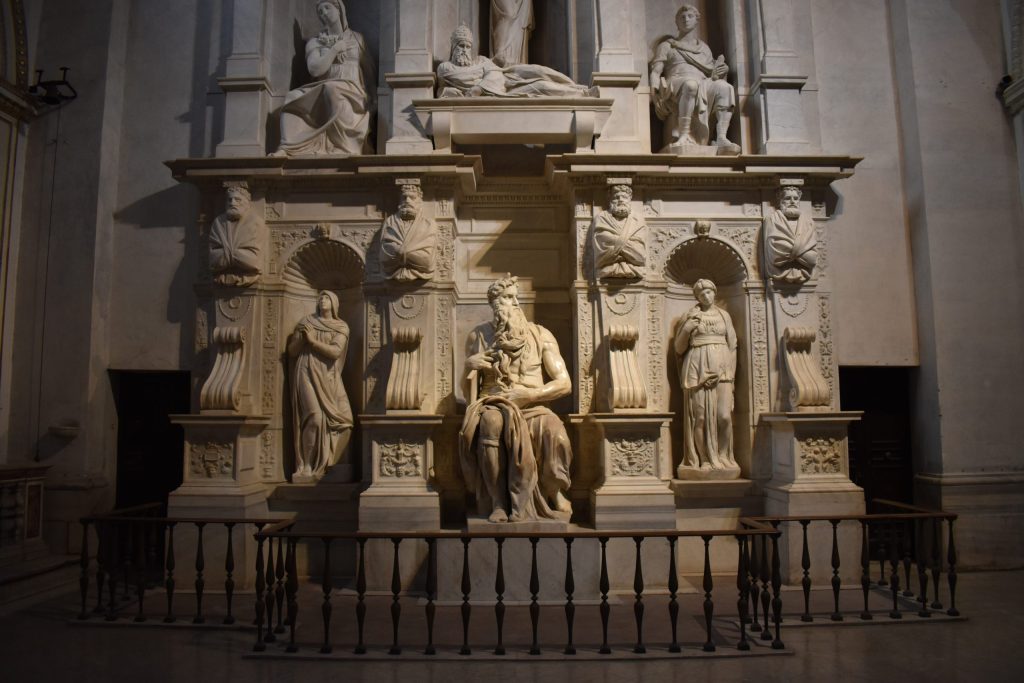
The intellectual transformation of these centuries had a direct impact on the arts. Painters, sculptors and architects became particularly interested in how to represent space, the human body and nature. To do so, they turned to observation, mathematics, geometry and the study of ancient works.
Their aim was not simply to copy what they saw. Artists sought to create convincing images while also pursuing certain ideals of proportion, harmony and beauty. This combination of observation and idealisation explains many of the innovations developed in Italy during the 15th and 16th centuries.
Perspective: Creating Space on a Flat Surface
One of the most important developments was linear perspective. The problem was apparently simple: how could a three-dimensional space be represented on a surface with only two dimensions?
In the early 15th century, Filippo Brunelleschi carried out experiments in Florence that helped establish geometrical principles for representing depth. Soon afterwards, Leon Battista Alberti systematised this knowledge in his treatise De pictura, published in 1435.
The use of lines converging towards a vanishing point made it possible to organise figures and buildings within a coherent space. Masaccio was one of the first painters to explore these possibilities to extraordinary effect. In his Holy Trinity in Santa Maria Novella in Florence, the painted architecture creates the illusion that the real space of the church continues beyond the wall.
Perspective was therefore more than a visual trick. It implied that space could be studied, measured and constructed according to mathematical rules.
The Human Body Became an Object of Study
Interest in Antiquity also encouraged a renewed focus on the body. Artists studied Classical sculpture, analysed human proportions and, in some cases, investigated anatomy to understand what lay beneath the skin.
Leonardo pursued this curiosity to an exceptional degree, but he was not alone. Michelangelo made the human body one of the central subjects of his work. His figures display complex muscles, movements and twists, although this does not mean that he was attempting a photographic reproduction of anatomy.
This distinction is important: representing reality did not necessarily mean copying it. Knowledge of the body also allowed artists to alter, exaggerate or idealise it. In many works, proportions reflect both direct observation and a particular conception of beauty.
Nature, Light and Volume
Artistic investigation was not limited to anatomy and perspective. Painters explored different techniques for conveying volume, distance and atmosphere.
Leonardo developed sfumato, using extremely subtle transitions between light and shadow to soften outlines. He also studied how the atmosphere changes our perception of distant objects. Other artists used light to create volume or explored how colour could contribute to a sense of depth.
All these experiments were connected to a fundamental question: how do we see the world?
A face changes under different light; a body changes as it turns; a building appears smaller as it moves into the distance; distant mountains are less sharply defined than objects close to us. Painting transformed these visual phenomena into problems that could be studied and solved.
A New Idea of Beauty
It would nevertheless be a mistake to reduce these innovations to a search for greater realism. Artists did not merely seek to reproduce nature faithfully. They also wanted to select, organise and perfect it.
Proportion therefore became extremely important. The study of ancient authors such as Vitruvius encouraged the idea that both the human body and architecture could be governed by mathematical relationships. Leonardo’s famous Vitruvian Man perfectly embodies this connection between anatomy, geometry and Classical tradition.
In the works of Raphael, for example, we find carefully balanced compositions in which every figure occupies a precise position. The naturalness we perceive is actually the result of an extremely calculated construction.
Perspective, anatomy, proportion, light and observation gave artists new possibilities for representing the world around them. But these concerns did not develop in the same way everywhere. While Italy sought some of its answers in geometry and Classical Antiquity, another pictorial revolution was taking place in northern Europe.
5. Italy and Flanders Understood the Renaissance Differently
When we think about 15th- and 16th-century art, it is easy to picture Florence or Rome and names such as Leonardo, Raphael or Michelangelo. Yet while Italian artists were exploring perspective, proportion and the models of Classical Antiquity, a different artistic transformation was taking place in the Low Countries.
Flemish painters also sought new ways of representing reality, but they did not necessarily begin with the same questions or arrive at the same solutions. Their extraordinary command of oil painting allowed them to explore light, texture and detail with remarkable precision.
Comparing these two regions reveals something fundamental: this cultural transformation did not follow a single path across Europe.
Italy: Perspective, Proportion and Antiquity
In much of 15th-century Italian painting, we find a particular interest in constructing space rationally. Perspective allowed artists to place figures within coherent settings, while the study of anatomy and proportion encouraged new approaches to the human body.
The Greco-Roman legacy was also enormously influential. Architects, sculptors and painters could study ancient buildings and sculptures directly, particularly in Rome. Classical texts also provided knowledge of architecture, mythology, philosophy and history.
This encouraged an art in which geometry, proportion and the study of Antiquity played a fundamental role. That does not mean that all Italian artists worked in the same way, but these concerns profoundly shaped artistic developments in cities such as Florence and Rome.
Flanders: Light, Detail and Oil Painting
In northern Europe, the picture was different. Painters such as Jan van Eyck, Rogier van der Weyden and Hans Memling developed an extraordinary ability to observe and describe the visible world during the 15th century.
Oil painting already existed, so Van Eyck did not invent it, as is sometimes claimed. Flemish masters did, however, develop its possibilities to an exceptional degree. Layers of paint and translucent glazes produced rich colours and allowed artists to represent the effects of light on different surfaces with remarkable precision.
A mirror, a jewel, velvet, hair, wood or polished metal could each receive a different treatment. In Van Eyck’s Arnolfini Portrait, even apparently secondary objects acquire an extraordinary physical presence.
This close observation also extended to landscapes and the human face. Flemish portraits could show wrinkles, imperfections and individual features that gave the sitter a striking sense of identity.
Two Different Ways of Constructing Reality
The difference can be understood through a simple comparison. An Italian painter might ask how to construct a convincing space geometrically, while a Flemish painter might focus particularly on how light behaves on every object within that space.
Naturally, this distinction has its limits. Italian artists also studied light and detail, while Flemish painters were concerned with space, composition and proportion. These were neither completely isolated schools nor incompatible approaches to painting.
What matters is that they developed different solutions while pursuing some common goals: representing the visible world convincingly, studying the individual and exploring new possibilities for painting.
Italy and Flanders Eventually Met
The two traditions were in constant contact. Merchants, diplomats, artists and works of art travelled across Europe. Flemish painting was admired and collected in Italy, while northern artists travelled south and encountered Italian innovations.
Albrecht Dürer represents this exchange particularly well. Born in Nuremberg, he travelled to Italy and studied perspective and proportion without abandoning the extraordinary attention to detail associated with northern European art.
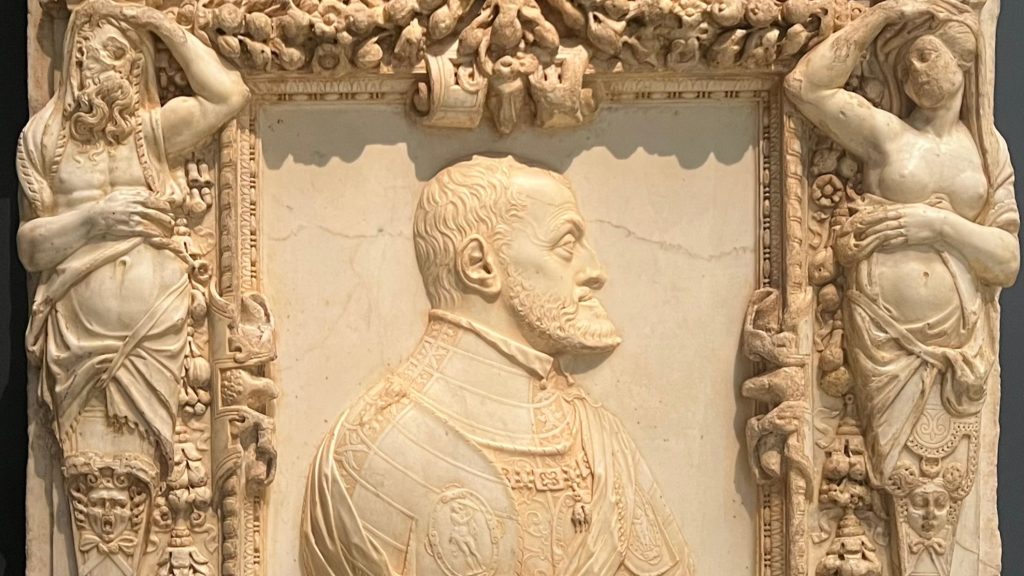
Spain also became an important meeting point for these traditions. Political and commercial relationships with both the Low Countries and the Italian states encouraged works from both regions to enter Spanish collections. Later, the Habsburgs assembled one of Europe’s great art collections.
This history helps explain why today we can observe this dialogue exceptionally well at the Museo del Prado. Its galleries allow us to compare Italian and Flemish masters and see different approaches to European painting of the 15th and 16th centuries.
Describing the Renaissance simply as an Italian phenomenon that the rest of Europe later copied is therefore insufficient. The transformation was European, but it was not uniform. Different regions adapted new ideas to their own traditions, and the encounter between these different ways of seeing ultimately enriched European art.
Experience the Renaissance in Prado Museum and Thyssen Museum
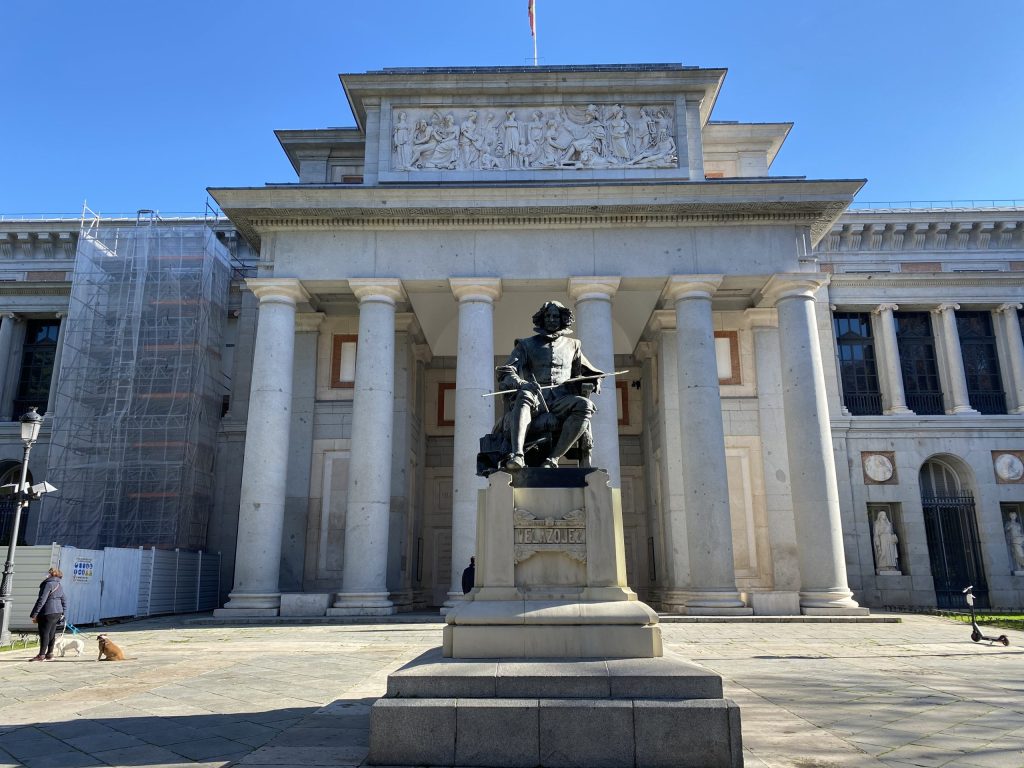
Many of these transformations can be seen directly in Madrid. The Prado Museum and the Thyssen Museum allow visitors to compare Italian and Flemish painting and understand the different paths taken by European art during the 15th and 16th centuries.
At The Guides You Need, we offer guided tours of both museums, exploring their collections within their historical and artistic context.
🎟️ Museum admission included in the price.
⚡ Tickets purchased in advance.
👥 Small-group tours.
🖼️ Professional guides specialising in art and history.
If you want to understand these works beyond the information on the museum label, join us on our guided tours of the Prado and the Thyssen.