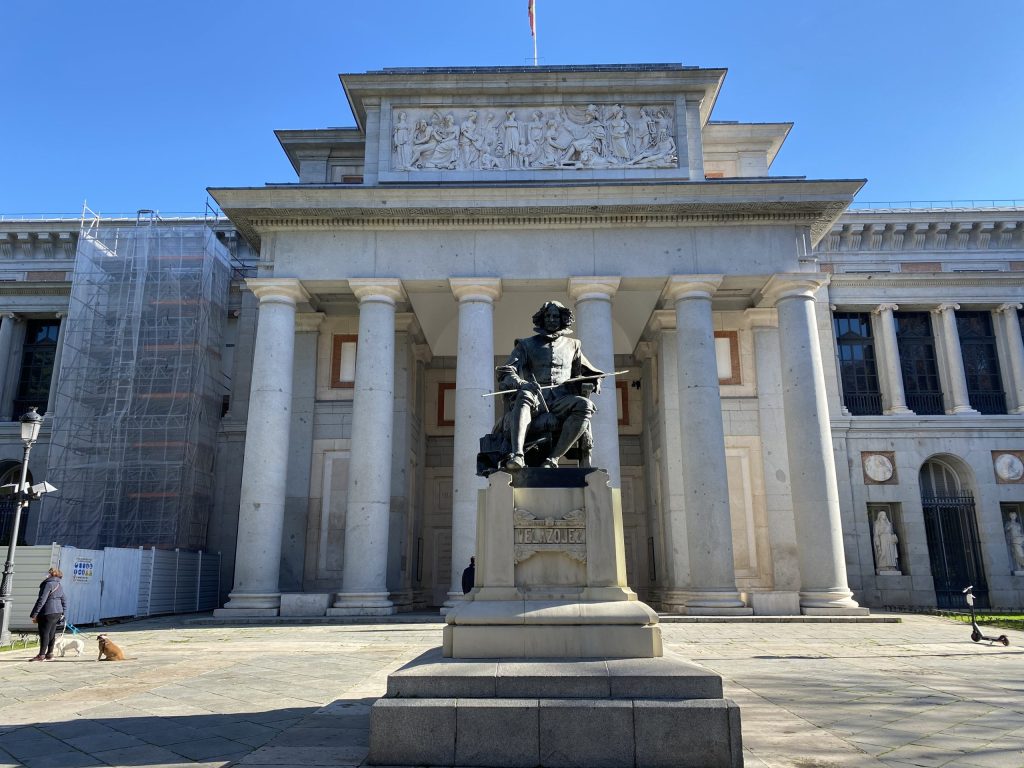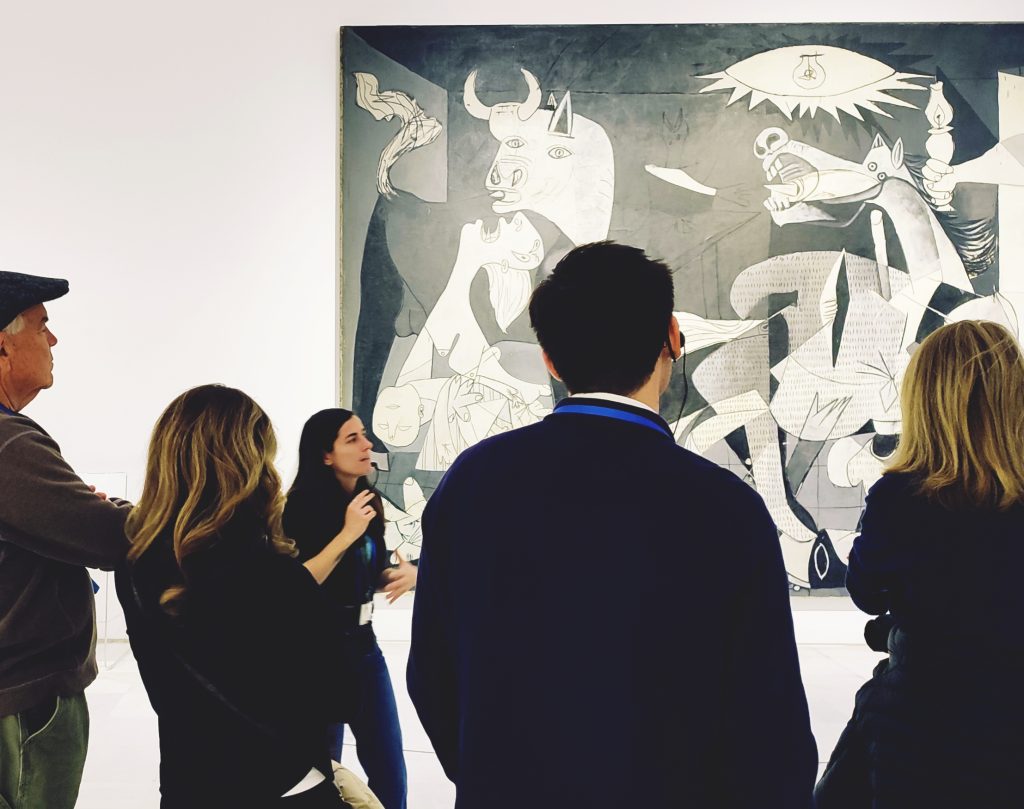
The Baroque was one of the great artistic movements of seventeenth-century Europe, but in Spain it acquired an importance that is difficult to compare with any other period. A walk through the galleries of the Prado Museum is enough to see why: Velázquez, Zurbarán, Ribera and Murillo belonged to an exceptional generation that turned Spanish painting into an international reference. Their influence did not end with them either. Centuries later, artists such as Goya, Manet and Picasso would continue to look back at some of the solutions developed by those painters.
This allows us to pose a deliberately provocative question: was the Baroque the most influential movement in the history of Spanish painting? There is no objective answer, but there are strong arguments in its favour. This period brought together an extraordinary generation of artists, the vast artistic heritage assembled by the Spanish monarchy and a new approach to painting based on the observation of reality, naturalism, colour and increasingly free brushwork. Some of these characteristics would eventually have consequences far beyond the seventeenth century.
But to understand this transformation, we need to begin before Velázquez. The Protestant Reformation had divided Europe, and the Council of Trent encouraged a profound renewal of Catholic culture in which images acquired an enormous capacity to teach, persuade and move the viewer. From Rome, these new demands interacted with the artistic traditions of each territory, producing very different solutions.
Nor was there a single Baroque. Caravaggio in Italy, Rubens in Flanders, Rembrandt in the Dutch Republic and Velázquez in Spain developed different visual languages, although they all shared a renewed attention to reality. Through five key ideas, we will explore how this transformation began, why Baroque painting sought to move the viewer, how it progressively liberated the brushstroke and why its legacy is essential to understanding the history of Spanish painting.
In this article
1. The Council of Trent Was the Great Driving Force Behind the Baroque
To understand why European art changed during the seventeenth century, we need to go back several decades. In 1517, Martin Luther began a religious reform movement that ultimately caused a profound division within Western Christianity. The spread of Protestantism forced the Catholic Church to respond both to doctrinal questions and to the need to reform its own institutions.
It was in this context that the Council of Trent was held in several sessions between 1545 and 1563. Its decisions profoundly shaped Catholicism over the following centuries and also had consequences for the arts. The Church reaffirmed the legitimacy of religious images and defended their usefulness in instructing the faithful, recalling episodes from sacred history and encouraging devotion.
The Council of Trent Did Not Invent a New Artistic Style
An important distinction should be made here. The participants at the Council did not design the Baroque or establish rules requiring artists to paint with strong contrasts of light, dynamic compositions or highly emotional figures. In fact, when the sessions at Trent ended in 1563, several decades still remained before the appearance of some of the works and artists we now immediately associate with this period.
What the culture of the Counter-Reformation did create was a particularly favourable context for art that was comprehensible, persuasive and capable of provoking an emotional response. Religious images had to avoid doctrinal confusion and represent sacred stories in a way that allowed viewers to recognise and understand them.
Rome became one of the great laboratories for this transformation. Popes, cardinals and religious orders commissioned churches, chapels, sculptures and paintings that progressively transformed the appearance of the city. Art thus acquired a fundamental role within the renewal of Catholicism.
From Rome to Catholic Europe
This transformation was not limited to Italy. The decisions made at Trent had a particular impact on the great Catholic monarchies, and Spain was one of the territories where the Counter-Reformation became especially important. The monarchy of Philip II presented itself as a defender of Catholicism and maintained a close relationship with the religious renewal promoted during the second half of the sixteenth century.
The process, however, was gradual. Between the end of the Council and the great Baroque painting of seventeenth-century Spain, we find several generations of artists and numerous influences. Italy played a fundamental role, particularly when Caravaggio began to develop a highly naturalistic style in Rome, characterised by powerful contrasts of light and an extraordinary physical proximity between the figures depicted and the viewer.
At the beginning of the seventeenth century, these possibilities found particularly fertile ground in Spain. Ribera, Zurbarán, Velázquez and Murillo would develop very different approaches, but all worked within a society profoundly shaped by the Catholic culture that emerged after Trent.
The Council, therefore, did not create a new way of painting by decree, nor did it invent the Baroque itself. It did, however, help establish a world in which images were expected to communicate with extraordinary effectiveness. To achieve this, simply representing a story correctly was no longer enough: artists had to make the viewer feel it.
2. Baroque Painting Sought to Move the Viewer: An Image That Did Not Need to Be Read
One of the consequences of the Protestant Reformation was that access to Scripture became a fundamental issue. Luther translated the Bible into German, while other Protestant communities promoted versions in the languages spoken by the faithful. In Catholic Europe, the situation was different: a considerable part of the population could not read and, moreover, the Bible officially used by the Church was written in Latin, a language that the vast majority did not understand either.
This helps explain the extraordinary importance acquired by images. It was not necessary to open a book to learn a biblical story: it could be heard during a sermon or seen in a church. Painting therefore had the ability to teach through images, but in the decades following Trent this function was accompanied by a growing ambition: it was no longer enough for the faithful to recognise a story; they had to feel it.
What Is the Latin Vulgate?
The Vulgate is a Latin translation of the Bible produced mainly by Saint Jerome between the late fourth and early fifth centuries. During the Middle Ages, it became the fundamental biblical text of the Western Church and, in response to the proliferation of translations associated with the Reformation, the Council of Trent reaffirmed its authority for ecclesiastical use.
This had an obvious consequence for religious communication. Most Catholic believers could not access Scripture directly: many were illiterate, and those who could read did not necessarily know Latin. Catholic translations into vernacular languages did exist, so it would be incorrect to claim that they were completely forbidden throughout Europe, but their circulation was much more tightly controlled and their role was very different from that of biblical reading in various Protestant denominations.
Painting could overcome this barrier. A martyrdom, a conversion or a scene from the life of Christ could be understood visually without having to read the corresponding passage. The more immediate, recognisable and emotional the image was, the greater its communicative power could be. This need found an extraordinarily powerful response in Italian painting of the late sixteenth and early seventeenth centuries.
Caravaggio: Sacred History Happens Before Our Eyes
Before Caravaggio, the renewal of Italian painting was already under way. Annibale Carracci and the painters associated with the Accademia degli Incamminati had reacted against some of the artificiality of Mannerism by returning to the study of nature, clarity of composition and the tradition of the great sixteenth-century masters. Carracci therefore represents another fundamental path towards seventeenth-century painting.
Caravaggio took this approach to reality in a radically different direction. His saints and apostles could have wrinkles, dirty feet and humble clothes; his models possessed an immediate physical presence, and religious scenes seemed to unfold in spaces the viewer could recognise. Instead of distancing sacred events through extreme idealisation, he brought them closer to the everyday world of those looking at the painting. The aim? Saints went from being ideals of behaviour to becoming “your neighbour from upstairs”: the painting was telling you that you, too, could achieve holiness.
Light reinforced this transformation. In The Calling of Saint Matthew, the contrast between light and darkness organises the composition and directs our gaze towards the decisive moment. Christ enters the room and points; Matthew reacts in surprise, apparently wondering whether Christ is really addressing him. The biblical story becomes an action we can follow through gazes, gestures and light.
Emotion Could Also Tell a Story
Caravaggio uses light to give his scenes a theatrical quality that directs the viewer’s gaze and brings the action closer. Figures emerge from the darkness, particular gestures are illuminated and the crucial moment of the story takes centre stage. Light is no longer simply a means of representing bodies and space: it becomes a device for constructing drama.
Emotion also functions as a narrative tool. Fear, pain, surprise and disbelief allow us to understand what is happening and how each character reacts. Caravaggio thus reduces the distance between the viewer and a story that took place centuries earlier: his figures seem like human beings reacting physically to what is happening, making the religious episode immediate, comprehensible and emotionally close.
After Caravaggio: Ribera and Velázquez
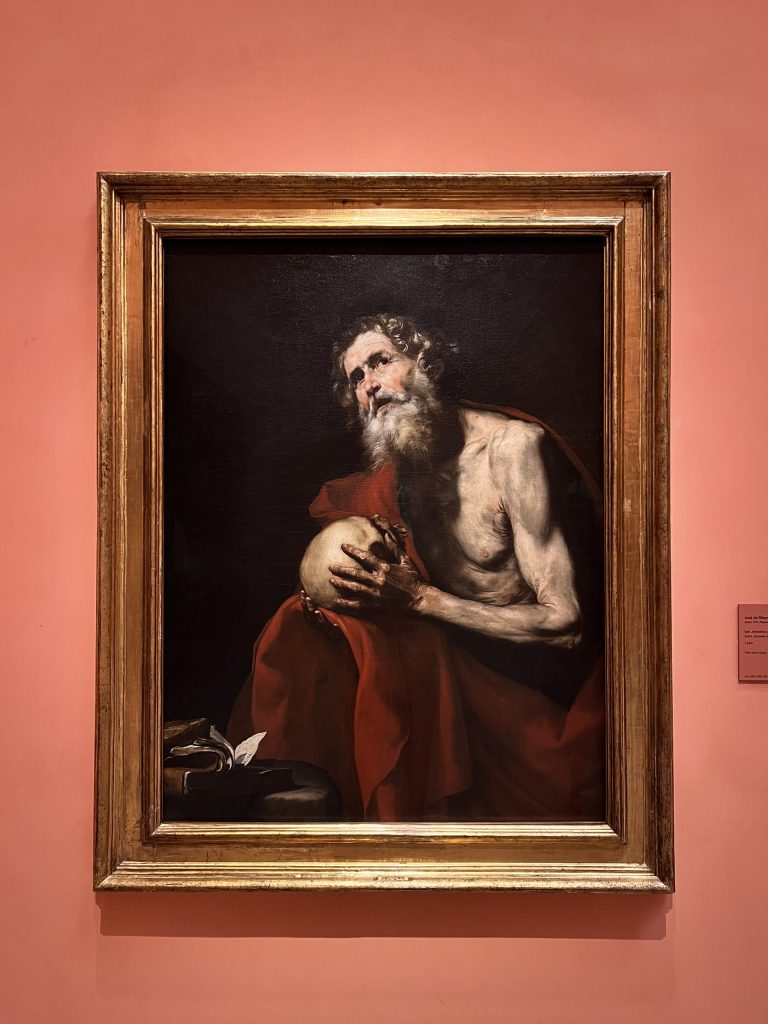
Caravaggio’s influence spread rapidly across Europe and had particularly important consequences for Spanish painting. José de Ribera, born in Xàtiva but established in Italy, encountered Caravaggesque naturalism directly and developed a style in which ageing bodies, wrinkles, skin and powerful contrasts of light acquire an extraordinary presence. His saints do not need to appear idealised in order to convey dignity; it is precisely their humanity that makes them convincing.
The young Diego Velázquez also shared this interest in reality, although he would later develop a profoundly personal visual language. In his early works from Seville, we find figures constructed through strong contrasts of light and an extraordinary attention to everyday objects, faces and materials. Works such as Old Woman Cooking Eggs demonstrate the extent to which direct observation could become the starting point for a painting.
Carracci, Caravaggio, Ribera and Velázquez did not paint in the same way, but together they reveal a decisive transformation. Reality and emotion had acquired a new capacity to tell stories. In Spain, these possibilities found some of the most fertile ground in seventeenth-century European painting and would eventually develop far beyond the religious needs that had initially helped to drive them.
3. The Spanish Monarchy Turned Baroque Art into a Tool of Power
The use of art as an expression of power predated the seventeenth century. During the Renaissance, families such as the Medici developed the concept of magnificence: wealth could and should be displayed through great buildings, works of art and the patronage of artists. Collecting was not simply a matter of personal taste. Owning certain works, building magnificent palaces or surrounding oneself with the finest artists was also a way of demonstrating prestige, culture and power.
The Spanish Habsburgs fully embraced this idea. Charles V and Philip II assembled important collections of paintings, paying particular attention to masters such as Titian, and used art to construct and project their public image. Philip IV inherited this extraordinary artistic heritage and continued to expand it during the seventeenth century. The royal collection thus became a space in which some of Europe’s major painting traditions coexisted and, over time, a significant part of these works would become part of the Prado Museum.
Rubens, Velázquez and a Court Connected to Europe
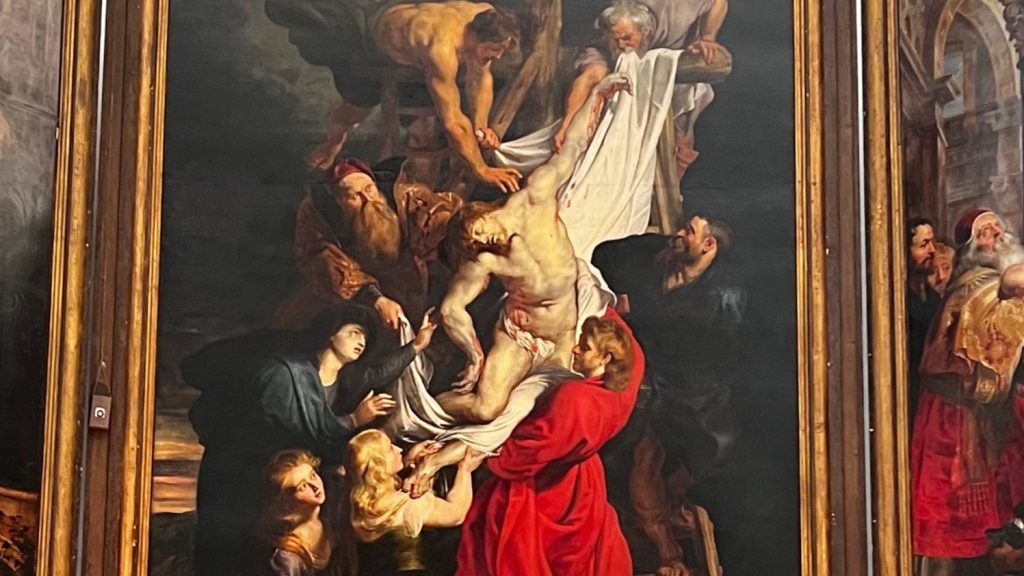
The court of Philip IV was fully integrated into the major artistic networks of Europe. Peter Paul Rubens visited Madrid in 1628 and remained in the city for several months, where he met Velázquez. Besides working for some of Europe’s leading courts, Rubens had a profound knowledge of Titian’s painting, whose works he was able to study and copy during his stay in Madrid.
The encounter is particularly interesting because Velázquez had two extraordinary references before him: the paintings by Titian preserved in the royal collection and one of his great artistic heirs, Rubens. Shortly afterwards, Velázquez travelled to Italy for the first time, where he continued to deepen his knowledge of the Italian tradition. Seventeenth-century Spanish painting did not, therefore, develop in isolation, but through constant contact with artists, collections and ideas from other parts of Europe.
Velázquez and the Construction of the King’s Image
Velázquez had arrived in Madrid in 1623 and soon became painter to Philip IV. One of his main responsibilities was to portray the monarch and his family, but his paintings went far beyond simply reproducing their physical appearance. The king’s posture, gaze and surroundings, together with the extraordinary economy of elements with which Velázquez represents him, construct an image of authority that does not need to rely constantly on an ostentatious display of wealth.
Decades later, this relationship between painting, artist and monarchy reached one of its most complex expressions in Las Meninas, painted in 1656. Philip IV and Mariana of Austria appear reflected in the mirror while Velázquez depicts himself working in front of a huge canvas alongside the Infanta Margarita and her entourage. The painter does not simply represent the royal family: he places himself within the space of the court and turns the very act of painting into the subject of a work intended for the king.
From the Medici to Philip IV, magnificence had turned the arts into a means of expressing power and prestige. But the extraordinary collections assembled by the Habsburgs had another consequence: they allowed painters such as Velázquez to study some of Europe’s greatest masters first-hand. Among all these influences, Titian and Rubens would prove fundamental to the progressive liberation of his brushwork.
4. The Baroque Liberated the Brushstroke Through Colour
One of the most important transformations in Baroque painting took place in the very way images were constructed. Drawing remained fundamental, but colour acquired an increasing ability to define bodies, create depth and represent the effects of light. Contours could become less precise and brushstrokes more visible without making the image any less convincing.
The fundamental precedent could be found in sixteenth-century Venetian painting. Titian, especially in his later works, had developed an extraordinarily free technique in which forms seemed to be constructed through patches of colour. Some Baroque painters inherited this tradition and explored its possibilities even further: representing the world no longer always required every object to be defined by a perfectly closed outline.
Painting with Patches of Colour
This way of painting produces an effect that becomes particularly evident when we look at a picture from different distances. From afar, we can perfectly recognise a face, a dress or the reflection of light on an object. When we move closer, what seemed to be precisely described may turn into just a few brushstrokes strategically placed on the canvas.
The painter thus entrusts part of the process to our own eyes. There is no need to represent every individual hair for us to see a head of hair, or to describe every thread for us to recognise a fabric. Colour, light and brushwork provide enough information for our eyes to complete what the painting has merely suggested.
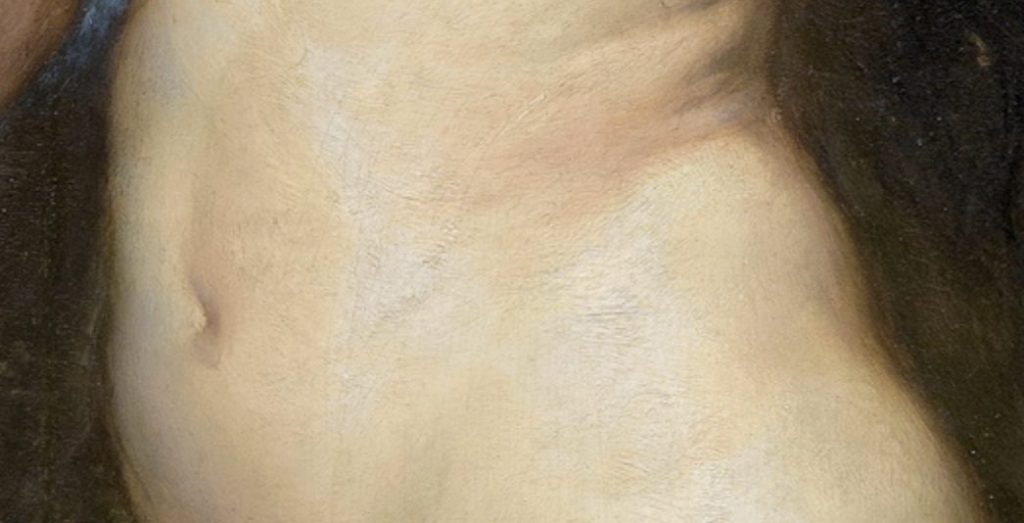
In artists such as Rubens and Velázquez, we find very different solutions built upon this freedom. In Rubens, colour and brushwork contribute to the energy and movement of the figures; in Velázquez, a few patches of paint can become a face, an ornament or a reflection when viewed from a certain distance. What truly matters is the principle they share: a painting does not need to describe every detail in order to represent reality.
The Brushstroke Could Also Represent Light
This freedom was particularly effective when representing something that has no defined outline: light. A reflection on a glass, the gleam of a jewel, the luminosity of a fabric or a figure emerging from the shadows could be rendered through subtle variations in colour and rapid strokes of the brush.
Baroque painting found in these resources an extraordinarily effective way of representing a changing reality. Objects do not visually exist independently of the conditions in which we see them: their appearance depends on distance, lighting and the space around them. Brushwork could suggest precisely these phenomena without having to define every element with the same degree of precision.
Of course, not all Baroque artists used loose brushwork, nor did drawing disappear during the seventeenth century. Very different techniques coexisted, with significant differences between schools and individual painters. But the increasing ability of colour and the physical substance of paint to construct an image was one of the great contributions of this period.
A Freedom That Outlived the Baroque
This transformation also helps explain why seventeenth-century Spanish painting had such a lasting influence. Goya studied the masters of the royal collections directly and took the freedom of the brushstroke in new directions. Later, during the nineteenth century, foreign artists travelled to Madrid in search of precisely this pictorial tradition and found in the Prado Museum works painted two centuries earlier that seemed to address surprisingly contemporary concerns. For example, the impressionists, that used a lot of this to perform their famous brushwork.
Manet was one of them, but the connection can be extended much further. Later painting would give increasing importance to patches of colour, colour itself and the visibility of the brushstroke, until these became some of the major artistic concerns of the nineteenth and twentieth centuries. The Baroque masters were pursuing very different goals, but they had demonstrated something fundamental much earlier: a patch of colour could represent reality while still appearing, at the same time, as a brushstroke on a canvas.
5. What Do the Different European Baroques Have in Common?
Speaking of the European Baroque as a single phenomenon can be misleading. Seventeenth-century painting took very different forms in Italy, Spain, Flanders, the Dutch Republic and France. Religion, political systems, artistic traditions and the market in each territory influenced both the subjects represented and the way they were painted. Not all artists used tenebrism, pursued loose brushwork or worked for the Church and the great monarchies.
Yet behind these differences, we find an important point of connection: a new attention to reality. The face of a particular person, an ageing body, light entering through a window or objects arranged on a table could all become subjects for painting. That reality could be observed, selected, idealised or transformed. Naturalism did not produce a single visual language, but rather a starting point from which different Baroque artists developed their own solutions.
Italy: Naturalism Becomes Drama
In Italy, Caravaggio transformed the observation of reality into painting of extraordinary intensity. As we have seen, he used recognisable models, strong contrasts of light and carefully constructed theatricality to bring religious stories closer to the viewer. His influence was enormous, and numerous European painters adopted some of his solutions during the first decades of the seventeenth century.
But Italian Baroque painting cannot be reduced to Caravaggism. Annibale Carracci and the artists associated with his circle developed another path, in which the study of nature coexisted with greater idealisation and a revival of classical models. From the very origins of the movement, therefore, we find different ways of taking reality as a starting point and transforming it through painting.
Spain: From the Everyday to the Sacred
Naturalism found particularly fertile ground in Spanish Baroque painting. Zurbarán could depict a saint with the physical presence of a person standing before us, while Ribera made ageing bodies, wrinkles and weathered skin the protagonists of some of his works. A figure’s sacred status did not necessarily require removing them from the viewer’s everyday experience.
The same attention can be found in still-life painting. Vessels, food, containers and other apparently humble objects could become protagonists through careful observation of their forms, materials and the effects of light. In Spain, the everyday and the sacred could therefore share the same concern with the physical presence of objects and people.
Flanders: Colour, Matter and Exuberance
The Flemish Baroque developed a different response. In Rubens’s great compositions, bodies possess weight, volume and movement, while colour reinforces the extraordinary energy of the scene. Observation of reality coexists here with monumental compositions that can transform that reality to heighten their narrative and spectacular effect.
This attention to the visible also took other forms. Van Dyck made aristocratic portraiture one of his great specialities, while other Flemish painters developed still lifes in which food, animals, flowers, metals and fabrics display an extraordinary material richness. Reality could be observed in minute detail while simultaneously becoming a celebration of colour and abundance.
The Dutch Republic: Everyday Life Enters the Painting
In the Dutch Republic, we find a very different religious, political and economic context. In a predominantly Protestant society with a significant private art market, religious commissions played a smaller role than in Catholic territories such as Spain or Italy. This encouraged the remarkable development of portraits, landscapes, still lifes, domestic interiors and scenes of everyday life.
Rembrandt, Frans Hals and Vermeer demonstrate just how varied the responses could be within the same territory. In Vermeer’s domestic scenes, for example, a room, a window and just a few figures are enough to construct an entire pictorial universe. Light passing through an interior or a person performing an everyday activity could become subjects worthy of the same attention traditionally reserved for the great historical or religious themes.
France: A More Classicising Approach
France followed a different path, particularly visible in artists such as Nicolas Poussin. In contrast to Caravaggio’s drama or Rubens’s exuberance, Poussin developed carefully ordered compositions in which drawing, narrative clarity and models from Antiquity retained enormous importance. Observation of reality was subjected to a rational and idealised structure.
We find something similar, although applied to landscape, in Claude Lorrain. His paintings begin with the observation of nature, but they do not attempt to reproduce a particular place literally. Trees, architecture, figures, water and light are reorganised to construct ideal landscapes. Here too, reality provides the starting point, although the painter transforms it into a perfectly ordered world.
Bonus Track: What Is the Difference Between Baroque and Rococo?
Although they are related, Baroque and Rococo are not the same thing. The former developed mainly during the seventeenth century and explored elements such as movement, emotion, contrasts of light and theatricality. Caravaggio, Rubens and Velázquez belong to this context, although, as we have seen, their approaches to painting were very different.
Rococo developed during the eighteenth century, particularly in France, and was closely associated with aristocratic culture. In contrast to the monumentality and drama of much earlier painting, artists such as Watteau, Boucher and Fragonard cultivated more intimate, sensual and decorative scenes, using luminous colours and subjects frequently related to love, leisure and courtly life. Rococo inherited elements from the Baroque but took them towards a different sensibility.
Baroque Painting at the Prado Museum
The Prado Museum houses one of the finest collections of Baroque painting in the world. Velázquez, Rubens, Ribera, Zurbarán and Murillo allow us to see first-hand many of the transformations we have explored throughout this article. At The Guides You Need, we help you understand these works within their historical and artistic context.
🎟️ Admission to the Prado Museum included in the price.
⚡ We purchase your tickets in advance so you can “skip the line”.
👥 Small groups of no more than 7 people.
🖼️ Professional guides specialising in art and history.
🌍 Tours available in Spanish, English, French and Italian.