To speak about Sorolla is to speak about light. Few artists have managed to capture the reflection of the sun on the sea, the movement of the water or the atmosphere of a beach with the naturalness that defines Joaquín Sorolla. His paintings convey such a vivid sense of life that they continue to amaze viewers more than a century later, earning him a place among the most admired Spanish painters both at home and abroad.
Sorolla, however, did not emerge out of nowhere. His work belongs to a long tradition of great Spanish masters such as Velázquez and Francisco de Goya, two artists who played a fundamental role in his artistic development. In this article, we’ll explore Sorolla’s early years, his artistic training, the journeys that transformed his painting and the extraordinary international success he achieved. We’ll also discover why he is still known today as “the painter of light” and where you can admire some of his most important masterpieces.
In this article
Sorolla’s Early Years
Sorolla’s Birth and a Childhood Marked by Tragedy
Joaquín Sorolla Bastida was born in Valencia on 27 February 1863. At the time, the city was experiencing significant economic growth thanks to its commercial and maritime activity, while still preserving much of its traditional character. This Mediterranean setting, shaped by the sea, the intense sunlight and life along the beaches, would eventually become the greatest source of inspiration throughout his career.
His childhood, however, was marked by a tragedy that would completely change the course of his life. In 1865, when he was just two years old, a cholera epidemic claimed the lives of both his parents. Joaquín and his sister Concha were left orphaned and were taken in by their maternal aunt and uncle, who raised them and did everything they could to provide them with a secure future.
From an early age, Sorolla showed an extraordinary talent for drawing. His relatives believed that learning a trade would guarantee him a stable livelihood, so he began working as an apprentice in a locksmith’s workshop. It soon became clear, however, that his true gift had little to do with working metal. Whenever he had the opportunity, he would draw everything he saw around him, a talent that did not go unnoticed by those who knew him.
Sorolla’s First Steps as a Painter
Sorolla’s artistic vocation eventually prevailed. With the support of several people around him, he enrolled at Valencia’s School of Arts and Crafts, where he received a much more solid education in drawing and painting. Shortly afterwards, he continued his studies at the Higher School of Fine Arts of San Carlos, one of the city’s most prestigious artistic institutions.
During these years, he became familiar with the work of great Spanish and European painters, but he also developed a deep curiosity for observing reality firsthand. Rather than limiting himself to copying academic models, he spent countless hours sketching the streets, the harbour, fishing boats and everyday scenes from Valencia. This habit of painting directly from life would remain with him throughout his career.
Among the figures who most influenced his artistic development was Ignacio Pinazo, one of the great innovators of Valencian painting. Although the two artists would eventually develop very different styles, Pinazo demonstrated that it was possible to move beyond academic conventions without sacrificing technical excellence. That artistic freedom would become an important reference for the young Sorolla.
His first works began to appear in national exhibitions while he was still very young. Like many painters of his generation, these early paintings reflected the academic taste of the period and focused mainly on historical and religious subjects. Even so, they already revealed an exceptional command of drawing and a remarkable sensitivity to the effects of light.
Rome and Paris: Discovering a New Way of Painting
In 1884, Sorolla was awarded a scholarship by the Provincial Council of Valencia to continue his artistic training in Rome, a destination that was almost essential for any painter aspiring to international recognition. There, he studied the masterpieces of the Italian Renaissance while deepening his understanding of anatomy, composition and the great techniques of classical painting.
His years in Italy were accompanied by several trips to Paris, where he encountered a completely different artistic world. While Rome allowed him to admire the great masters of the past, the French capital introduced him to a much more modern approach to painting. The new artistic movements embraced freer brushwork, a greater emphasis on colour and an increasing interest in depicting scenes of everyday life.
Sorolla never became an Impressionist in the strict sense of the word. Nevertheless, these visits profoundly transformed the way he understood painting. From that moment onwards, he began to give natural light an increasingly central role, adopted a looser and more spontaneous brushstroke, and became fascinated by the constantly changing effects of atmosphere.
The result was an unmistakably personal style that combined the solid academic training he had received in Spain and Italy with a modern vision of painting. This balance between tradition and innovation would become one of the main reasons behind the remarkable international success he achieved just a few years later, both in Europe and in the United States.
Sorolla’s Rise to Fame
When Sorolla returned from Italy, he had already become a technically outstanding painter. He had studied the great masters of the Renaissance, was familiar with the artistic movements flourishing in Paris and had mastered academic painting to a level achieved by very few artists of his generation. His greatest breakthrough, however, was still to come. Rather than repeating what he had learned, he set out to develop a language of his own and found his greatest teacher in something that had surrounded him since childhood: the light of the Mediterranean.
Like Velázquez and Francisco de Goya before him, Sorolla discovered a completely personal way of representing reality. If Velázquez transformed painting through his mastery of perspective, atmosphere and brushwork, and Goya revolutionised portraiture and history painting with his profoundly human vision, Sorolla made light itself the true subject of his art.
International Success
Recognition did not come overnight, but once it arrived, it did so with remarkable force. By the end of the nineteenth century, Sorolla had begun winning major awards at Europe’s leading exhibitions, and his name was becoming increasingly well known beyond Spain. At a time when Paris dictated the direction of Western art, earning the respect of French critics meant opening the doors to the international market, and Sorolla achieved exactly that thanks to a style that was unlike any other.
Successful exhibitions in London soon followed, but it was the United States that truly embraced his work. American audiences were captivated by paintings filled with light, colour and movement, offering a striking contrast to the dark, dramatic image that many associated with Spanish art.
One man proved instrumental to that success: Archer Milton Huntington, the founder of the Hispanic Society of America. Convinced that Sorolla was the finest ambassador Spanish art could have, he commissioned the artist to create a monumental series that remains one of the institution’s greatest treasures: Vision of Spain. Comprising fourteen enormous panels, the series depicts the landscapes, traditions, festivals and everyday life of Spain’s different regions, making it one of the most ambitious projects ever undertaken by a Spanish painter.
The Painter of Light
If Velázquez is remembered for the psychological depth of his portraits and Goya for the powerful way he portrayed the human condition, Sorolla occupies a unique place in art history because he made light the true subject of his paintings.
The Valencian artist often worked outdoors because he understood that light is constantly changing. A passing cloud, a gust of wind or the movement of the sea could completely transform a landscape within minutes. For that reason, he painted quickly, striving to capture a fleeting moment before it disappeared forever.
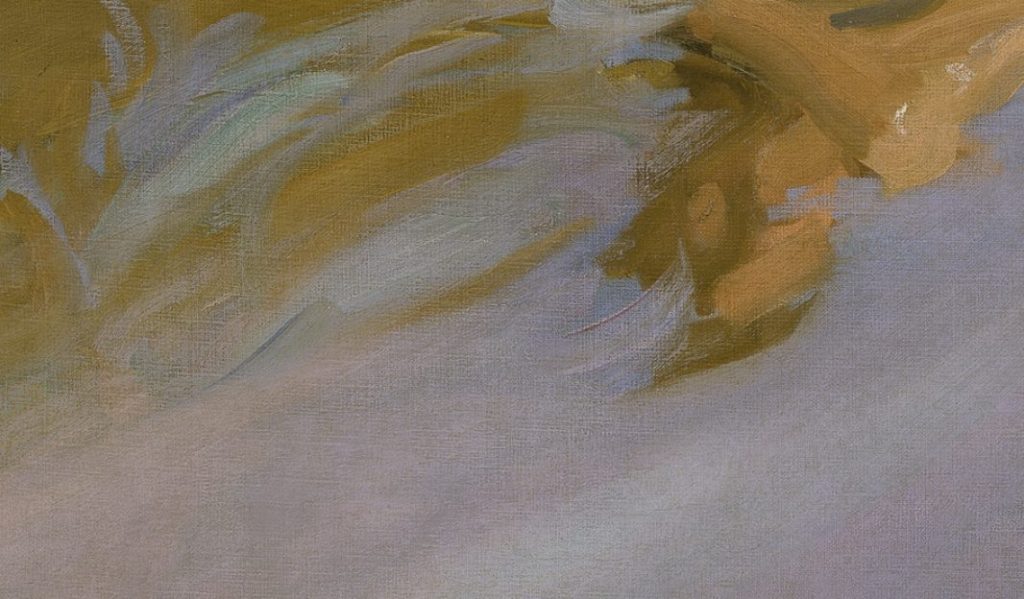
The beaches of Valencia became his favourite studio. There he painted children running across the sand, fishermen hauling in their boats, women strolling along the shoreline and horses emerging from the sea. Although these scenes appear effortless, each one is supported by meticulous planning and an exceptional command of drawing, colour and composition.
Perhaps that is why Sorolla’s paintings still feel so alive today. Sunlight shimmers across the water, fabrics seem to flutter in the sea breeze and the figures appear ready to move before the viewer’s eyes. More than a century later, standing in front of one of his paintings still feels like witnessing a moment that has only just taken place.
Sorolla’s Greatest Masterpieces
Among Sorolla’s many paintings, Walk on the Beach has become one of the most iconic images in Spanish art. It depicts the artist’s wife, Clotilde García del Castillo, and their daughter María walking along the Mediterranean shoreline while the wind catches their white dresses. The painting perfectly captures the elegance, serenity and luminous atmosphere that define Sorolla’s mature style.
Very different in tone is Sad Inheritance, the masterpiece that won the Grand Prix at the 1900 Paris Universal Exposition. It portrays a group of children with disabilities bathing in the sea under the care of a priest. Far removed from the joyful scenes for which Sorolla is best known, the painting demonstrates his ability to tackle social issues with remarkable sensitivity and emotional depth.
Another essential work is And They Still Say Fish Is Expensive!, painted early in his career. Inspired by the harsh reality faced by Valencian fishermen, it highlights the difficult conditions of those who made their living from the sea and shows that, even before developing his signature style, Sorolla already possessed an extraordinary ability to move his audience.
These masterpieces are joined by celebrated works such as Children on the Beach, The Horse’s Bath and the monumental Vision of Spain panels, a body of work that demonstrates the remarkable versatility of an artist who could move effortlessly between portraiture, landscapes, scenes of everyday life and monumental decorative compositions without ever losing his distinctive artistic identity.
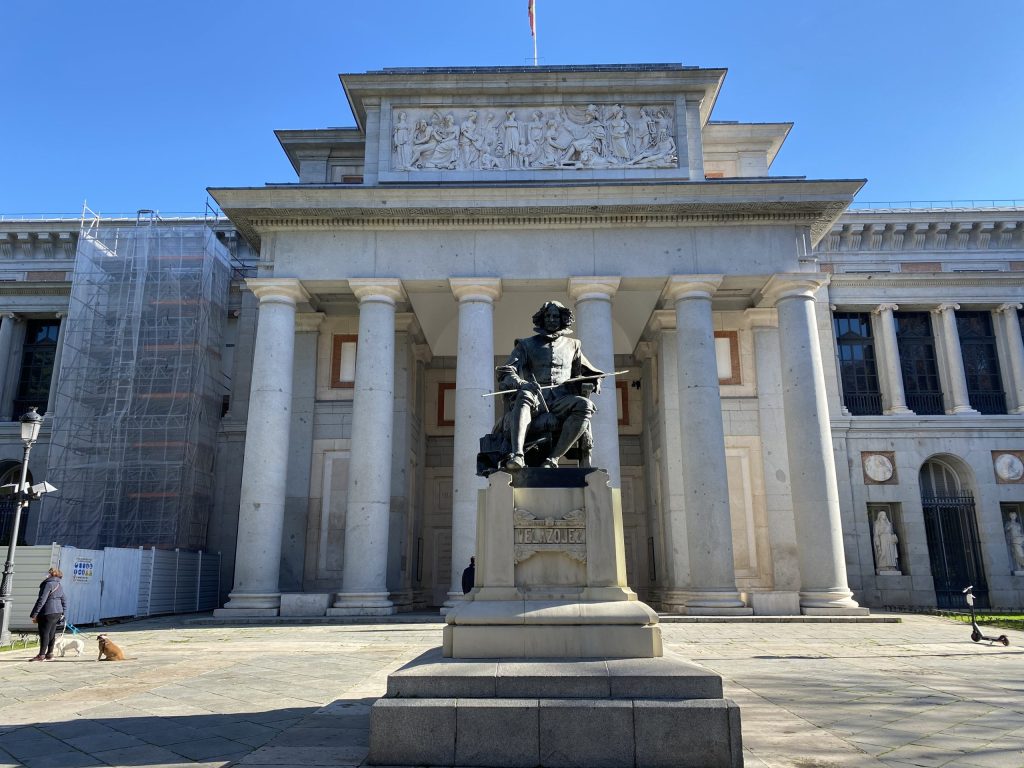
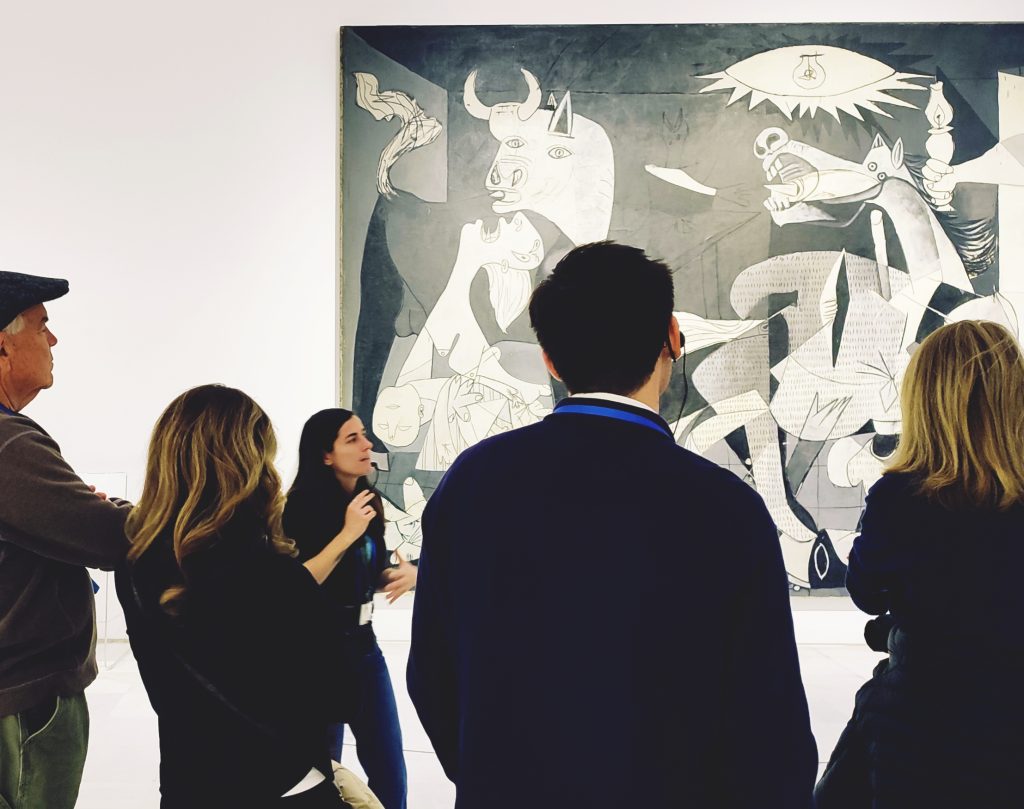
One final curiosity: Sorolla is one of the very few painters whose works can be admired in both the Prado Museum and the Reina Sofía Museum.
Sorolla’s Death and Legacy
In 1920, while painting in the garden of his home in Madrid, Sorolla suffered a severe stroke that brought his career to an abrupt end. Over the following three years, his health gradually deteriorated until his death on 10 August 1923 in Cercedilla, a town in the mountains near Madrid where he often spent long periods.
However, Sorolla’s legacy continued to grow long after his death. The family home where he spent his final years is now the Sorolla Museum, one of Madrid’s most remarkable museums and the perfect place to get to know the artist while admiring many of his paintings in the very setting where they were created. This was not only Sorolla’s home—it was also his studio. If you visit, one detail is sure to catch your attention: many of the walls were fitted with large glass panels, allowing natural light to flood the rooms. For an artist so obsessed with capturing light, there could hardly have been a more inspiring place to paint.
More than a century after his death, Sorolla remains one of Spain’s most beloved painters. His works continue to travel to the world’s leading museums, attracting hundreds of thousands of visitors wherever they are exhibited. The reason is simple: few artists have ever painted light with such naturalness that, even today, it still seems to shine from the canvas itself.
Do you want to know more about Sorolla? Come with The guides you need!
There are few better ways to appreciate Sorolla’s work than by seeing his paintings in person. While photographs capture the composition, they can never reproduce the extraordinary brightness of his colours, the texture of his brushwork or the way sunlight seems to radiate from the canvas. Standing in front of one of his masterpieces is the best way to understand why he became known as “the painter of light.”
One of the great advantages of visiting Madrid is that you can admire Sorolla’s work in more than one museum. Several of his paintings are displayed at the Prado Museum, where they can be appreciated alongside masterpieces by Velázquez, Francisco de Goya and other great Spanish artists. Sorolla is also represented in the Reina Sofía Museum, making him one of the very few painters whose works can be found in both of Spain’s leading national art museums.
If you would like to explore his legacy in even greater depth, Madrid is also home to the Sorolla Museum, located in the artist’s former residence. The house, studio and gardens have been beautifully preserved, offering visitors a unique glimpse into his personal and artistic life. At the moment, we do not offer guided tours of the Sorolla Museum, but it is a place we highly recommend visiting if you have extra time in the city.
At The Guides You Need, we believe that a great museum tour should be much more than a collection of dates and names. Our aim is to help you understand the stories behind the paintings, the lives of the artists and the historical context that shaped their work, making every masterpiece easier to appreciate and remember.
To achieve this, we work exclusively with small groups of no more than seven people. This allows every guest to ask questions, take their time in front of the paintings and enjoy a far more personal experience than is possible in larger groups. If you are travelling with family or friends and there are more than seven of you, we’ll be happy to organise a private tour tailored to your group.
All Prado Museum and Reina Sofía Museum admission tickets are included in the price of our tours, so there is no need to purchase them separately. We offer guided tours in English, Spanish, French and Italian, each with its own schedule, and we’ll be happy to help you choose the option that best suits your plans.
If you’re interested in avoiding the ticket queue, we also offer skip-the-line tours. Before booking, we recommend reading our article explaining exactly what skip-the-line means in Madrid, so you’ll know precisely what to expect on the day of your visit.
We look forward to welcoming you to Madrid and helping you discover not only the extraordinary paintings of Sorolla, but also the fascinating history behind them. Click here to book at the Prado and here to book at the Reina Sofía!