Peter Paul Rubens is one of those artists whose paintings you would probably recognise even if you had no idea who painted them. Powerful bodies, flying fabrics, diagonals, colour, movement and scenes in which everything seems about to burst out of the canvas. Few artists capture the sheer spectacle of the Baroque quite like he does.
And we are lucky: the Prado Museum houses one of the finest collections of works by the Flemish master anywhere in the world. That is no coincidence. His close relationship with the Spanish monarchy, and particularly with Philip IV, meant that many of his paintings became part of the Spanish Royal Collection and can now be seen in Madrid.
However, approaching the work of this Baroque master without a few clues can be a little overwhelming. Mythology, religion, naked bodies, allegories and characters appearing absolutely everywhere: where do we even begin? In this article, we will give you five keys to understanding Rubens and, above all, to enjoying his paintings much more when you visit the Prado Museum.
In this article
1. Get to know Rubens before visiting the Prado Museum
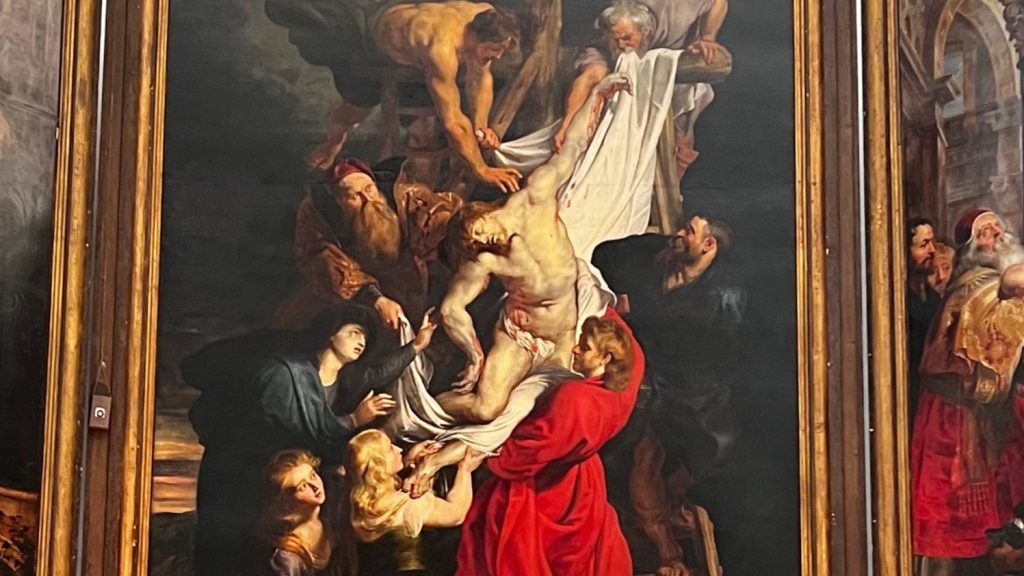
Although we know him as one of the great masters of Flemish painting, Peter Paul Rubens was born in Siegen, in present-day Germany, in 1577. His family came from Antwerp and returned to the city when he was still a child. It was there that he trained as a painter and began a career that would eventually take him to some of Europe’s most important courts.
Antwerp and the Training of the Flemish Master
Antwerp played a fundamental role in his training. The young artist worked in the studios of several masters, and by 1598 he was already registered as an independent master in the city’s painters’ guild. He was just over twenty years old, well trained and officially allowed to work professionally. But there was still something important missing.
For any European painter who wanted to experience the great works of the Renaissance first-hand and study Classical Antiquity, Italy was practically an essential destination. And that was exactly where he went.
Italy: The Journey That Transformed His Painting
The Siegen-born painter arrived in Italy in 1600 and remained there for around eight years. The journey allowed him to study first-hand some of the works that would eventually shape his own approach to painting. In Venice, he encountered the paintings of Titian, Tintoretto and Veronese; in Rome, he was able to study Michelangelo and Raphael, while also examining ancient sculpture and paying close attention to contemporary artists such as Caravaggio.
All of this matters when we later stand in front of his paintings at the Prado Museum. Titian’s extraordinary use of colour, Michelangelo’s monumental bodies and the fascination with the Classical world all went into a kind of artistic cocktail shaker, from which a completely personal style would eventually emerge.
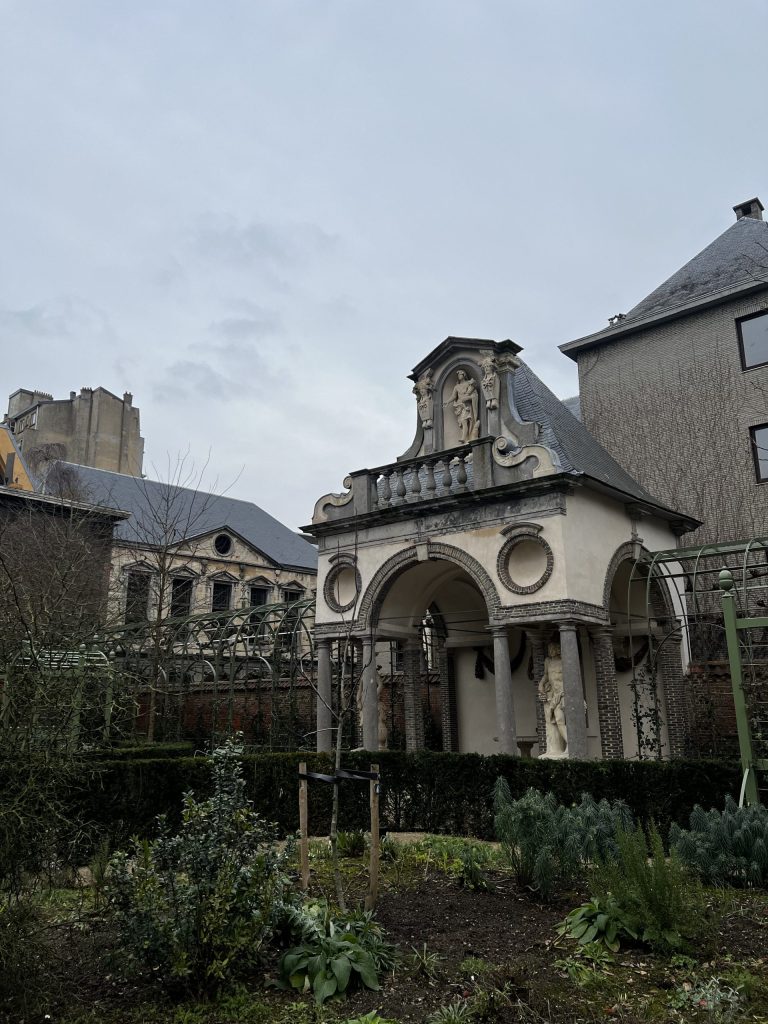
By the time he returned to Antwerp in 1608, he was an extraordinarily accomplished artist. Soon afterwards, he was appointed court painter to Archduke Albert and Archduchess Isabella, and major commissions began pouring in. So many, in fact, that he established a large workshop where pupils and assistants took part in producing some of his works.
This is an important detail when talking about the Baroque master: the fact that a painting came from his workshop does not necessarily mean that every inch of it was painted directly by his own hand. As we will see, producing enough paintings to satisfy the demand for such a successful artist required rather more than just one pair of hands.
He Wasn’t Just a Painter: He Was Also a Diplomat
And here we come to one of the most fascinating sides of the man. He was exceptionally well educated, spoke several languages and knew how to move comfortably among Europe’s elites. These qualities allowed him to combine his artistic career with a rather less common occupation for a painter: diplomacy.
During the 1620s, he took part in negotiations between the Spanish and English monarchies, and his missions brought him to some of Europe’s most important courts. Painting and politics could even take place at the same time: entering a palace as an artist was an excellent way of gaining the opportunity to discuss other matters as well. One of those journeys brought him back to Madrid in 1628. There, he worked for Philip IV and met a young Diego Velázquez, a crucial encounter in the careers of both artists that we will return to later.
For now, there is one idea worth remembering. When Rubens arrived at the Spanish court, he was not simply a foreign painter coming to deliver a few pictures. He was one of the most prestigious artists in Europe, a diplomat accustomed to dealing with kings and a man with an extraordinary knowledge of art history. His close relationship with Philip IV helps explain why we can now find such an exceptional collection of his work at the Prado Museum.
2. Learn How to Recognise a Rubens
You do not need to be an art historian to start recognising his paintings. In fact, after seeing a few of them, you will probably begin to identify them from the other side of the gallery. Rubens developed a highly distinctive style based on movement, colour and bodies that are rather difficult to ignore.
Movement: There’s Never Too Little Going On
One of the first things to pay attention to is movement. In many of his paintings, figures twist, run, fall, raise their arms or seem almost ready to burst out of the canvas. The compositions are filled with diagonals, and our eyes constantly jump from one character to another. This is Baroque in its purest form. Instead of the balance and stability we associate with much of the Renaissance, the aim now is to make us feel that we are witnessing an action as it unfolds. If there is a battle, expect rearing horses and twisting bodies; if we are watching a mythological episode, the gods do not seem particularly interested in standing still either.
When you are at the Prado Museum, try something very simple: look at the whole painting before searching for individual details. Where does the composition lead your eye? You will often find that the figures create diagonals, curves and movements that guide your gaze across the entire scene.
Colour, Light and the Influence of Titian
We have already talked about his years in Italy, and here we find one of their most important consequences. The painter became fascinated by the Venetian tradition and, above all, by Titian. Colour consequently takes on an enormous importance. Deep reds, warm flesh tones, shimmering fabrics and strong contrasts help construct the figures and separate different parts of the composition. Light does more than simply illuminate the scene: it also directs our attention towards exactly what the artist wants us to see.
This influence also allows us to make connections within the Prado Museum itself. We can look at Titian’s paintings and then see how an artist born several decades later studied that tradition, transformed it and pushed it towards the spectacle of the Baroque.
The Bodies: There’s a Reason We Have the Word “Rubenesque”
And now we come to one of the most famous characteristics of his painting: the bodies. They are muscular, voluptuous, fleshy and take up an enormous amount of space. The men can remind us of ancient sculptures or Michelangelo’s figures, while the women are often represented according to an ideal of beauty very different from our own.
There is a common mistake worth avoiding here: judging these figures exclusively according to contemporary standards of beauty. The body has a history too. What a society considers beautiful, powerful or sensual changes over time, and 17th-century paintings were certainly not created with 21st-century body ideals in mind.
Those bodies also serve a purpose within the paintings themselves. Flesh gives the artist a surface on which to explore light, colour and movement; muscles make certain gestures more dramatic, while volume increases the impression that these figures really occupy the space in front of us. So, when you reach these galleries at the Prado, do not simply look for large naked figures. Pay attention to how they move, how light falls across their skin, how the bodies overlap and how colour holds all that apparent chaos together. Once you begin to recognise these characteristics, identifying the Flemish master becomes considerably easier.
3. Mythology, Religion and Power: Understand What Rubens Was Painting
Recognising the style is only part of the job. The other part is knowing what we are actually looking at. And the Flemish master does not always make things easy for us: gods falling in love, women being transformed, saints, martyrs, allegories and characters from Classical Antiquity appear constantly throughout his paintings.
For a 17th-century viewer, many of these stories would have been immediately recognisable. For us, four hundred years later, walking into a gallery at the Prado Museum and finding twenty naked figures gathered around a cloud may require a little explanation.
The Gods Are Anything but Discreet
Classical mythology offered the painter exactly what he needed: bodies, movement, violence, sensuality and extraordinary situations. The stories of Ovid and other ancient authors provided an almost inexhaustible repertoire of tales involving gods and heroes.
And these gods behave in surprisingly human ways. They fall in love, deceive each other, become jealous, lose their tempers, chase other characters and make some rather questionable decisions. Olympus was not exactly a peaceful place.
All of this also made it possible to represent the nude in contexts where doing so with contemporary figures would have been considerably more complicated. We are not simply seeing bodies everywhere because the Baroque master enjoyed painting them: mythology was one of the great subjects of European culture and formed part of the education and prestige of the European courts.
This will become particularly important when we reach works such as The Three Graces and The Judgement of Paris. Knowing the story behind them completely changes the way we look at the paintings.
Religious Baroque and the Counter-Reformation
The other great source of stories was, naturally, Christianity. The painter grew up and spent much of his career in the Spanish Netherlands, within a Catholic society profoundly shaped by the Counter-Reformation.
Religious painting had to communicate and move the viewer. A martyrdom had to convey suffering; an Adoration, wonder; and a scene from the life of Christ had to allow the viewer to understand immediately what was happening. The Baroque took this search for emotion much further through movement, light and increasingly theatrical compositions.
That is why the artist’s religious paintings and mythological scenes can initially seem like completely different worlds while sharing many of the same devices. The characters change and the stories change, but the desire to involve us emotionally in what is happening before our eyes remains.
Painting for Kings: Philip III, Philip IV and the Spanish Monarchy
There is a third piece of the puzzle that helps explain why we find so many of these works in Madrid: power. When walking through the Prado galleries, it is worth keeping this context in mind. We are not simply looking at an extraordinary collection of Baroque painting; to a considerable extent, we are looking at what remains of one of the great royal collections of 17th-century Europe. In other words, we are seeing the image that the Spanish Crown wanted to project to the rest of the world.
Philip IV was an extraordinary collector, and during the 17th century the Spanish monarchy assembled some of the finest paintings in Europe. The Flemish master occupied a privileged place within that world. His works could decorate palaces, depict stories from Classical Antiquity, convey political messages or simply demonstrate the taste and wealth of those powerful enough to commission them.
One of the best examples was the Torre de la Parada, a royal hunting lodge outside Madrid that Philip IV decided to decorate with an ambitious series of mythological paintings. The commission was enormous, and the artist’s workshop played an active role in its production. Many of those works are now part of the collections of the Prado Museum.
4. Rubens and Diego Velázquez: Two Giants Meet in Madrid
Madrid, 1628. One of Europe’s most celebrated painters arrives in the city in his fifties, with an international reputation and a career that combines art and diplomacy. Waiting at the Spanish court is Diego Velázquez, not yet thirty but already a painter to Philip IV. For several months, these two extraordinary artists found themselves working in the same place.
Arriving in Madrid in 1628
The Flemish master arrived in Madrid for the second time in 1628. Officially, he was there on a diplomatic mission connected to the Spanish monarchy, but naturally, he also found time to paint. He spent several months in the city and, crucially, had access to the extraordinary Spanish Royal Collection.
And here comes Titian again. Philip IV owned some of his masterpieces, and the visiting artist took advantage of his time in Madrid to study them closely and copy several of them. We should keep this in perspective: this was not an apprentice learning his craft. This was one of the greatest painters in Europe studying one of the greatest painters in history.
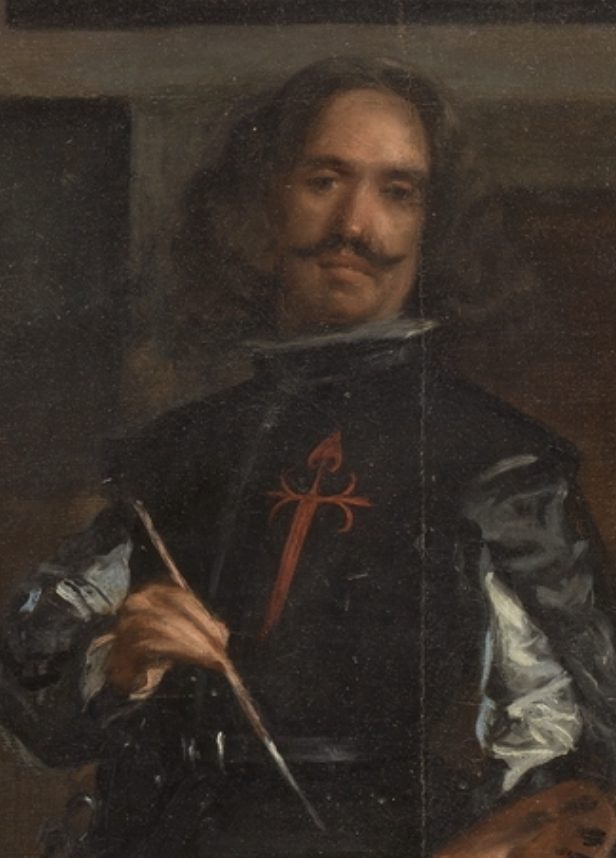
Velázquez was working in that same environment. We know that the two artists met and spent time together during the 1628 stay. There was a considerable difference in both age and experience, but they had something fundamental in common: privileged access to one of the finest collections of paintings in Europe.
Did He Convince Velázquez to Travel to Italy?
The short answer is: we don’t know. According to our boss, however, the pieces fit together rather nicely. Shortly after the two painters met, Velázquez set off on his first journey to Italy in 1629. It has traditionally been suggested that their conversations may have encouraged the younger artist’s desire to experience Italian art first-hand. It certainly sounds plausible: the Flemish master had spent years studying Titian, Michelangelo, Raphael and Classical Antiquity and knew exactly what Italy could offer a painter.
Did he actually say, “Diego, you need to go to Italy”? We have absolutely no idea. What we do know is that Velázquez left the following year and that the journey marked a clear before and after in his painting.
If you want to explore that story further, we have an article dedicated to Diego Velázquez, where we look at the different stages of his career and explain what to look for in his paintings when you visit the Prado Museum.
Two Very Different Ways of Painting
Meeting another great artist does not necessarily mean ending up painting like him, and a walk through the Prado Museum makes that perfectly clear. The Antwerp master tends towards movement, abundance and spectacle: bodies, diagonals, fabrics, animals and gestures can fill every corner of his compositions. Velázquez, particularly later in his career, often moves in the opposite direction. He strips things back, simplifies and allows space and air to play an increasingly important role.
One seems to be telling us, “look at everything that’s happening!” The other can keep us staring for ten minutes at someone who is simply standing there. And that contrast is precisely what makes seeing their paintings in the same museum so interesting.
There is no need to decide which one was better. What we can do is watch two giants of the Baroque approach similar artistic problems in radically different ways. Both had studied some of the same masterpieces and enjoyed extraordinary access to the Royal Collection, yet each ultimately developed a visual language that could hardly be mistaken for the other.
5. Look for These Works by Rubens at the Prado Museum
By now, we know the man, we can recognise some of the defining features of his painting, and we have explored his relationship with both the Spanish monarchy and Diego Velázquez. Now comes the most important part: standing in front of the paintings themselves. The Prado Museum houses an exceptional collection by the Flemish master, so narrowing it down to just a handful of works is no easy task.
The Three Graces
This is probably one of the artist’s most recognisable paintings, and also one of the best places to put everything we have discussed so far into practice. The Three Graces depicts the three goddesses from Classical mythology traditionally associated with beauty, charm and joy, among other qualities. The three figures appear nude, intertwined and arranged in a circular composition in which hardly any part of the body seems completely still.
Pay particular attention to the flesh. Here we find the painter’s characteristic ideal of female beauty: full bodies, pale skin and a representation far removed from contemporary standards. But do not stop there. Watch how the light travels across their bodies and how arms, glances and gestures connect the three figures, keeping our eyes constantly moving around the painting.
The Judgement of Paris
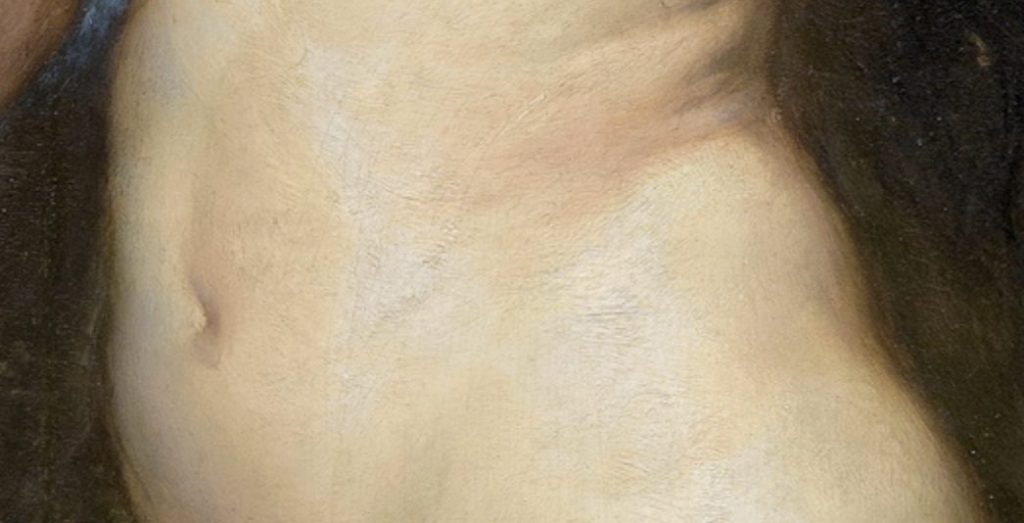
If The Three Graces gives us an opportunity to talk about the body, The Judgement of Paris takes us straight into the world of mythology. Paris must decide which of three goddesses —Venus, Minerva and Juno— is the most beautiful. Naturally, this being Classical mythology, his decision ends up having rather more serious consequences than you might expect: the episode is connected to the origins of the Trojan War.
The story gives the Flemish painter the perfect opportunity to depict several nude figures while exploring different poses, gestures and body types. But pay attention to the composition too: these are not simply three models standing next to one another. Their glances, arms and positions connect the different parts of the scene and keep our eyes moving continuously across the canvas.
Saturn Devouring His Son
Yes, there is another Saturn Devouring His Son at the Prado Museum, and this one is not by Goya. In fact, having both paintings in the same collection gives us a remarkable opportunity to see how two artists separated by almost two centuries approached one of the most brutal stories in Classical mythology.
Saturn had been warned that one of his children would eventually overthrow him, so he decided to solve the problem in a rather drastic way: by devouring them. The Baroque master depicts the moment with all the violence we might expect, but the comparison with Goya is fascinating. When you visit the Prado, try to keep both images in mind and see how two artists can take exactly the same myth and turn it into something completely different.
The Adoration of the Magi
After all that mythology, we finally come to a religious painting, although the spectacle certainly does not disappear. The Adoration of the Magi is a monumental composition packed with figures, fabrics, animals, objects and movement, making it a perfect example of how the visual language of the Baroque could also be used to tell a Christian story.
The painting also has a particularly interesting history because the artist returned to it years after completing it and considerably enlarged the composition. When you stand in front of it, try not to focus exclusively on the Christ Child and the Magi. Explore the secondary figures, look at the fabrics, search for the diagonals and notice how the light manages to organise a scene that, at first glance, can seem almost overwhelming.
These four paintings represent only a small part of what the Prado Museum has to offer. The interesting thing is that, once you know the keys we have explored throughout this article, you can continue through the galleries and try to spot them for yourself: movement, colour, monumental bodies, mythology, religion and that constant feeling that several things are happening inside the painting at the same time.
And if, after all this, you start recognising a painting by the Flemish master before you have even read the label, then this article has done its job. From there, all that remains is to move closer, take a few steps back and enjoy the spectacle.
Want to Discover Rubens at the Prado Museum? Join The Guides You Need!
👥 Groups of no more than 7 people. We want you to be able to see the paintings, hear your guide comfortably and ask as many questions as you like.
🎓 Professional guides. We don’t just want you to see The Three Graces, The Judgement of Paris or the paintings of Diego Velázquez: we want to help you understand what you are looking at.
🎟️ Admission to the Prado Museum included. Skip the line? Yes, although it is worth understanding exactly what that means. Take a look at our article on how to visit the Prado Museum.
🇬🇧🇪🇸🇫🇷🇮🇹 Tours in English, Spanish, French and Italian. Each language has its own schedule, so make sure you check before booking.
⏱️ Two-hour tours. Enough time to discover some of the great masterpieces of the Prado Museum and understand the connections between artists such as Rubens, Diego Velázquez, Goya and Titian.
❓ Do you have questions about the Prado Museum? We have an article answering the most common questions visitors have before coming to the museum (click here!)
👉 Would you like to join us? You can book your guided tour of the Prado Museum by clicking here.