August 13 marks the anniversary of the rise to power of Philip V, the first Bourbon to occupy the Spanish throne. Born Philip of Anjou and grandson of Louis XIV, his reign profoundly transformed the history of Spain.
The War of the Spanish Succession, his authoritarian exercise of power, his mental health struggles and the construction of Madrid’s Royal Palace marked a life and reign that remain controversial today. In this article, we explore who he was and the legacy he left behind.
In this article
Who Was Philip V?
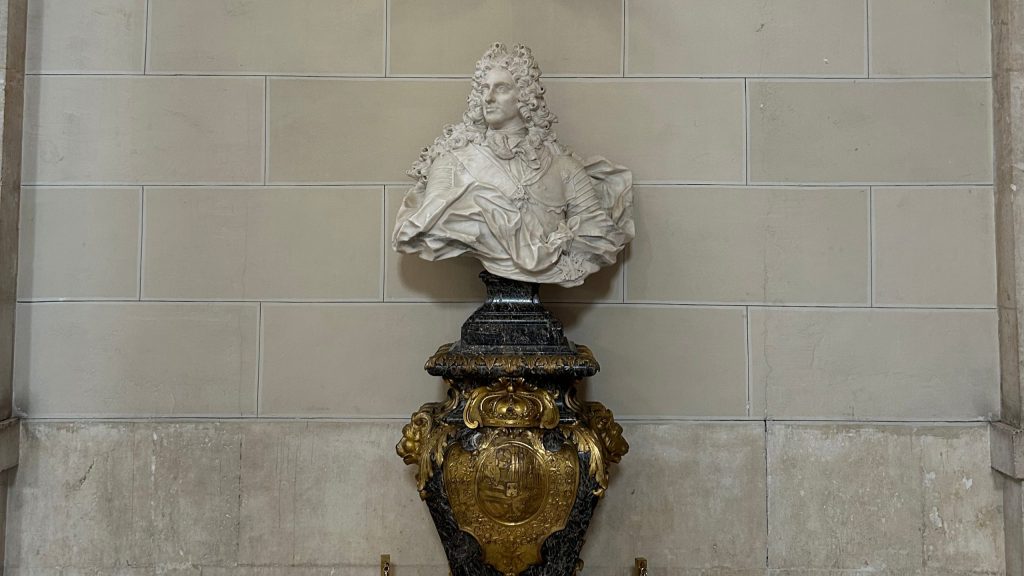
Philip V was the first king of the Bourbon dynasty in Spain and one of the monarchs who most profoundly transformed the country’s political organization. He was born at Versailles in 1683 as Philip of Anjou and was a grandson of Louis XIV of France, the famous Sun King. Initially, there was little reason to believe that he would eventually rule the Spanish Monarchy.
His accession to the throne resulted from one of the greatest political problems facing Europe at the end of the 17th century: Charles II, the last Spanish monarch of the House of Habsburg, had no children. His death raised the possibility that the vast territories of the Spanish Monarchy would fall into the hands of one of Europe’s great ruling families.
Philip of Anjou: Louis XIV’s Grandson Who Became King of Spain
Charles II died on November 1, 1700. In his final will, he had named Philip of Anjou, grandson of Louis XIV and the Spanish Infanta Maria Theresa, as his heir. The young French prince was only 17 when he inherited a monarchy that included not only the kingdoms of the Iberian Peninsula, but also territories in Italy, the Netherlands and the vast Spanish Empire in the Americas.
Philip accepted the Crown and began his reign as Philip V. His grandfather presented the new monarch to the French court at Versailles with a phrase that would become famous: “There are no more Pyrenees.” Whether those exact words were actually spoken or later embellished, they perfectly summarize one of the great fears of the European powers: that France and Spain might fall under the interests of the same family.
From Versailles to Spain: The Beginning of a New Dynasty
The arrival of the new king meant much more than replacing one monarch with another. After almost two centuries of Habsburg rule, Spain had a new dynasty: the Bourbons, closely connected to the France of Louis XIV and to a much more centralized conception of royal power.
But Philip of Anjou did not inherit his immense territories peacefully. His claim to the throne was challenged, and Europe eventually became embroiled in a war that lasted for more than a decade. Within the Spanish Monarchy itself, the conflict also took on the characteristics of a civil war. The outcome allowed the Bourbon king to retain the Crown, but also gave him the opportunity to punish the territories that had fought against him and profoundly alter their political organization.
That conflict would become known as the War of the Spanish Succession.
Did Philip V Really “Go Mad”?
Discussing the mental health of a historical figure presents an important problem: “mad” is not a medical diagnosis. For centuries, the term has been used to group together very different behaviors and illnesses and can turn a health condition into a way of discrediting the person who suffers from it.
In the case of the first Bourbon king, we know that he experienced periods of severe psychological distress and that some of his behaviors seriously affected his ability to exercise power. We can describe these episodes and examine their consequences. What is much more difficult is diagnosing, three centuries later, precisely what condition he may have had.
Can We Say That the King Was “Mad”?
Historical accounts describe periods of profound melancholy, isolation and personal neglect. The monarch could remain secluded for long periods, neglect his hygiene and refuse to change his clothes. He also suffered serious sleep disturbances and at times completely reversed his schedule, remaining awake at night and sleeping for much of the day.
Some accounts describe even more extreme behavior. During certain crises, irrational fears, obsessive ideas and an increasing inability to perform his duties normally appeared. We are therefore not dealing simply with a later legend about an eccentric king: there is evidence of serious problems that affected both his daily life and the government of the monarchy.
What Do We Really Know About His Mental Health?
Historians and specialists have attempted to interpret these symptoms using later medical categories. Severe depression has been suggested, alongside other possible conditions. However, any retrospective diagnosis has obvious limitations: the patient cannot be examined, and we depend on written accounts produced in a period with a very different understanding of mental health.
It is therefore more accurate to discuss documented crises, symptoms and behaviors than to state categorically that he suffered from a particular condition. We should also avoid another mistake: using these problems to explain all of his political decisions automatically.
An Illness Does Not Make a King a Tyrant
This distinction is particularly important in an article that takes a critical view of his reign. We can condemn the suppression of institutions, the repression of the defeated or his absolutist conception of the Crown without using his mental health as a way of discrediting him.
If we consider some of the monarch’s actions tyrannical, we should do so because of his decisions and their political consequences, not because he suffered from an illness. Confusing the two issues is not only historically weak; it also turns mental health problems into an easy explanation for authoritarian behavior that should instead be examined politically.
When Governing Became a Problem
His crises became particularly severe during the final decades of his life. At certain points, the sovereign’s ability to deal with affairs of state was profoundly impaired. His second wife, Elisabeth Farnese, consequently acquired enormous political influence and played a crucial role within a court forced to adapt to the king’s periods of incapacity.
This part of his biography offers a very different image from the conventional picture of an absolute monarch. The man around whom enormous authority had been concentrated could, paradoxically, find himself unable to exercise that authority normally.
Philip V and the War of the Spanish Succession
The arrival of the new king was not accepted by all the European powers. The problem was not simply who should succeed Charles II. The Spanish Monarchy still controlled vast territories, and there were fears that the accession of Louis XIV’s grandson would permanently alter the balance of power in Europe.
Opposing the Bourbon candidate was Archduke Charles of Austria, son of Emperor Leopold I. England, the Dutch Republic and the Holy Roman Empire supported his claim, while France backed Philip. In 1701, the War of the Spanish Succession began, an international conflict that soon also became a war within the territories of the Spanish Monarchy.
Why Did the War of the Spanish Succession Begin?
The succession dispute concealed a much larger problem. If Philip retained his rights to the French Crown while occupying the Spanish throne, the two monarchies could eventually be united under the House of Bourbon. For the other European powers, such a concentration of power was unacceptable.
But reducing the conflict to France against the rest of Europe would not explain what happened within Spain. The Crown of Castile largely supported the Bourbon candidate, while much of the Crown of Aragon eventually backed Archduke Charles. The reasons were varied, but among them was the fear that the new dynasty would threaten their own laws, privileges and institutions.
Philip V Against Archduke Charles
The war lasted for more than a decade and was fought across the Iberian Peninsula, Italy, Flanders and Germany. In Spain, both candidates experienced victories and defeats. One of the decisive moments came with the Battle of Almansa in 1707, when Bourbon forces defeated the Allied army.
The king used this victory not only to strengthen his military position, but also to transform the political organization of the defeated territories. That same year, he issued the first Nueva Planta Decrees, abolishing the fueros and institutions of the kingdoms of Valencia and Aragon. The war was giving the new monarch an opportunity to build a more centralized Crown and punish those who had supported his rival.
Barcelona, 1714: The Bourbon Victory
The international situation changed when Archduke Charles inherited the Habsburg lands in 1711 and later became Holy Roman Emperor. The powers supporting him had little interest in allowing the same ruler to control both the Empire and the Spanish Monarchy. A negotiated settlement therefore became increasingly attractive.
The Treaties of Utrecht in 1713 recognized the Bourbon candidate as King of Spain in exchange, among other conditions, for his renunciation of any claim to the French Crown. Spain also lost important European territories. The war nevertheless continued in Catalonia. Barcelona resisted until September 11, 1714, when Bourbon troops captured the city after a long siege.
Victory allowed the Crown subsequently to extend the Nueva Planta system to Catalonia and Mallorca. Historical institutions were abolished and royal authority was strengthened. The first Bourbon had secured his throne, but he had done more than win a war: he used the defeat of his opponents to impose a new political order.
That aspect of his reign leads directly to a much more uncomfortable question: should we consider the first Bourbon a tyrant?
Was the First Bourbon a Tyrant?
The word tyrant is a strong one, but that does not mean we should avoid it. If we understand tyranny as the exercise of power that weakens institutional limits on the monarch, represses opponents and uses military victory to eliminate political mechanisms capable of restraining royal authority, there are good reasons to apply the term to the reign of Philip V.
This does not mean that Spain before 1700 was a democratic monarchy. Obviously, it was not. The Habsburgs also ruled an authoritarian monarchy and firmly defended their royal prerogatives. However, royal power coexisted with different legal systems, Cortes, fueros and territorial institutions. The arrival of the Bourbons profoundly altered that balance.
The Nueva Planta Decrees: Punishing the Defeated Territories
The War of the Spanish Succession gave the king an opportunity to impose this transformation. Following the Bourbon victory at Almansa, the kingdoms of Valencia and Aragon lost many of their institutions through the Nueva Planta Decrees of 1707. The decree itself justified the measure by referring to the rebellion committed by those territories and, particularly revealingly, to the king’s “right of conquest” acquired through force of arms.
This was not simply an attempt to reorganize the administration and make it more efficient. There was a clearly punitive dimension: those who had supported Archduke Charles suffered the political consequences of defeat. The Nueva Planta system was later extended to Catalonia and Mallorca, while Navarre and the Basque territories, which had remained loyal to the Bourbon cause, retained their fueros.
A Monarchy With Fewer Limits
The result was a substantial transformation of the political structure inherited from the Habsburgs. The Crown of Aragon had consisted of territories with their own laws and institutions, and the monarch had been required to govern within that political plurality. After the war, a considerable part of those structures disappeared, increasing the Crown’s ability to intervene.
It would be an oversimplification to claim that the new system immediately turned Spain into a completely uniform state. Important legal and administrative differences remained. But the political direction was clear: power became increasingly concentrated around the king and an administration closely tied to the Crown.
Absolutism, Repression and the Right of Conquest
This is precisely where the word “tyrant” becomes meaningful as a political judgment. Not because the first Bourbon was uniquely authoritarian compared with every other European ruler of his time, but because he used military victory to deprive defeated territories of institutions that had previously limited and negotiated the exercise of royal power.
We should also distinguish between two different issues. One thing is to explain the context of 18th-century European absolutism; another is to turn that context into a justification. The fact that other monarchs also ruled in an authoritarian manner does not make these decisions any less authoritarian.
Victory in the War of the Spanish Succession secured the Crown for the new dynasty. It also allowed the victor to politically punish those who had opposed him and construct a more centralized monarchy. This remains one of the most controversial aspects of his legacy and one of the main reasons why his reign continues to provoke debate more than three centuries later.
Philip V and the Royal Palace of Madrid
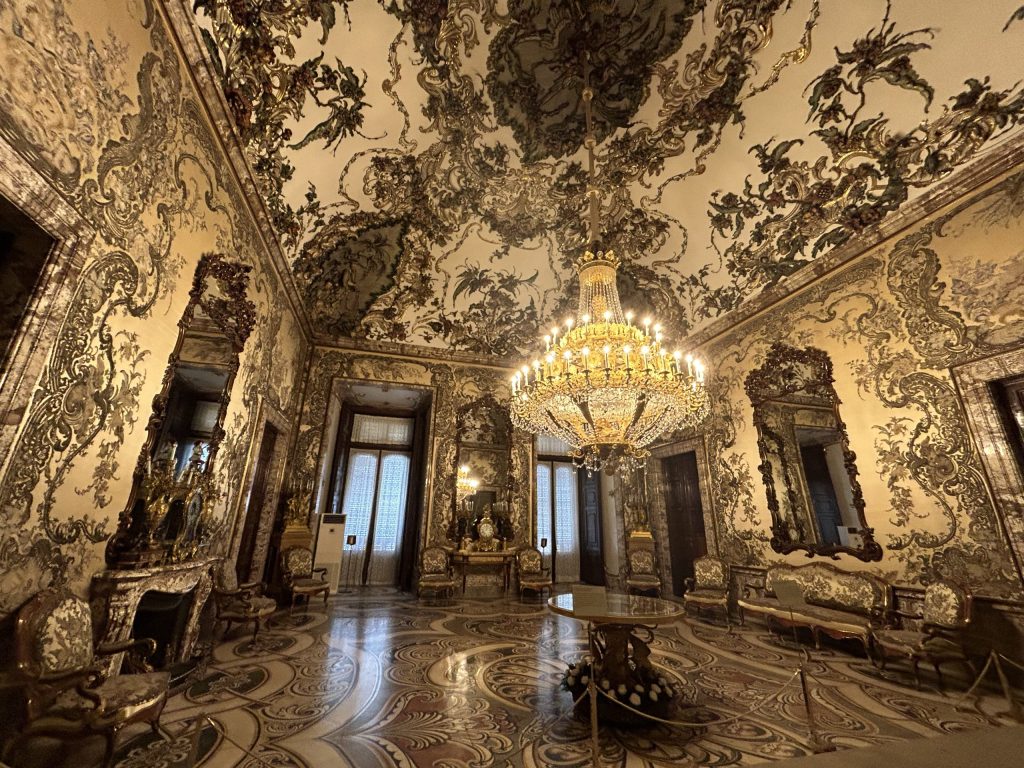
One of the most visible consequences of the dynastic change can still be seen in the heart of Madrid. The Royal Palace we know today did not exist when the first Bourbon arrived in Spain. In its place stood the Royal Alcázar, a medieval fortress that had been transformed over the centuries into a royal residence.
Everything changed on Christmas Eve 1734. A fire broke out in the Alcázar and continued for several days, destroying much of the building. Numerous works of art were also lost, although many others were saved, including Velázquez’s Las Meninas.
The Fire at Madrid’s Royal Alcázar
The disaster presented an opportunity to rebuild the old residence. Instead, the new dynasty chose a far more ambitious solution: constructing an entirely new palace on the same site.
The project fitted perfectly with a monarchy that also sought to express its power through architecture. The Italian architect Filippo Juvarra was initially commissioned to design it and conceived an extraordinarily monumental palace. His proposal had to be modified, and after his death, Giovanni Battista Sacchetti developed the project that finally began construction in 1738.
A New Palace for a New Dynasty
The building should not be understood merely as a royal residence. European palaces were also representations of power. The scale of their façades, succession of state rooms, ceremonial spaces and decoration communicated the sovereign’s position within the political order.
Madrid’s new Royal Palace emerged precisely as the Bourbon dynasty was consolidating its position. Its monumental character is difficult to separate from the model of monarchy taking shape during these decades: a Crown strengthened after the War of the Spanish Succession and determined to project an image worthy of its authority.
The King Who Never Lived in His New Palace
Here we find one of the great ironies of his biography. Philip V commissioned the present Royal Palace but never lived there. He died in 1746, when construction was still far from complete.
Nor would his immediate successor, Ferdinand VI, be the first monarch to occupy it. That distinction went to Charles III, who moved into the palace in 1764, three decades after the fire that had prompted its construction.
One of Madrid’s most recognizable monuments is therefore also part of the first Bourbon’s legacy. The prince born at Versailles never walked through the completed rooms of the palace he had ordered to be built, yet he left behind the project that would become the monumental royal residence we see today.
What Was Philip V’s Legacy?
As we mentioned earlier, it is impossible to discuss the legacy of Philip V without considering the Nueva Planta Decrees and the tyrannical nature of his rule. The suppression of institutions in the defeated territories and the concentration of power were fundamental parts of what he left behind.
However, it is difficult to reduce more than four decades of rule—with the brief interruption of Louis I’s reign—to these events alone. During this period, Spain changed its position in Europe, established a new dynasty and witnessed the emergence of institutions that would survive for centuries. His legacy was also administrative, international, cultural and dynastic, and some of its consequences remain visible today.
Reforms Beyond the Nueva Planta Decrees
Changes also affected the administration, the army, public finances and relations between the Crown and its American territories. These decades saw the beginning of a process of reorganization that would be continued by other Bourbon monarchs throughout the 18th century.
His reign also saw the creation or consolidation of cultural institutions that still exist today. Among them was the Royal Spanish Academy, founded in 1713 and placed under royal protection shortly afterwards. The new monarchy understood that strengthening its position was not simply a matter of controlling territories: it also involved building institutions capable of projecting a particular idea of the state and its culture.
In Conclusion
More than three centuries later, the first Bourbon remains a controversial figure because his victory had very different meanings depending on the territory from which it is viewed. For the new dynasty, it meant the consolidation of its power. For those who had supported Archduke Charles, defeat could mean repression, the loss of institutions and submission to a new political order.
This contrast makes it impossible to reduce his reign to the story of a simple “modernizer.” Important administrative and cultural reforms coexisted with absolutism, centralization and the authoritarian exercise of power. Acknowledging the former does not require us to minimize the latter.
And there is one final consequence that connects the dynastic change of the early 18th century directly with the present: the House of Bourbon still occupies the Spanish throne. The French prince who arrived from Versailles did not merely inaugurate a new period in the history of the monarchy. He founded the dynasty to which the present King of Spain belongs.
Discover Madrid’s History with The Guides You Need
The history of the first Bourbon is still present in Madrid. The clearest example is the Royal Palace, whose construction began during his reign after the fire that destroyed the old Alcázar. At The Guides You Need, we offer small-group guided tours where you can discover not only its magnificent rooms and works of art, but also the stories of the monarchs who shaped the building we see today.
But Madrid’s history extends far beyond the palace. We also offer guided tours of the Prado Museum, Reina Sofía Museum and Thyssen Museum, three extraordinary collections that allow us to explore other key moments in Spanish and European art and history.
If you want to discover Madrid with our professional guides, take a look at our tours and choose the experience that interests you most. Ready to book? Click here.