On September 15, 1505, Mary of Hungary was born, one of the most fascinating women of the Habsburg dynasty. The daughter of Philip the Handsome and Joanna I of Castile and the sister of Charles V, her life was closely connected from an early age to some of the most important political decisions in 16th-century Europe. She became Queen of Hungary and Bohemia, Governor of the Netherlands, and a key figure within the imperial family.
But Mary of Hungary also shared another of the Habsburgs’ great passions: art. She was an extraordinary art collector and patron, assembled works by some of the most important artists of her time, and helped enrich the Royal Collections, whose legacy can still be traced today in the Prado Museum. To mark the anniversary of her birth, we explore her biography through five facts that will help us get to know this fascinating Renaissance woman much better.
In this article
1. Mary of Hungary Was Born into One of the Most Powerful Families in Europe
Mary of Hungary was born in Brussels on September 15, 1505. Her father was Philip the Handsome, son of Emperor Maximilian I of Habsburg and Mary of Burgundy. Her mother was Joanna I of Castile, daughter of the Catholic Monarchs. From birth, therefore, Mary belonged to a family that brought together some of the most important territories and dynastic claims in Europe.
She was certainly not an only child. Mary had five siblings: Eleanor, Charles V, Isabella, Ferdinand, and Catherine. Their lives perfectly illustrate how marriage politics worked among Europe’s great dynasties. Eleanor would become Queen of Portugal and later of France; Isabella, Queen of Denmark; Ferdinand would become Holy Roman Emperor; and Catherine would become Queen of Portugal.
She Was the Sister of Charles V
Of all the siblings, Charles V would occupy an exceptional position. Within a few years, he accumulated the crowns of Castile and Aragon, the Habsburg territories, and the imperial title. Yet the family’s power did not depend solely on the emperor. His sisters also played fundamental roles in Habsburg dynastic politics and, in some cases, came to exercise considerable power in their own right.
Mary is one of the best examples. Her relationship with Charles V would shape much of her life. Decades later, the emperor would entrust his sister with one of the most important responsibilities within his domains: the government of the Netherlands.
Her Future Had Been Decided Since Childhood
As was customary among members of royal families, Mary’s marriage was determined by political interests. While she was still a child, the Habsburgs began negotiating a marriage alliance with the Jagiellonians, the dynasty that ruled Hungary and Bohemia.
The agreement would eventually link the two families through a double marriage: Mary would marry Louis II of Hungary, while her brother Ferdinand would marry Anne Jagiellon, Louis’s sister. These unions had enormous dynastic implications. No one could have known it at the time, but they would prove fundamental to the future expansion of Habsburg power across Central Europe.
For Mary of Hungary, however, this meant something much more immediate: she would have to leave the world in which she had grown up to become a queen while still very young.
2. Mary of Hungary Became Queen at Just 16
The destiny that the Habsburgs had planned for Mary since childhood eventually became a reality. In 1521, she married Louis II of Hungary and Bohemia and, at just 16 years old, became queen consort. Louis was even younger: he had inherited the crowns of Hungary and Bohemia as a child and was only 15 when the marriage took place.
Mary thus arrived at a court very different from the one in which she had grown up. But her role was not limited to that of a wife expected to ensure the continuity of the dynasty. The young queen began to take an interest in political affairs and gathered around her a court in which music, books, and art also played an important role. The marriage, however, produced no children.
Her Marriage to Louis II of Hungary
Despite the political origins of the match, the sources suggest that Mary and Louis enjoyed a particularly close relationship. They shared interests such as hunting and enjoyed a courtly life that contrasted with the difficult situation facing the kingdom. Hungary was coming under increasing pressure from the Ottoman Empire of Suleiman the Magnificent, while the monarchy struggled to gather the resources necessary to defend its borders.
Mary did not remain entirely removed from these problems. Her position as the sister of Charles V and Ferdinand of Habsburg also made her an important link between the Hungarian court and her own family. Events, however, would soon overtake them before she could consolidate her position as queen.
The Battle of Mohács Changed Her Life
On August 29, 1526, Louis II’s army confronted the forces of Suleiman the Magnificent at the Battle of Mohács. The Hungarian defeat was devastating. Louis died during the retreat after falling from his horse and drowning in a stream. He was only 20 years old.
Mary was widowed at just 21. Louis’s death brought her brief period as queen to an end and triggered an enormous succession crisis in Hungary and Bohemia. Her brother Ferdinand claimed both crowns thanks precisely to the dynastic agreements that had led to the double marriage between the Habsburgs and Jagiellonians years earlier.
Mary of Hungary never remarried. For the rest of her life, she retained the title associated with the kingdom and also preserved the memory of Louis. But widowhood did not mean her disappearance from European politics. Quite the opposite: the young woman who had been sent to Hungary to become queen was about to enter the period in which she would exercise the greatest power in her own right.
3. Mary of Hungary Governed the Netherlands for More Than Twenty Years
The death of Louis II did not bring Mary of Hungary’s political career to an end. In the years following the Battle of Mohács, she helped defend her family’s interests in Central Europe, but the major turning point came in 1530. Margaret of Austria, Mary’s aunt and Governor of the Netherlands, died in Mechelen. Charles V needed someone capable of replacing one of his most experienced collaborators.
His sister was chosen for the role. Mary accepted the position with some reluctance, and in 1531 she officially began her tenure as Governor of the Netherlands. She would remain in charge of these territories until 1555. She was only 25 when she assumed one of the most important political responsibilities in Habsburg Europe.
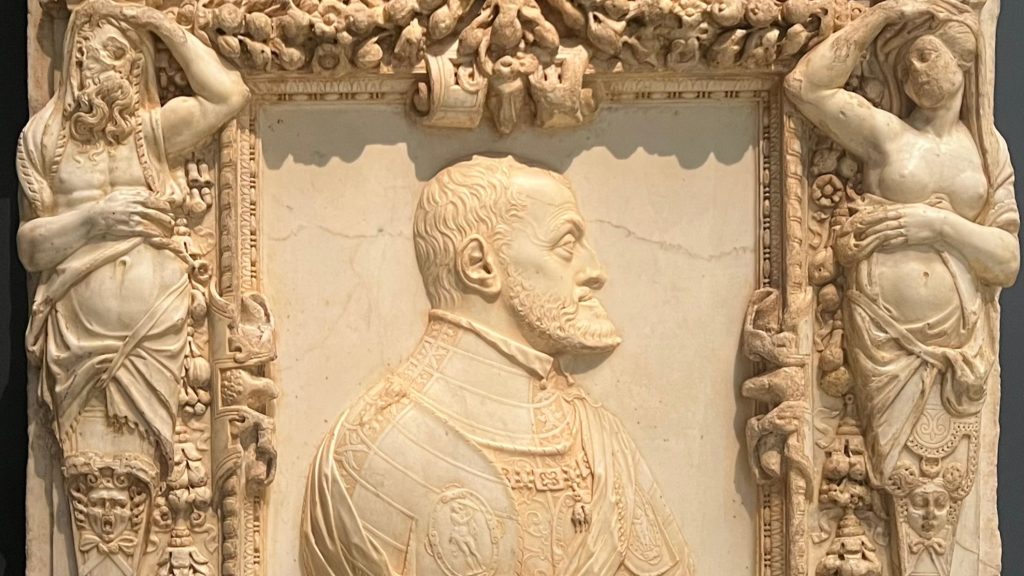
Charles V Entrusted His Sister with the Government
The Netherlands comprised a group of extraordinarily wealthy territories, but they were also difficult to govern. Cities such as Antwerp were major European commercial centers, while the provinces enjoyed their own institutions and privileges. Added to this were Charles V’s wars against France and the growing spread of Protestant ideas.
Mary had to govern on her brother’s behalf, negotiate with local institutions, secure resources for imperial wars, and maintain stability throughout the territories. Her freedom of action was constrained by the emperor’s decisions, and Charles V’s financial demands sometimes caused considerable tension between them. Mary knew firsthand how difficult it was to continually demand money and men from provinces that also had interests of their own.
A Governor in a Europe at War
Her position was not limited to administering the Netherlands. Mary of Hungary played an important political and diplomatic role within the broader Habsburg strategy. She participated in international negotiations and acted as an intermediary between Charles V, other members of the family, and the various European powers.
One of the best examples came in 1529, even before she became Governor of the Netherlands. Mary participated alongside her aunt Margaret of Austria in the negotiations that led to the Peace of Cambrai, the agreement between Charles V and Francis I of France that temporarily brought one of their many conflicts to an end. The treaty would also become known as the Ladies’ Peace, precisely because of the prominent role played by women in the negotiations.
For more than two decades, Mary had to navigate wars, religious conflicts, financial pressures, and the interests of her own family. Her government shows why reducing her simply to “Charles V’s sister” or Louis II’s widow does not do her justice. Before becoming one of the great Habsburg art collectors, Mary of Hungary had also been one of the dynasty’s most important political figures.
4. Mary of Hungary Was an Extraordinary Art Collector
Politics occupied much of Mary of Hungary’s life, but art was another of her great passions. Like other members of the Habsburg family, she understood that paintings, tapestries, sculptures, and precious objects were not merely used to decorate palaces. They could also project an image of power, preserve family memory, and demonstrate a person’s status within Europe’s great courts.
During her years as Governor of the Netherlands, Mary also had access to one of Europe’s most important artistic environments. She assembled an extraordinary collection and commissioned works from some of the leading artists of her time. This aspect of her biography is particularly important for understanding the later history of the Spanish Royal Collections and, through them, some of the works now housed in the Prado Museum.
Art Was Also a Way of Exercising Power
Mary’s collecting was closely connected to her family identity. Portraits of the Habsburgs made the dynasty present across territories ruled by family members separated by thousands of miles. Large decorative cycles, meanwhile, could celebrate military victories, assert dynastic rights, or present the emperor and his family as heirs to the great figures of Antiquity.
Mary actively participated in this visual culture. Her collection was not simply the private pastime of a governor who enjoyed art. It formed part of the political language of the court and reflected a concept of prestige shared by other members of her family, including Charles V and, later, Philip II.
Portraits of Mary of Hungary
As a major figure at the European court, Mary was portrayed at different stages of her life. One of her best-known early portraits was painted around 1520 by Hans Maler, when she was still a teenager destined to become Queen of Hungary. The painting presents a young Mary with the richness and solemnity characteristic of a dynastic portrait.
Years later, her image would be very different. Mary was no longer simply a Habsburg princess prepared for a political marriage, but a widowed queen and an experienced governor. Her portraits therefore allow us to follow something rather unusual: the visual transformation of a woman who spent almost her entire life within the structures of European power.
Mary of Hungary and Titian
Among the artists associated with Mary, Titian stands out in particular. The great Venetian painter worked for Charles V and other members of the imperial family. Mary played a fundamental role in one of the most ambitious commissions given to the artist: a series of large mythological paintings intended to decorate her palace at Binche.
The series included works inspired by the punishments of figures from classical mythology, later known as The Furies. Titian painted, among others, Tityus and Sisyphus, two enormous canvases now in the Prado Museum. The choice of these figures was not innocent: enemies of the gods condemned to eternal punishment could be interpreted as part of a program celebrating Habsburg authority and triumph over their adversaries.
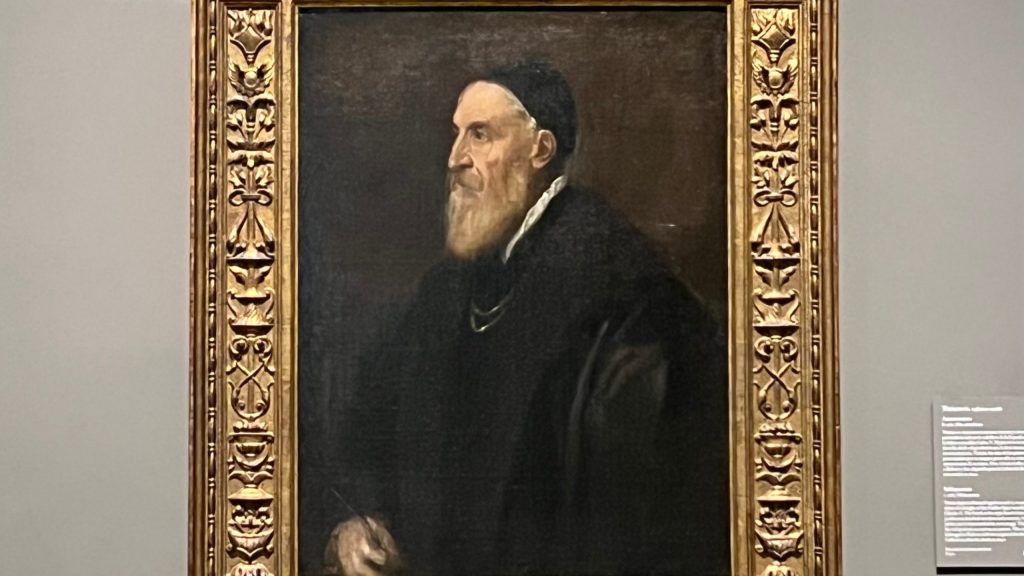
The Magnificent Palace of Binche
Mary transformed the palace of Binche, in present-day Belgium, into one of her most spectacular residences. There, she displayed much of the courtly culture she had developed during her years in government. In 1549, the palace was the setting for famous festivities organized during the future Philip II’s visit to the Netherlands.
Its splendor was short-lived. In 1554, during another conflict between the Habsburgs and France, French troops destroyed the palace. The loss of Binche makes the surviving paintings, documents, and objects that allow us to reconstruct Mary’s extraordinary artistic project all the more important.
From Mary of Hungary’s Collection to the Spanish Royal Collections
In 1555, as Charles V withdrew from political life, Mary resigned as Governor of the Netherlands. She later returned to Spain, bringing with her an important collection of paintings, tapestries, and other artistic objects. After her death in 1558, a significant part of her possessions passed to Philip II.
In this way, Mary’s collecting became part of a much larger process. Charles V, Mary of Hungary, Philip II, and subsequent generations of Habsburgs accumulated, inherited, commissioned, and exchanged works of art. Centuries later, a fundamental part of those Royal Collections would form the historic core of the Prado Museum.
Mary of Hungary in the Prado Museum
This is why we can still find traces of Mary of Hungary during a visit to the Prado. Titian’s Tityus and Sisyphus are two particularly important examples because they were commissioned by Mary herself. These are not simply paintings that once belonged to the Habsburgs: they were originally conceived for one of her own artistic projects.
This provenance allows us to see them from a different perspective. Behind the great paintings of the Prado Museum are stories of commissions, inheritances, marriages, and political decisions that explain how one of Europe’s greatest painting collections was formed. And Mary of Hungary occupies an important place in that history.
5. Mary of Hungary: One of the Great Women of the Habsburg Dynasty
The life of our birthday-woman shows that women played a much more important role in Habsburg politics than a history focused exclusively on emperors and kings might suggest. Mary was a queen, governor, diplomat, patron, and art collector. For decades, she administered some of the wealthiest territories in Europe and participated directly in her family’s political strategy.
And she was not an isolated case. The Habsburgs used marriage to build an enormous dynastic network, but some of the women involved managed to exercise considerable power in their own right. Mary’s own biography was shaped by other women in her family who governed, negotiated, and used art as an instrument of representation.
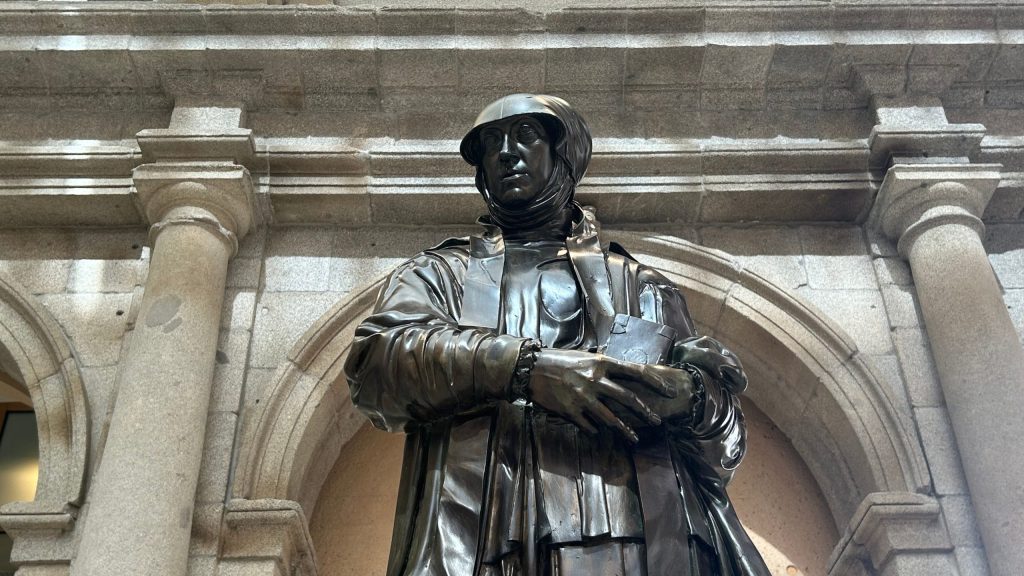
Margaret of Austria and Mary of Hungary
One of the most important figures was Margaret of Austria, Mary’s aunt and the sister of Philip the Handsome. Before her niece, Margaret had governed the Netherlands on behalf of the dynasty and had transformed her court at Mechelen into an important political and cultural center. She also assembled an extraordinary collection of paintings, manuscripts, sculptures, and precious objects.
Margaret was therefore a direct precedent for Mary. Both women held major political responsibilities, participated in European diplomacy, and understood collecting as part of the culture of power. When Margaret died in 1530, it was Mary who eventually succeeded her as Governor of the Netherlands.
The Sisters of Charles V
Charles V’s own generation provides further examples. Eleanor of Austria became Queen of Portugal and later Queen of France; Isabella became Queen of Denmark, Norway, and Sweden; and Catherine became Queen of Portugal. Their marriages helped extend Habsburg influence across much of Europe.
Mary’s career, however, was particularly remarkable because of the length and importance of her personal rule. For more than twenty years, she governed the Netherlands and maintained a direct political relationship with the emperor. This is why, when discussing some of the most important women of the Habsburg dynasty, she necessarily occupies a prominent place.
Her final years
In 1555, Mary decided to step down as Governor of the Netherlands as her brother began his abdications. After more than two decades of political responsibility, she initially rejected the possibility of continuing to govern under Philip II and returned to Spain alongside Charles V and her sister Eleanor.
Her retirement, however, would be brief. Charles V died in September 1558, while Eleanor had passed away a few months earlier. Mary died in Cigales, Valladolid, on October 18, 1558, just a few weeks after her brother. She was 53 years old.
Where Is Mary of Hungary Buried?
Mary’s remains were later transferred to the Monastery of San Lorenzo de El Escorial, where Philip II brought together numerous members of the dynasty. She rests there in the Pantheon of the Infantes, alongside her sister Eleanor of Austria.
Her legacy, however, also survived elsewhere. Some of the works she collected and commissioned became part of the Spanish Royal Collections, and several can now be seen in the Prado. Five centuries after her birth, Mary’s life helps us understand something essential about the Habsburgs: their power was not built solely through wars, crowns, and marriages. It was also constructed through images, palaces, and works of art.
Discover the Habsburg Legacy with The Guides You Need
🎨 Would you like to discover the stories behind the great masterpieces of the Prado Museum? The museum’s collection cannot be fully understood without figures such as Mary of Hungary, Charles V, and Philip II, who commissioned, purchased, and inherited some of the masterpieces we can admire in Madrid today.
🏛️ On a guided tour of the Prado Museum, you will discover not only great artists such as Titian, Velázquez, Rubens, and Goya, but also the stories of the kings, queens, and collectors who helped create this extraordinary collection.
👉 At The Guides You Need, we want you to understand why these works are in the Prado and the stories behind them. Book your guided tour and discover the museum with us.