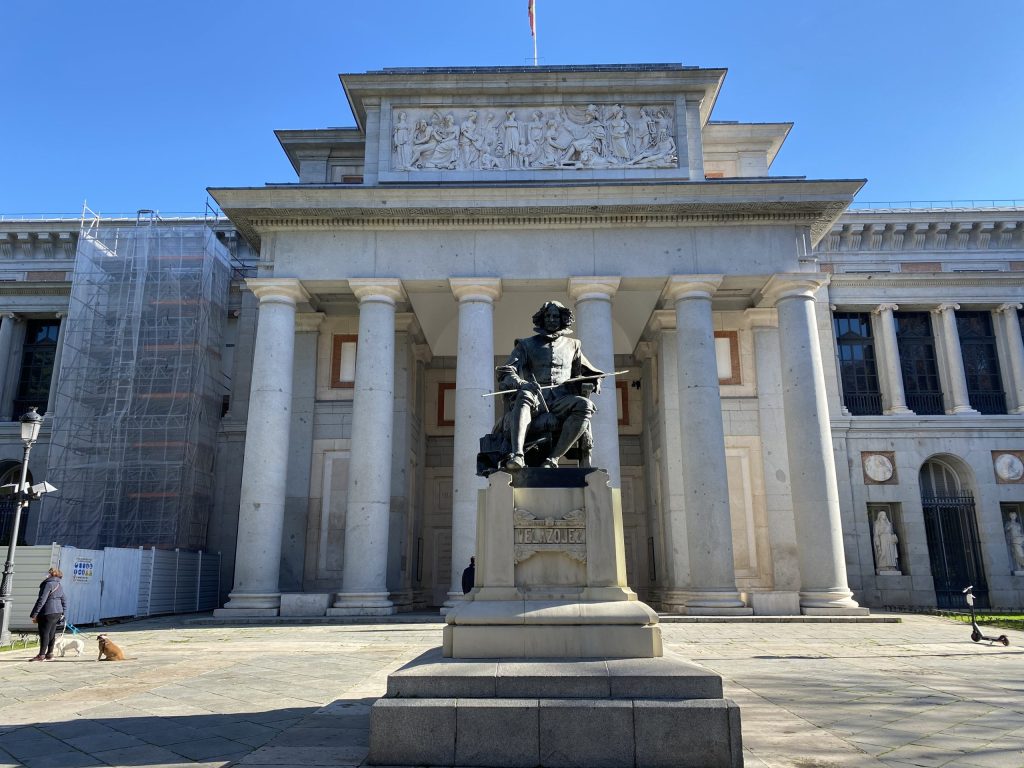
Royalty at the Prado is not present only in the many portraits of kings and queens hanging on its walls. The history of the museum itself would be difficult to understand without the decisions, commissions and collections of certain members of European royal families. Over the centuries, their personal tastes helped bring together many of the works that today form part of one of the world’s great art museums.
In this article, we will focus on three figures separated by almost three centuries: Charles V, Mary of Hungary and Isabel of Braganza. The first two played a fundamental role in shaping the Habsburg collections during the 16th century, while the third became closely associated with the birth of the Prado Museum in the 19th century. Three very different figures who allow us to trace much of the history that preceded the museum’s opening.
In this article
Charles V: the Emperor Who Made Titian His Painter
Talking about Royalty at the Prado inevitably means turning our attention to Charles V. The emperor did not create a collection intended to become a museum one day, but his artistic decisions had consequences that lasted for generations. His relationship with Titian was particularly important: it helped establish a connection between the Habsburg dynasty and the great Venetian master that would continue under Philip II.
Charles V met Titian in person in Bologna in 1530, during the journey to Italy in which he was crowned emperor by Pope Clement VII. From then on, the painter produced several portraits of the monarch and members of his family. The trust Titian eventually earned was exceptional: in 1533, Charles V granted him the title of Count Palatine and made him a Knight of the Golden Spur.
Charles V at the Battle of Mühlberg: the Image of an Emperor
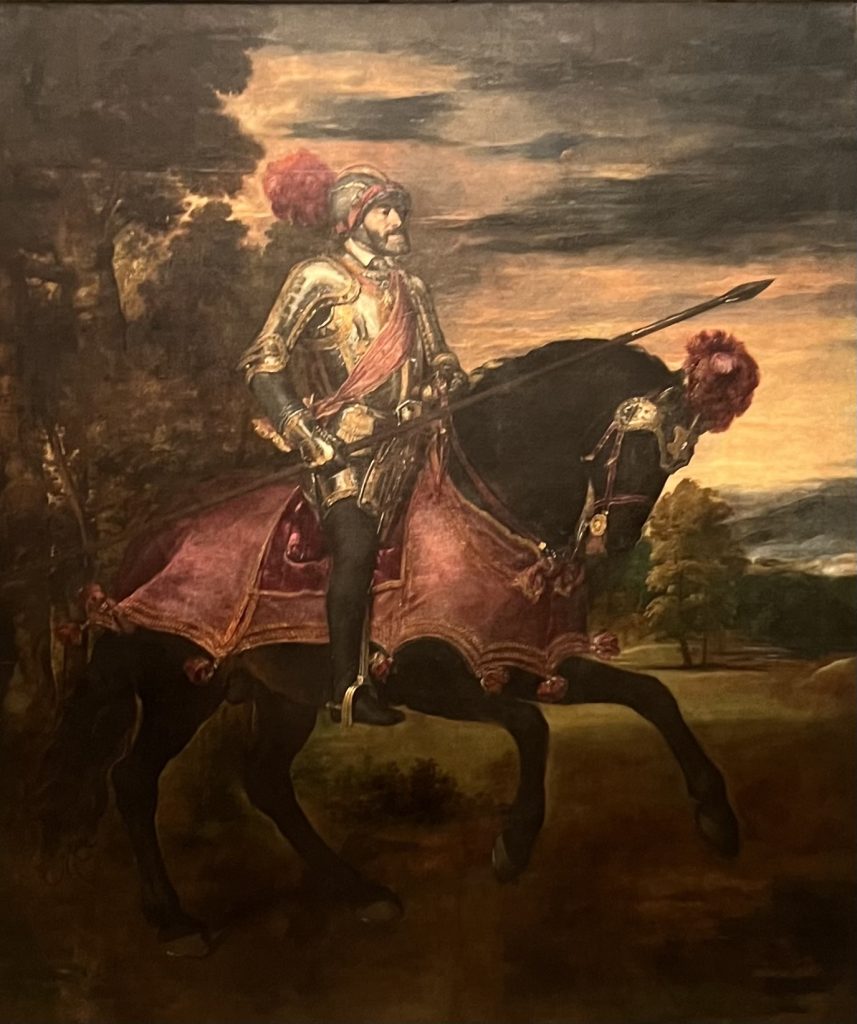
Among these works, Charles V at the Battle of Mühlberg, painted by Titian in 1548 and now housed in the Prado Museum, stands out. The emperor appears on horseback, wearing armour and holding a lance, following the victory of the imperial forces over the Schmalkaldic League in 1547. Yet Titian does not depict the turmoil of battle. We see no defeated enemies and no soldiers surrounding the monarch: Charles V advances almost alone through a silent landscape.
The result is much more than a military portrait. Titian constructs a solemn image of imperial power in which the armour, horse and lance coexist with the serenity of the emperor’s expression. Centuries later, this painting remains one of the most recognisable images of Charles V and one of the great works that reveal just how closely the history of the monarchy and that of the Prado Museum are intertwined.
Mary of Hungary: an Extraordinary Collector
If Charles V helps us understand the origins of a fundamental artistic relationship, his sister, Mary of Hungary, shows that Habsburg collecting was much more than a story of kings and emperors. Sister of Charles V and Ferdinand I, widowed Queen of Hungary and Governor of the Netherlands for more than two decades, she was one of the most politically powerful women in 16th-century Europe. She also developed an extraordinary interest in art.
Mary assembled an important collection and commissioned some of the leading artists of her time. Her story is particularly relevant to understanding Royalty at the Prado, because several works connected with her commissions and collection eventually became part, directly or indirectly, of the Spanish royal collections.
Mary of Hungary, Titian and the Memory of the Habsburgs
Following Charles V’s victory at Mühlberg, Mary of Hungary commissioned Titian to produce an ambitious series of dynastic portraits for her palace at Binche, in the Netherlands. The project was not simply intended to decorate a royal residence. Portraits of Charles V and other members of the family transformed the palace into a setting for the representation of dynastic power and continuity.
Her relationship with Titian also strengthens the connection we have just seen with Charles V. Mary understood the enormous potential of the Venetian painter’s work to shape the public image of the Habsburgs and played an active role in the culture of commissions, exchanges and collecting that characterised the family.
A Collection That Eventually Travelled to Spain
When Mary left the Netherlands in 1556, she returned to Spain with her siblings Charles V and Eleanor of Austria. Part of her art collection also made its way to the Iberian Peninsula. After her death in 1558, Philip II acquired numerous works that had belonged to his aunt.
This journey helps explain how the collections that would, centuries later, provide many of the works in the Prado Museum were formed. Mary of Hungary could never have imagined the museum we know today, but her taste, commissions and activity as a collector form part of the long history that made its extraordinary collection possible.
Philip II: the Great Collector of Bosch
The next generation continued the Habsburg passion for art. Philip II, son of Charles V and nephew of Mary of Hungary, was an extraordinary collector who continued to enrich the royal collections throughout his long reign. We have already discussed him in our article about Philip II and the video game Civilization VI, but here we are interested in a very different side of the monarch.
Among his many artistic interests, none is perhaps as recognisable today as his fascination with Bosch. Philip II assembled the most important collection of the painter’s works of his time. This is essential to understanding why some of the Netherlandish master’s most celebrated paintings can be found in Spain today.
The Acquisition of Bosch for the Royal Collections
Philip II could not commission these paintings: Bosch had died in 1516, eleven years before the king was born. He therefore had to seek them out in earlier collections. One of the most important acquisitions took place in 1570, when Philip II purchased several paintings attributed to Bosch from the heirs of Felipe de Guevara. Guevara had been an important collector and a profound connoisseur of the artist’s work.
Other acquisitions followed. The most famous example is The Garden of Earthly Delights, which had belonged to the Nassau family and eventually came into the possession of Don Fernando de Toledo, the illegitimate son of the 3rd Duke of Alba. Philip II acquired it at the sale of his estate in 1591.
The Incorporation of Bosch into the Royal Collections
The works acquired by Philip II were mainly destined for the Monastery of El Escorial. The Garden of Earthly Delights arrived there in 1593 and was recorded as a painting depicting the “variety of the world”. Other works associated with Philip II’s collections included The Table of the Seven Deadly Sins, The Haywain Triptych and The Temptations of Saint Anthony, although the attributions and provenance of some works historically associated with Bosch have been reassessed as modern scholarship has developed.
The result was exceptional. While Bosch’s paintings became dispersed among different European collections, the Spanish monarchy assembled an extraordinary group of works, largely thanks to Philip II’s personal interest.
How Did Bosch Reach the Prado Museum?
There is an important distinction here between belonging to the royal collections and belonging to the Prado Museum. Some of Bosch’s greatest works remained at El Escorial for centuries and were not among the paintings displayed when the museum opened in 1819.
The Garden of Earthly Delights, for example, remained at El Escorial until the 20th century. It was transferred to the Prado Museum in 1939 and has remained there on loan from Patrimonio Nacional. Philip II’s extraordinary interest in a 15th-century painter therefore had a consequence the king could never have foreseen: it helped turn the Prado into one of the most important places in the world to experience Bosch’s art.
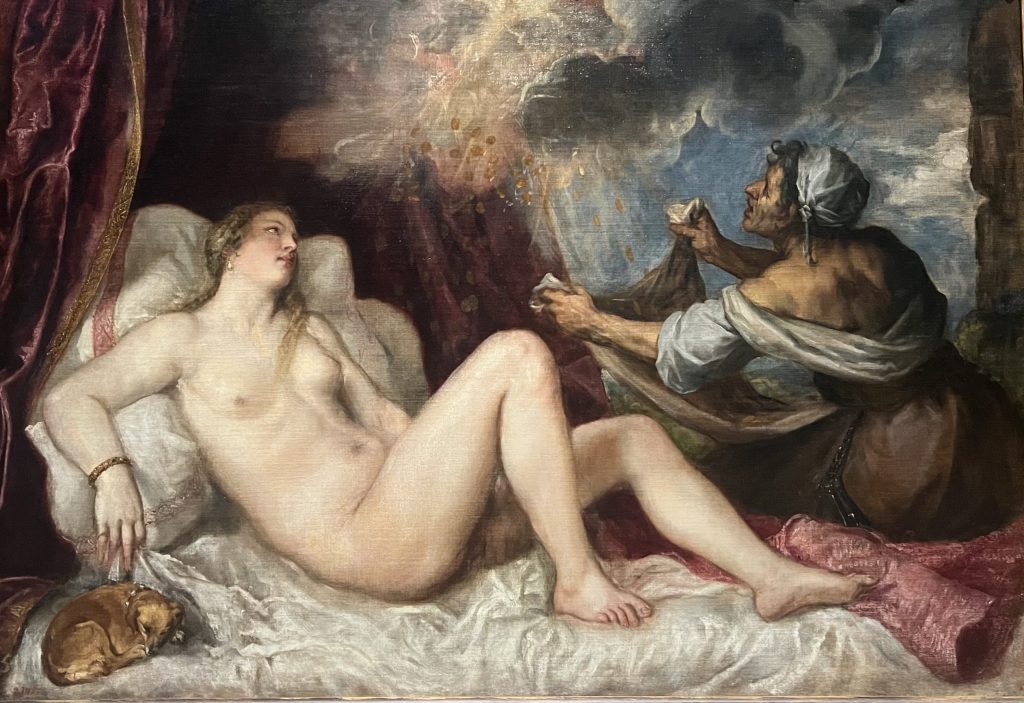
Titian’s “Poesie”: Another Great Contribution by Philip II
Bosch was one of Philip II’s great artistic passions, but he was far from the only one. The king continued the close relationship that Charles V had established with Titian and became one of the great recipients of his paintings. Their relationship produced one of the most important mythological cycles of the Renaissance: the works known as the Poesie.
Titian conceived these paintings as visual equivalents of poetry, drawing primarily on Ovid’s Metamorphoses. The series included works such as Danaë, Venus and Adonis, Diana and Actaeon, Diana and Callisto, Perseus and Andromeda and The Rape of Europa. The paintings became dispersed over the centuries, but the Prado Museum today houses Danaë and Venus and Adonis, two magnificent examples of the artistic relationship between Philip II and Titian.
Beyond Titian: Tintoretto, Veronese and Bassano
Philip II’s appreciation of Venetian painting did not end with Titian. His collections also incorporated works by other great masters from the Republic of Venice, including Tintoretto, Veronese and Jacopo Bassano, as well as paintings produced by members of Bassano’s workshop and family.
These acquisitions helped make Venetian painting one of the great strengths of the Spanish Habsburg collections. The taste established during the reign of Charles V thus continued under his son and would be developed even further by later generations. The result of that passion can still be seen in the Prado today, where Bosch is displayed alongside an extraordinary representation of the great Venetian masters of the 16th century.
Philip IV and Velázquez: Buying Art for the Crown
While Philip II continued the collecting tradition of Charles V and Mary of Hungary, his grandson, Philip IV, took the royal collections into a new era during the 17th century. The monarch was passionate about painting and assembled hundreds of works to decorate his residences. His reign is fundamental to understanding Royalty at the Prado, particularly because of his relationship with Diego Velázquez, who was not only his court painter: he also served the king by acquiring art on his behalf.
Philip IV possessed an extraordinary collection of paintings in which Titian, Rubens and Velázquez himself occupied a privileged position. But he also wanted to acquire Italian paintings and sculptures capable of enhancing the splendour of the royal residences. To achieve this, he turned to someone who understood art from the inside.
Velázquez Travels to Italy to Buy Art
In 1649, Velázquez embarked on his second journey to Italy on behalf of Philip IV. One of his principal missions was to acquire paintings and ancient sculptures for the king and to obtain casts of some of Rome’s most prestigious classical sculptures, from which bronze reproductions could be made.
During his stay, he purchased important works by Italian artists for the royal collections. Among them were paintings by Tintoretto and Veronese, Venetian masters who continued a collecting tradition cultivated by the Habsburgs since the 16th century. But his acquisitions were not limited to Venice. Velázquez also obtained works then attributed to Raphael, one of the greatest names of the Italian Renaissance and an artist whose paintings were particularly coveted by Europe’s leading collectors.
The mission demonstrates just how much Philip IV trusted his painter’s judgement. Velázquez was not simply an intermediary responsible for completing purchases: he was an exceptional artist selecting works for another great collector. The aim was to add examples from different periods and schools of Italian painting to Philip IV’s collections, from the Renaissance of Raphael to the great Venetian masters.
Sculptures for the Royal Alcázar
Velázquez’s mission also had an important sculptural dimension. In Rome, he commissioned casts of some of the city’s most famous ancient sculptures and arranged for bronze copies to be produced. Philip IV intended to use them to decorate the Royal Alcázar of Madrid, transforming its interiors through direct references to the artistic prestige of classical antiquity.
Here we encounter once again the idea of magnificence that we discussed in relation to Mary of Hungary. A great collection did not merely satisfy the monarch’s private taste. It also transformed the palace into a visible expression of culture, wealth and power. Owning great Italian paintings and reproductions of celebrated classical sculptures placed the Madrid court within an artistic competition taking place among Europe’s leading royal courts.
From Philip IV’s Palaces to the Prado Museum
Many of the paintings assembled during the reign of Philip IV initially decorated spaces such as the Royal Alcázar and the Buen Retiro Palace. Their destinations changed over the centuries: fires, transfers, new royal residences and, eventually, the creation of the Prado Museum completely transformed the context for which they had originally been acquired.
When we walk through the Prado today, therefore, we find much more than the portraits Velázquez painted of Philip IV and his family. We also encounter the results of the artistic policy of a king who sent his own painter to Italy in search of works of art. Part of the extraordinary richness of the collections now preserved in the Prado Museum and the Royal Palace has its roots in Philip IV’s ambition to make Madrid a court worthy of Europe’s great artistic capitals.
Isabel of Braganza: the Queen Linked to the Birth of the Prado Museum
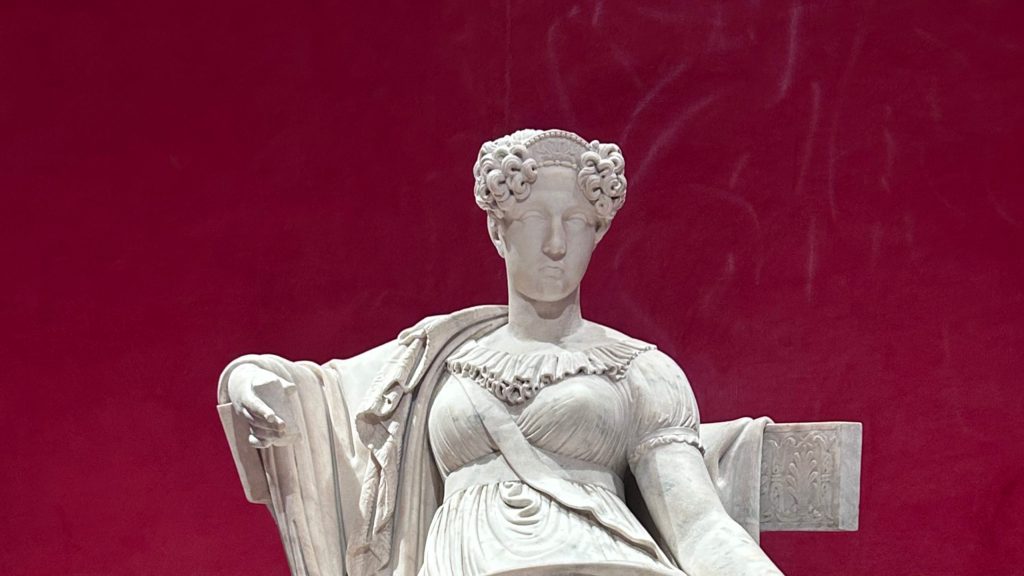
With Isabel of Braganza, the story of Royalty at the Prado jumps forward almost three centuries. We are no longer looking at a great Renaissance collector, but at a queen whose name became closely associated with the birth of the museum. The second wife of Ferdinand VII, Isabel arrived in Spain in 1816 and died just two years later, at the age of only 21. She therefore never lived to see the opening of the Royal Museum of Painting and Sculpture, which welcomed its first visitors on 19 November 1819.
Despite her brief life in Spain, tradition has attributed a decisive role to Isabel in the creation of the institution. According to the most commonly repeated account, the queen promoted the idea of bringing together paintings belonging to the Crown and displaying them to the public. The historical reality, however, is more complex, and it is important to distinguish Isabel of Braganza’s symbolic importance from what we can state with certainty about the foundation of the museum.
Was Isabel of Braganza the Founder of the Prado Museum?
The project to create a museum from the royal collections did not depend exclusively on Isabel. The idea of establishing a public gallery predated her arrival in Spain, and it was Ferdinand VII who ultimately promoted the Royal Museum of Painting and Sculpture. Even so, the queen appears to have supported the project, and her figure soon became associated with it.
This memory was immortalised in Portrait of Queen Maria Isabel of Braganza as Founder of the Prado Museum, painted by Bernardo López Piquer in 1829. In the painting, Isabel points towards the museum building with one hand while resting the other on a set of plans. The portrait was produced more than a decade after her death and played a powerful role in establishing her reputation as a patron — and, in popular memory, effectively the founder — of the institution.
From the Collections of Kings to a Public Museum
The presence of Isabel of Braganza in our story has another important meaning. Charles V and Mary of Hungary belonged to an age in which great paintings were commissioned, purchased and preserved within a dynastic context. Three centuries later, those collections, accumulated by generations of monarchs, began to be displayed in an institution open to the public.
When the museum opened in 1819, it displayed 311 paintings, all by Spanish artists and all drawn from the royal collections. Today’s Prado Museum is, of course, the result of many subsequent additions, but that original nucleus explains why the history of the monarchy is inseparable from the history of its collections. With Isabel of Braganza, our journey therefore reaches the moment when centuries of royal collecting began to evolve into the museum we know today.